
Please note: Reservations are required; walk-ins cannot be accommodated.
Please note: Reservations are required.
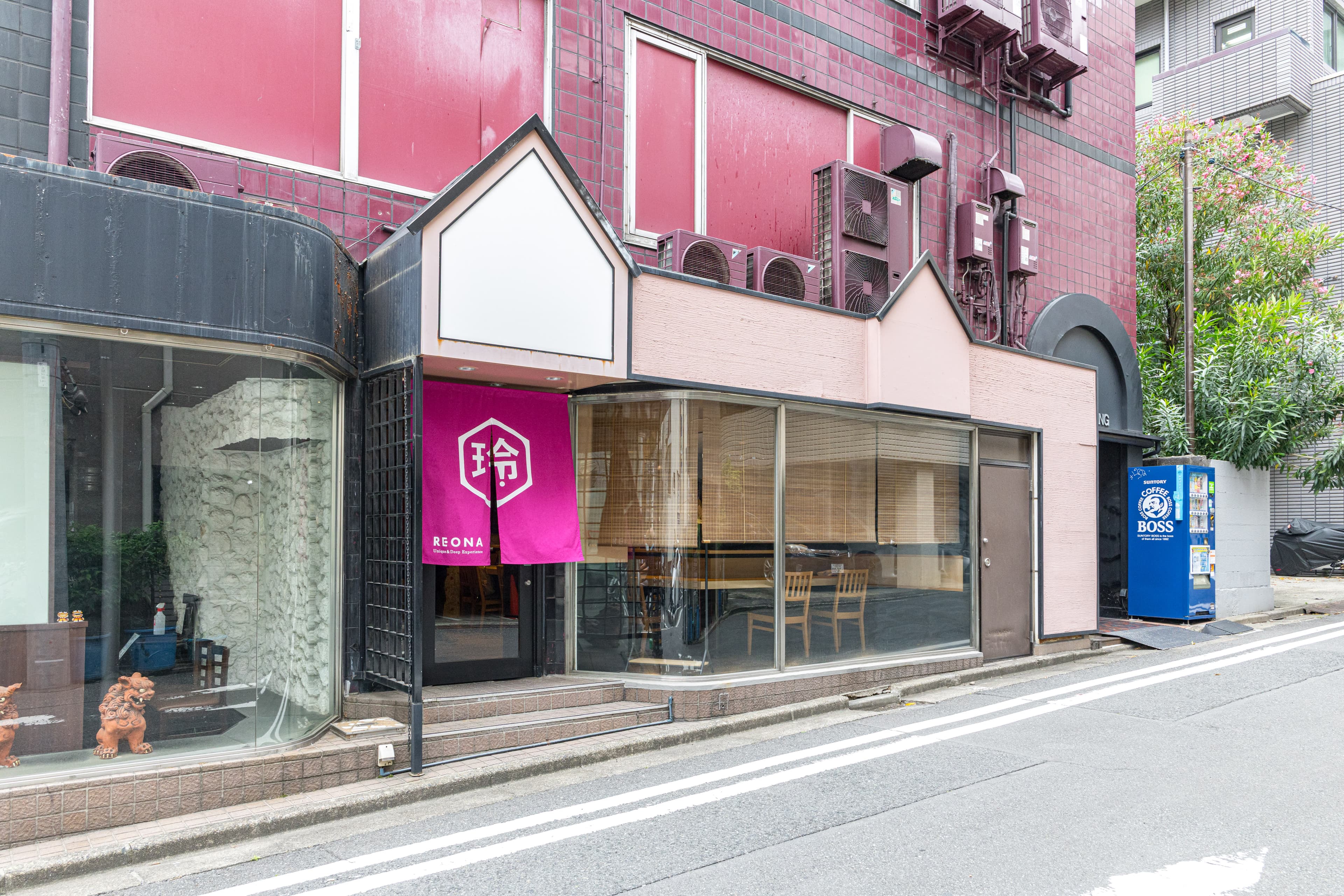

At REONA Sushi Tokyo, we receive many reviews every day.
Of course, we also receive many kind comments such as “delicious” and “wonderful experience.”
However, what we are often a little surprised by is the length of those reviews.
It is not uncommon for guests to write reviews that go beyond a few lines and extend into several hundred words.
Most of our guests are from overseas, so the reviews are mainly written in English, but when we read them, they sometimes feel less like restaurant reviews and more like travel journals or personal experience stories.
Why does REONA Sushi Tokyo receive so many long reviews?
From our perspective, the reason is not only the sushi itself.
Of course, as a sushi restaurant, sushi is very important.
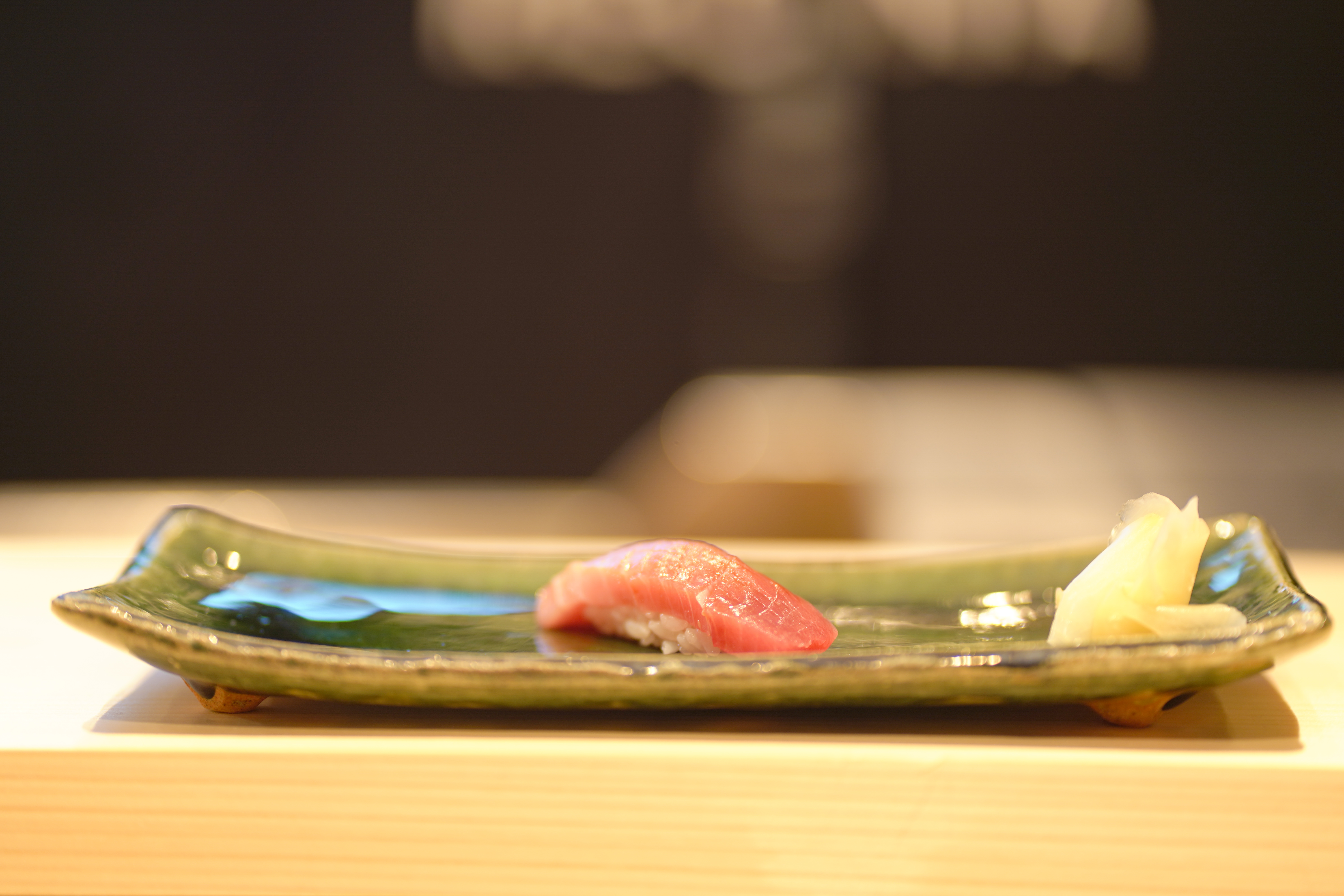
Fish quality. Condition of the rice. Preparation. Temperature.
All of these are things we cannot compromise on.
However, what we are trying to provide at REONA is not only “eating delicious sushi.”
We often use the expression:
“Understanding Sushi” “Understanding Sushi”
Why this fish is used. Why this timing is important. Why Edo style sushi uses techniques such as curing or marinating. Why the chef applies wasabi or soy sauce before serving.
Most of our international guests have eaten sushi in their own countries, but they do not often have the chance to learn deeply about Edo style sushi.
That is why we explain the background of each piece while the course progresses.
When this happens, guests stop evaluating only the taste of fish.
We often hear things like:
“I learned about kohada for the first time, and even its history.” “I finally understood why uni is highly valued in Japan.” “I felt like sushi is art.”

When someone understands something, they may want to tell someone else about it.
We sometimes feel that long reviews are written while organizing and expressing that experience.
There was a guest who said, “I don’t like uni.”
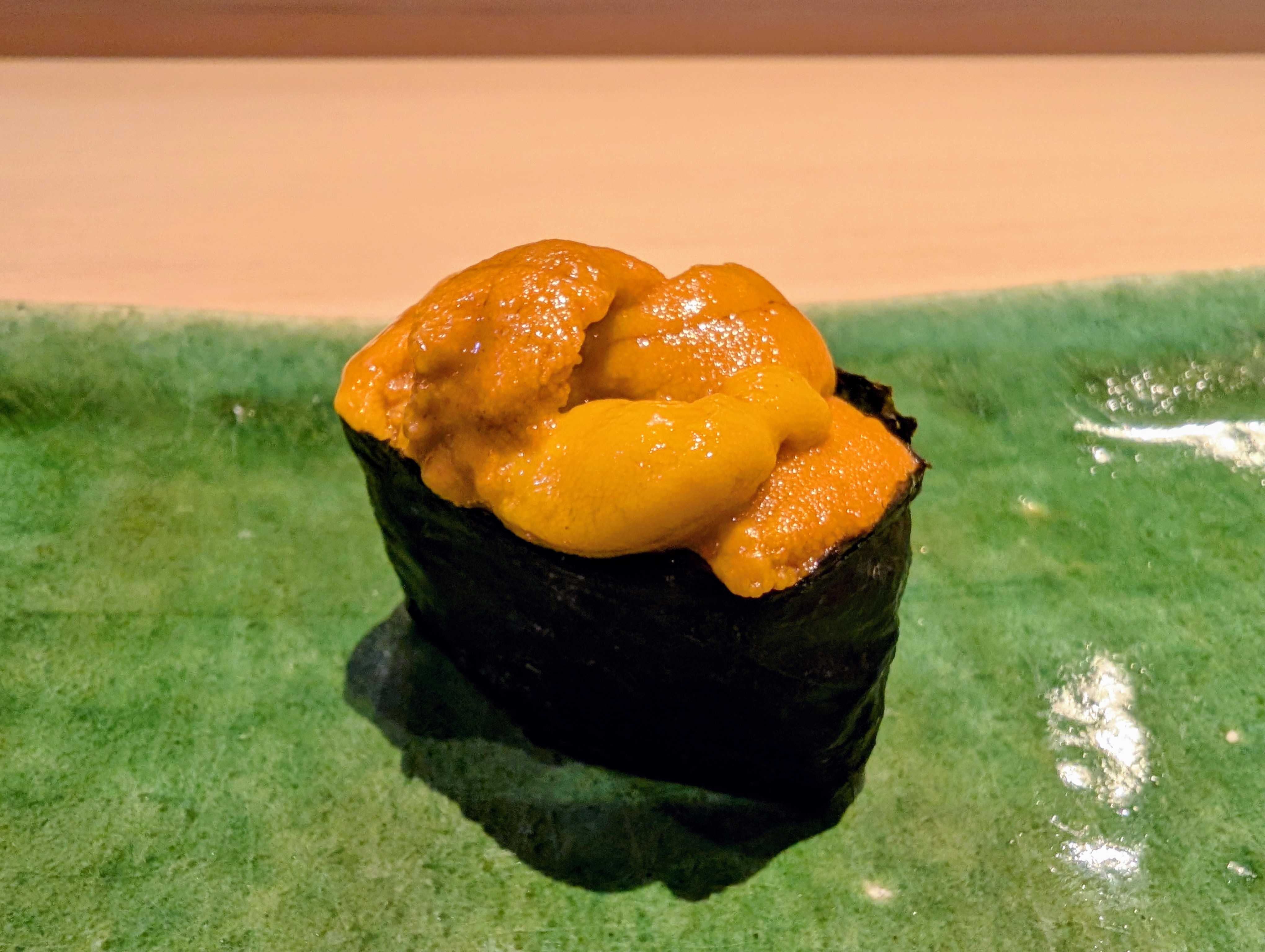
They told us this was because of a previous experience in another country.
We explained the origin, characteristics, and quality of the uni we use that day, and also why Japanese people value uni highly.
After that explanation, the guest tried it with some hesitation.
After eating it, they said, “This is completely different.”
In the review we received later, it was not only about the uni itself, but also about the conversation and what they learned at that moment.
By the way, uni is an ingredient that often divides opinions.
Some guests also tell us they have never tried it before coming here because they avoided it.
We have written another article in detail about uni and guest reactions, so please feel free to read that as well if you are interested.
What is striking when reading reviews is that many of them are not only about sushi itself, but about what happened that day and the emotions of the experience.
For example:
“This was the most memorable time of my trip with my daughter.” “I felt like I finally understood Japanese culture after coming to Japan.” “I used to dislike uni, but I learned to enjoy it.”
We often think that we are a sushi restaurant, but at the same time, we are also part of the travel experience.

Many of our guests are not living in Tokyo. They are traveling.
Travel always includes emotions. Expectation. Surprise. Discovery. Impression.
We spend a few hours together during that journey.
That is why reviews often include not only “the fish was good,” but also who they came with and why they came.
Family trips. Couples. Honeymoons. Birthdays. Anniversaries.
We are very honored to be part of those important moments.
We also offer cakes at REONA upon request.
There was a day when a wife made the reservation for her husband’s birthday.
In addition, another couple at the same counter also had a birthday on the same day.
When we served the cake, everyone sang happy birthday together, and we celebrated both guests at the same time.
We often have situations like this, where we are part of special moments.
At REONA, we share all reviews with our staff.
Chefs. Service staff. Navigators.
All English reviews are translated and read by the entire team.
The reason is simple.
We do not see reviews as results. We see them as learning.
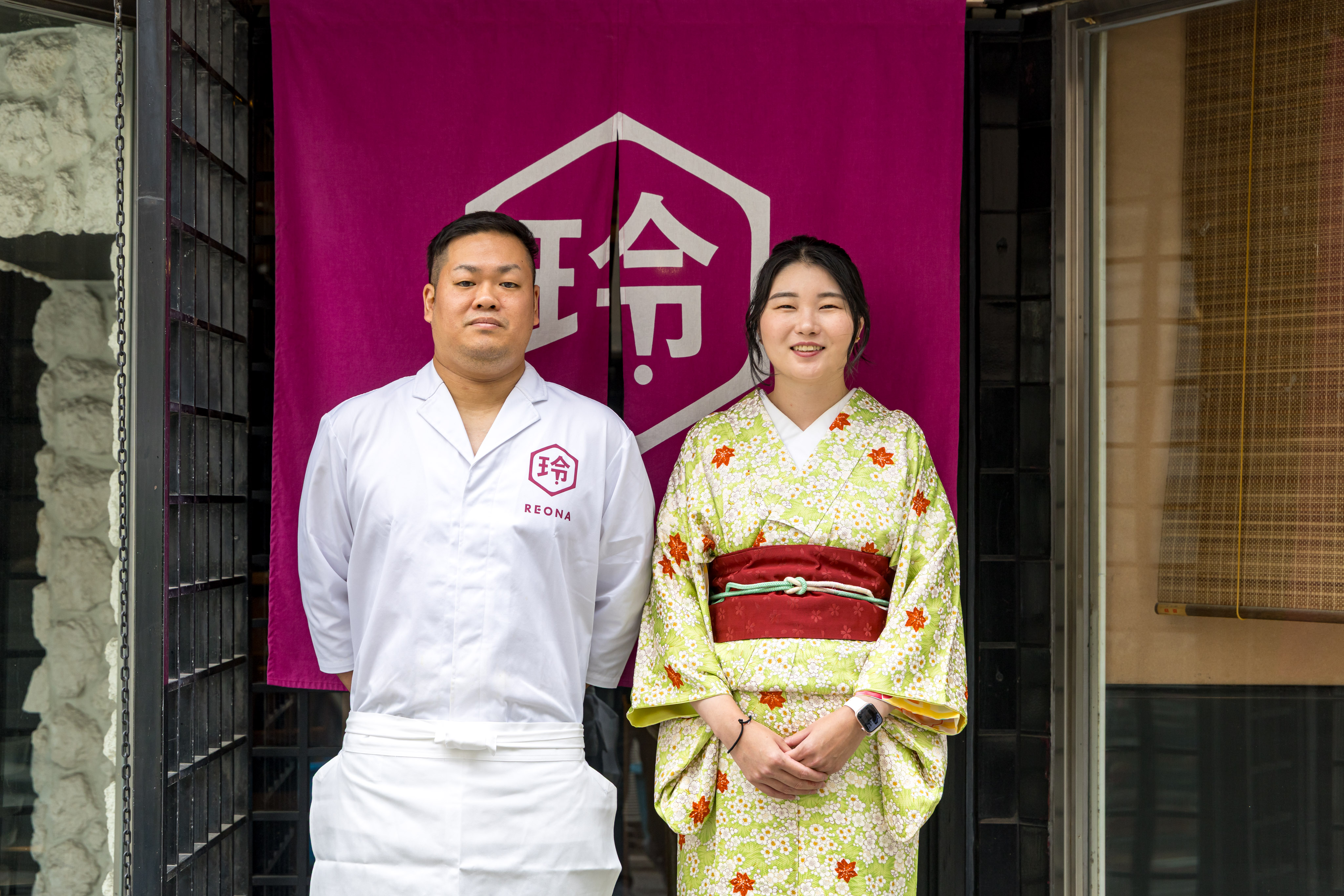
What explanation stayed in memory. What conversation was remembered. What moment remained with the guest.
Reviews contain many answers to these questions.
For example, something a chef casually said about fish sometimes becomes the most memorable part of the meal.
Or small gestures toward children are sometimes written in detail in long reviews.
One real example is a staff member who taught a child how to fold a paper crane during a quiet moment in service.
While the parents were experiencing Japanese culture through sushi, the child experienced Japanese culture through origami.
At that time, the staff member said the child was a little restless and he was not sure if he should do it, but he decided to try.
It turned out to be a very positive experience.
After reading that review, we encouraged our service staff to interact more with children when possible, while still focusing on their main duties.
The staff member who did this was very happy when the review was shared, because what he thought was “just something he did at the moment” became part of someone’s travel memory.

Sometimes, we also notice that what we think is important is not always what guests remember most.
For example, email communication.
Before guests visit, we often receive questions or special requests.
We try to respond clearly and carefully in advance.
We often receive comments saying that this communication made them feel comfortable before arriving.
Some guests even wrote, “Even before visiting, I felt confident this place would be good.”
Traveling to a foreign country often comes with uncertainty.
Allergies. Children. Food preferences. Dress code and manners.
We try to answer all of these questions carefully so guests can feel comfortable.
Because of that, our emails can become quite long, but we try to remove uncertainty as much as possible.
When we read reviews, we sometimes realize that this communication itself is also part of the experience.
Sometimes reviews are discussed as a marketing tool.
Of course, reviews are important for people who are choosing a restaurant.
However, for us, reviews have a different meaning.
Reviews are not advertising.
They are records of what happened on that day, in that place.
Someone experiencing Edo style sushi for the first time. Someone trying ingredients they had avoided before. A family creating memories during a trip. Someone discovering Japanese culture in a new way.
These experiences remain as written words.
Sometimes, when we read reviews again, we can remember the exact moment at the counter.
The expression on a guest’s face. A question they asked. A final conversation before leaving.
Reviews feel like letters left by our guests.
That is why we read each one carefully.
We do not see long reviews as something to be proud of.
We see them as proof that many guests took home something beyond sushi.
At REONA Sushi Tokyo, we will continue to provide not only sushi, but also culture, background, and human connection.
And we hope that when guests read their own reviews again in the future, the memories of that day will come back clearly.