
Please note: Reservations are required; walk-ins cannot be accommodated.
Please note: Reservations are required.
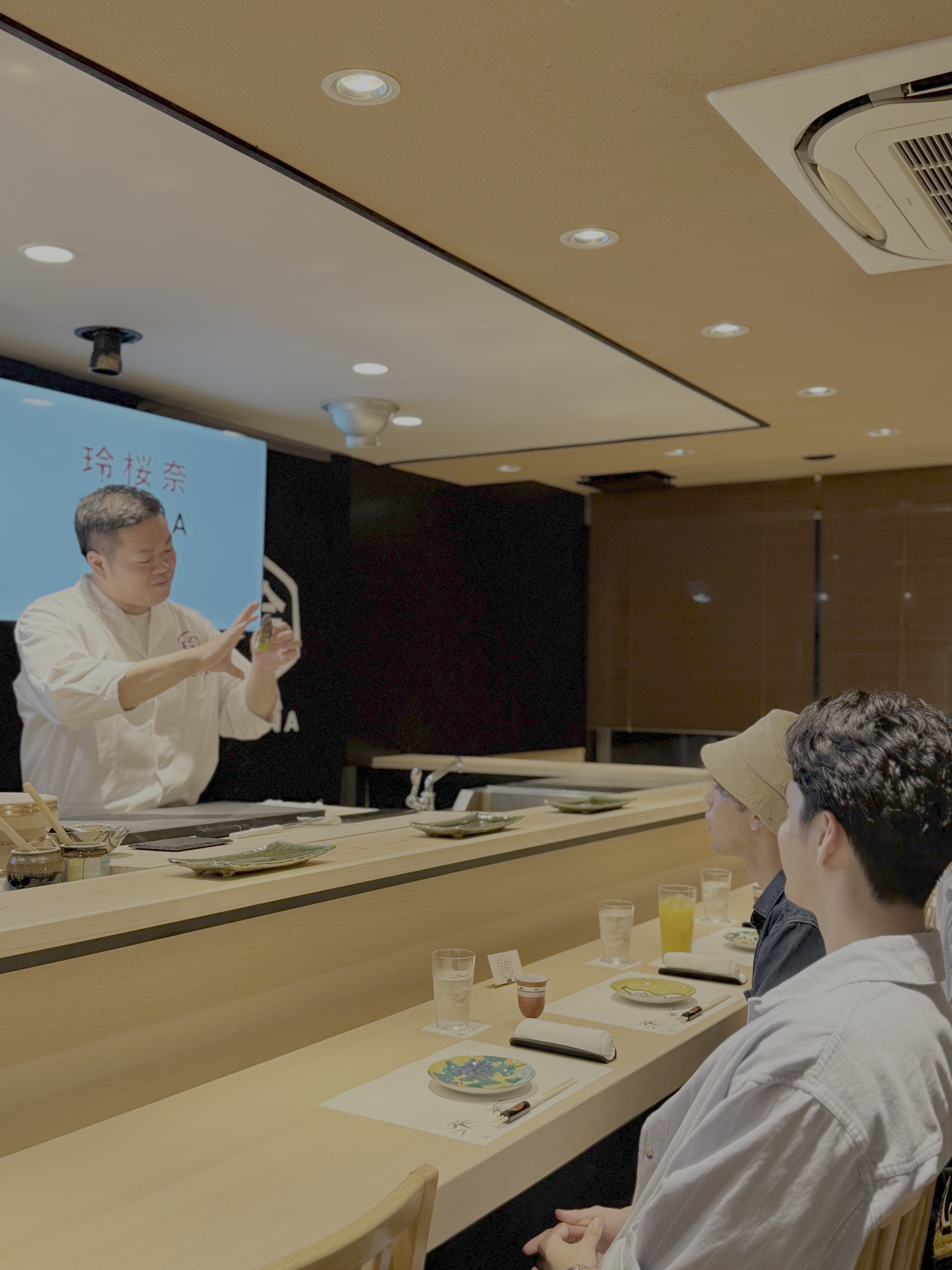

"We'd be grateful if you could leave us a review."
These days, it's something you hear almost everywhere—not just at restaurants, but also at hotels, tourist attractions, hair salons, and many other businesses.
Open Google Maps, and it's not unusual to see messages like:
"Get a free drink when you leave a review." "Receive a special gift for leaving a 5-star review."
Online reviews have become one of the biggest factors people consider when choosing where to go.
For that reason, I don't believe there's anything wrong with asking guests to leave a review.
At REONA, we also mention it before guests leave. We simply say:
"If you enjoyed your experience, we'd be grateful if you could share your thoughts on Google Maps."
However, collecting reviews is never our goal.
Today, REONA has more than 160 reviews on Google Maps alone.
Around 99% of them have been written by international guests, and many are surprisingly detailed, with some guests taking the time to write long, thoughtful comments about their experience.
In this article, I'd like to share how we think about reviews, and why our approach is a little different.
After finishing their meal, some international guests tell us stories like these:
"At many restaurants we've visited, they asked us to leave a review."
Or,
"They offered us a free drink if we left a review, so we felt almost obligated to write one."
Of course, there's nothing unusual about that.
In fact, it's become a common marketing strategy around the world.
If we really wanted to, we could probably collect even more reviews by actively asking every guest to leave one.
But that's not the approach we want to take.

We believe reviews shouldn't be something guests write because they were asked.
They should be something they genuinely want to write.
At the end of each experience, we do mention that we collect reviews, simply because some guests ask where they can leave feedback.
But we never ask anyone to write one.
Why?
Because when people experience something that truly moves them, they naturally want to share it with someone else.
A breathtaking view during a trip.
An unforgettable meal.
A kind interaction with someone they met along the way.
When something leaves a lasting impression, people want to tell others about it.
We believe reviews should be a natural extension of that feeling.
Not,
"I should leave a review."
But rather,
"I want other people to know about this experience."
To us, that kind of review is far more meaningful.
Some guests leave without writing anything online.
Instead, they tell us,
"I'm definitely recommending REONA to my friends."
Or,
"Next time, I'm bringing my family."
To be honest, hearing those words makes us just as happy.
Whether someone shares their experience through a Google review, recommends us to a friend, or simply tells their family about us doesn't really matter.
What matters most is knowing that their experience was meaningful enough that they wanted to talk about it with someone else.
One phrase we often say to each other at REONA is this:
Not,
"Let's get more reviews."
But,
"Let's create unforgettable memories of Japan for as many guests as possible today."
If more reviews come as a result of that, then we know we're doing the right thing.
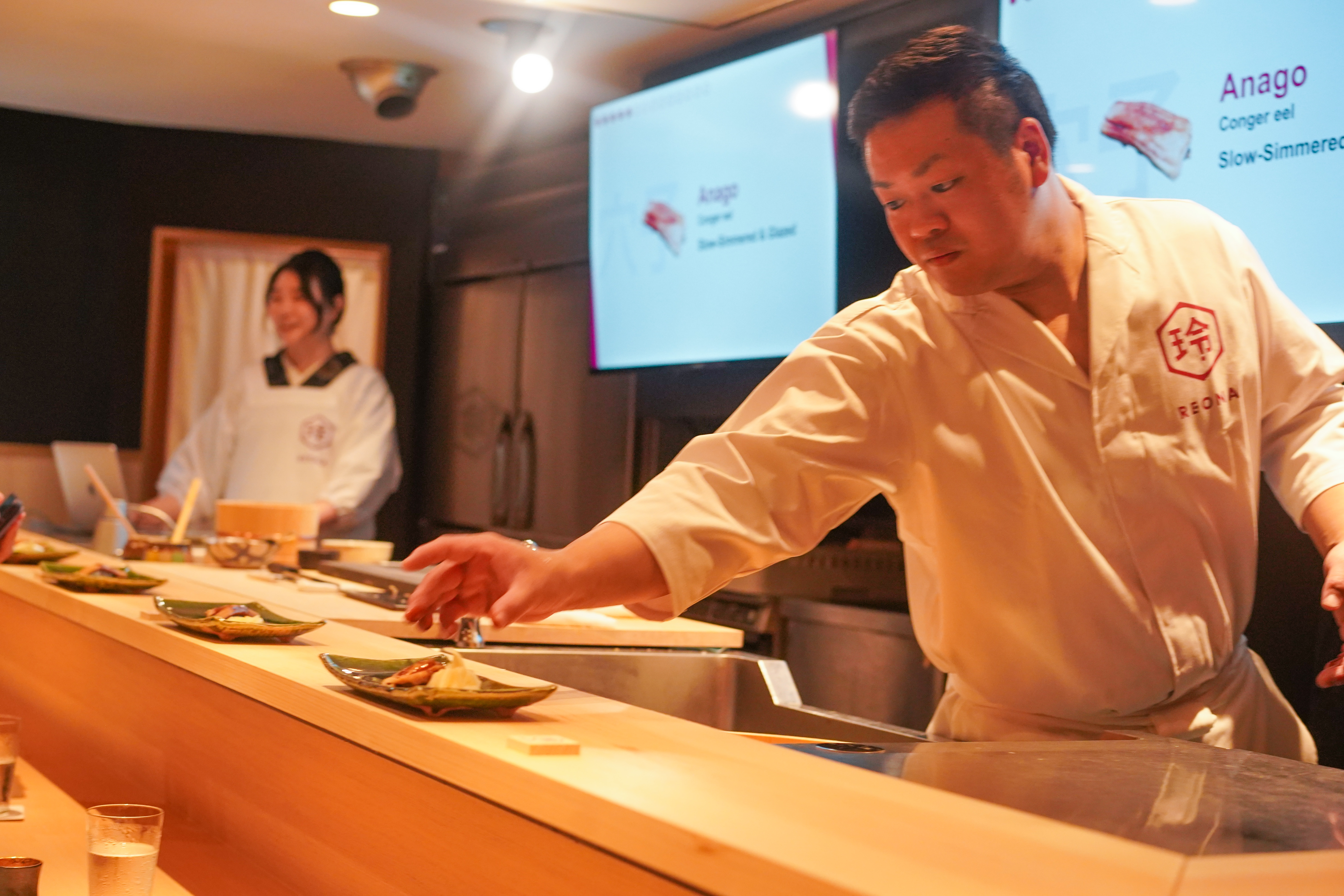
So what does that look like in practice?
It means taking the time to explain sushi in a way that's easy to understand.
It means introducing the philosophy behind Edomae sushi, something many international guests have never heard about before.
It means talking not only about the fish itself, but also about Japanese food culture, history, and the craftsmanship behind each piece.
We also pay close attention to each guest's reactions. If someone seems especially interested, we'll share a little more. If they're focused on enjoying the meal, we'll simply let the sushi speak for itself.
Sometimes guests ask us for travel recommendations, and it's not just our service staff who join the conversation. Even our sushi chefs happily recommend places to visit, seasonal events, or hidden spots around Japan.
When families visit with children, we prepare origami, spend time playing with the kids, and do everything we can to help parents relax and enjoy their omakase experience.
For guests with allergies or dietary restrictions, it's common for us to exchange several emails before their visit to make sure every detail has been carefully prepared.
Every now and then, a guest says something that stays with us:
"I never expected you would go this far for us."
When we look back through our reviews, we notice something interesting.
Many reviews certainly mention the quality of the sushi.
But just as many talk about things like:
"The staff gave us wonderful travel recommendations." "We felt completely comfortable bringing our children." "The explanations about Japanese culture were fascinating."
Some guests even write,
"We'd love to come back just to see the staff again."
Those are the words that mean the most to us.
Our goal has never been to be remembered only for serving delicious sushi.
We want guests to remember the entire journey—from the first email before their reservation to the moment they walk out our door.
Perhaps that's why so many reviews aren't simply about great food.
Instead, guests write things like,
"This was the highlight of our trip to Japan."
Or,
"I'll never forget the conversations we had with the team."
Those are the memories we hope every guest takes home with them.
When most people look at reviews, the first things they notice are the star rating and the number of reviews.
Those are certainly important.
But when we read our reviews, we almost always start with the words—not the stars.
What touched our guests the most?
Which moment stayed with them?
What did they choose to write about?
The answers to those questions tell us far more than a rating ever could.
They also give us valuable ideas for improving what we do.
We often read comments such as:
"We felt completely at ease bringing our children." "The explanations in English helped us understand Japanese food culture." "Talking with the sushi chef was one of the highlights." "The hospitality was exceptional." "The sushi was so good that I'm worried I won't be able to enjoy sushi back home anymore."
Whenever we see comments like these, we feel reassured that the experience we hope to create is truly reaching our guests.
At the same time, we value critical reviews just as much.
If a guest leaves feeling disappointed, we want to understand why.
Was there something we could have explained better?
Did we misunderstand their expectations?
Could we improve part of our service?
Those reviews often become opportunities for us to grow.
To us, reviews aren't simply a way for a restaurant to be evaluated.
They're a reflection of each guest's experience.
That's why we care far more about what people write than how many reviews we receive.
Most of our guests travel to Japan from overseas.
Whenever I reply to a review, I almost always find myself remembering that particular day.
"That little boy tried so hard to stay seated through the entire course."
"I wonder if the gentleman who told us he was planning to propose afterward got the answer he was hoping for."
"That guest had several food allergies—we exchanged so many emails before their visit."
As I read each review, those moments come back to me vividly.
That's why, whether I'm replying to a Google review or writing a thank-you email after a guest's visit, I try not to rely on templates.
Instead, I mention something specific that happened that day.

To us, reviews aren't just numbers on a screen.
They're a record of the time we shared with each guest.
For many people, a trip to Japan is a once-in-a-lifetime experience.
For others, Japan is somewhere they love so much that they return every year.
Either way, we want every guest to leave feeling that their expectations were exceeded.
Thankfully, more and more guests now tell us,
"We came because we read your reviews."
When I hear that, I often think about the person who wrote the review.
Perhaps they visited us because they had read someone else's review, too.
One guest's experience inspires another guest to visit.
Then that guest shares their own experience, inspiring someone else.
Little by little, trust grows.
That's the kind of relationship we hope to build.
Reviews are different from advertisements.
They're written by people who actually experienced something worth talking about.
That's why they have the power to encourage someone who is planning their own trip to Japan.
And because those words come from genuine experiences, they become the foundation of lasting trust.
There may be faster ways to collect more reviews.
But we'd rather spend our time creating experiences that guests genuinely want to write about.
We believe that's what leads to trust.
And ultimately, that trust is what brings us new guests from all over the world.
That's the way we choose to think about reviews at REONA.