
Please note: Reservations are required; walk-ins cannot be accommodated.
Please note: Reservations are required.
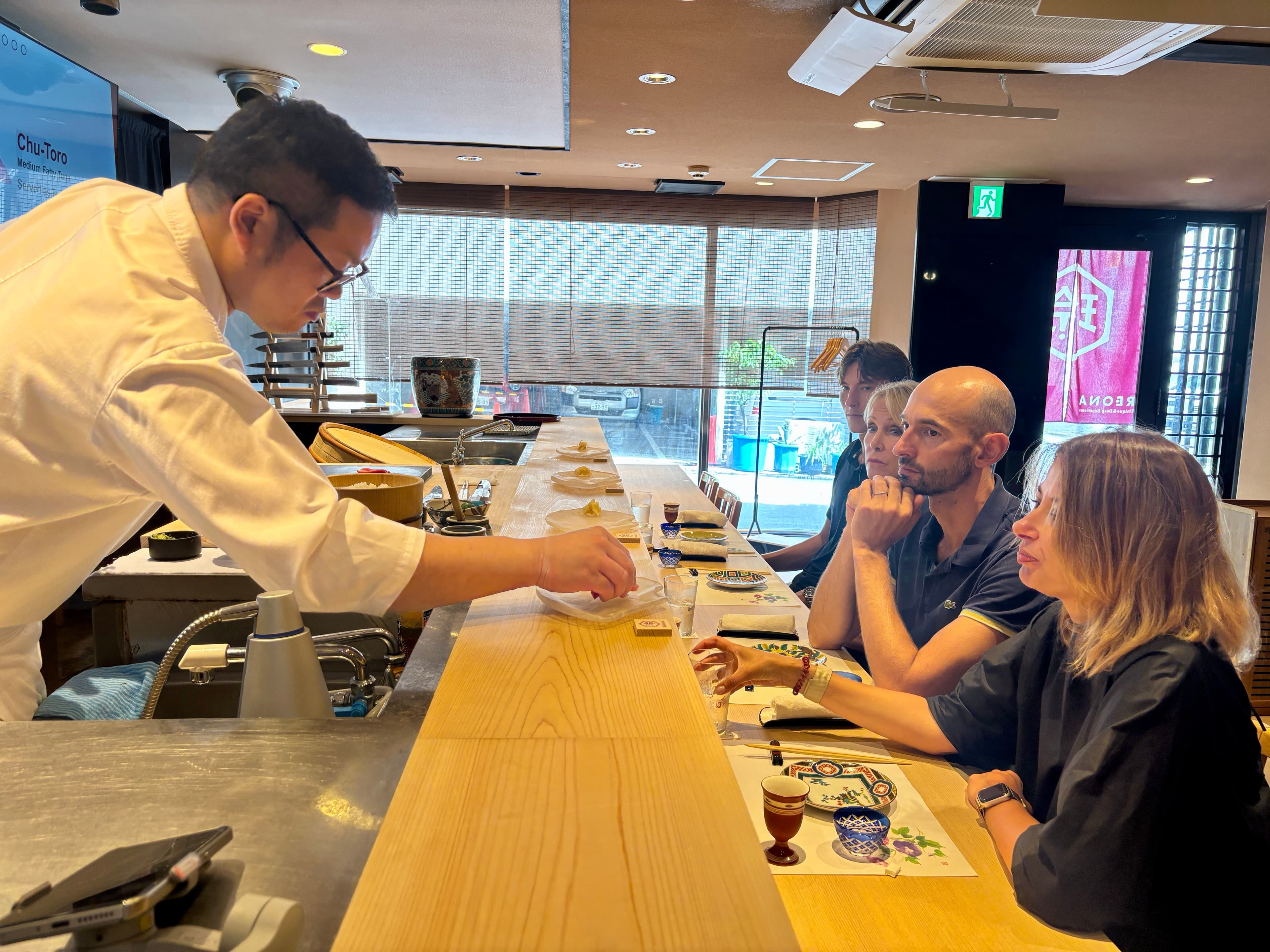

What do guests expect when they visit a sushi restaurant?
Delicious sushi. The skills of the sushi chef. Fresh fish. And a taste of Japanese food culture.
Of course, all of these things matter.
At REONA Sushi Tokyo, enjoying the flavor and quality of the sushi itself is at the heart of what we offer.
But our focus goes beyond making sure that every piece of sushi tastes delicious.
From the moment guests enter the restaurant to the moment they enjoy their first piece of sushi. From the conversations they have throughout the meal to the moment they finish their final piece and leave.
We think about the entire time our guests spend with us and what we want that experience to feel like.
These are the things we consider every day as we welcome guests to REONA.
Approximately 99% of the guests who visit REONA come from overseas to travel in Japan.

Some look forward to eating sushi as one of the highlights of their trip to Japan. Others have visited Japan many times and experienced a wide variety of sushi restaurants.
Some are trying a traditional sushi counter experience for the first time, while others are already very familiar with high-quality sushi.
Even though they all share the same goal of enjoying sushi, each guest has different expectations.
That is why we place importance not only on the service we provide during their visit, but also on our communication with them beforehand.
How do we answer questions during the reservation process? How much detail should we provide about the menu and dietary requirements? Have we addressed the concerns that someone visiting us for the first time might have?
With these questions in mind, we also make an effort to provide detailed information on our website.
We have dedicated pages explaining our allergy and gluten-free policies, what we can and cannot offer for birthdays and special occasions, and information for guests visiting with children.
Our aim is to make as much important information as possible available before guests arrive.
One thing we pay particular attention to is explaining not only what we can accommodate, but also what we cannot.
We never want guests who have been looking forward to their visit to feel disappointed because the experience turns out to be different from what they expected.
Even when we cannot fulfill a particular request, we want to be honest about it in advance so that guests can make an informed decision and feel comfortable with their reservation.
The same approach applies to our email communication.
We believe that all this preparation is also part of the time guests spend with REONA.

For example, someone visiting a traditional Japanese sushi restaurant for the first time may feel a little nervous about sitting across the counter from a sushi chef.
When should they eat each piece of sushi? Is it okay to speak directly to the chef? How does the dining experience usually proceed?
Things that may seem obvious to experienced sushi diners can be completely unfamiliar to first-time visitors.
By providing the necessary information in advance, we can help guests feel more at ease and enjoy the experience without unnecessary worries.
On the other hand, guests who have visited sushi restaurants many times may enjoy conversations tailored to their knowledge and experience more than repeatedly hearing basic explanations.
Our goal is not to give every guest exactly the same explanations.
Instead, we try to understand how each guest feels about their upcoming visit and what they are looking forward to, so that we can prepare for their experience accordingly.
At a sushi restaurant, it is natural for most of the attention to be focused on the sushi itself.
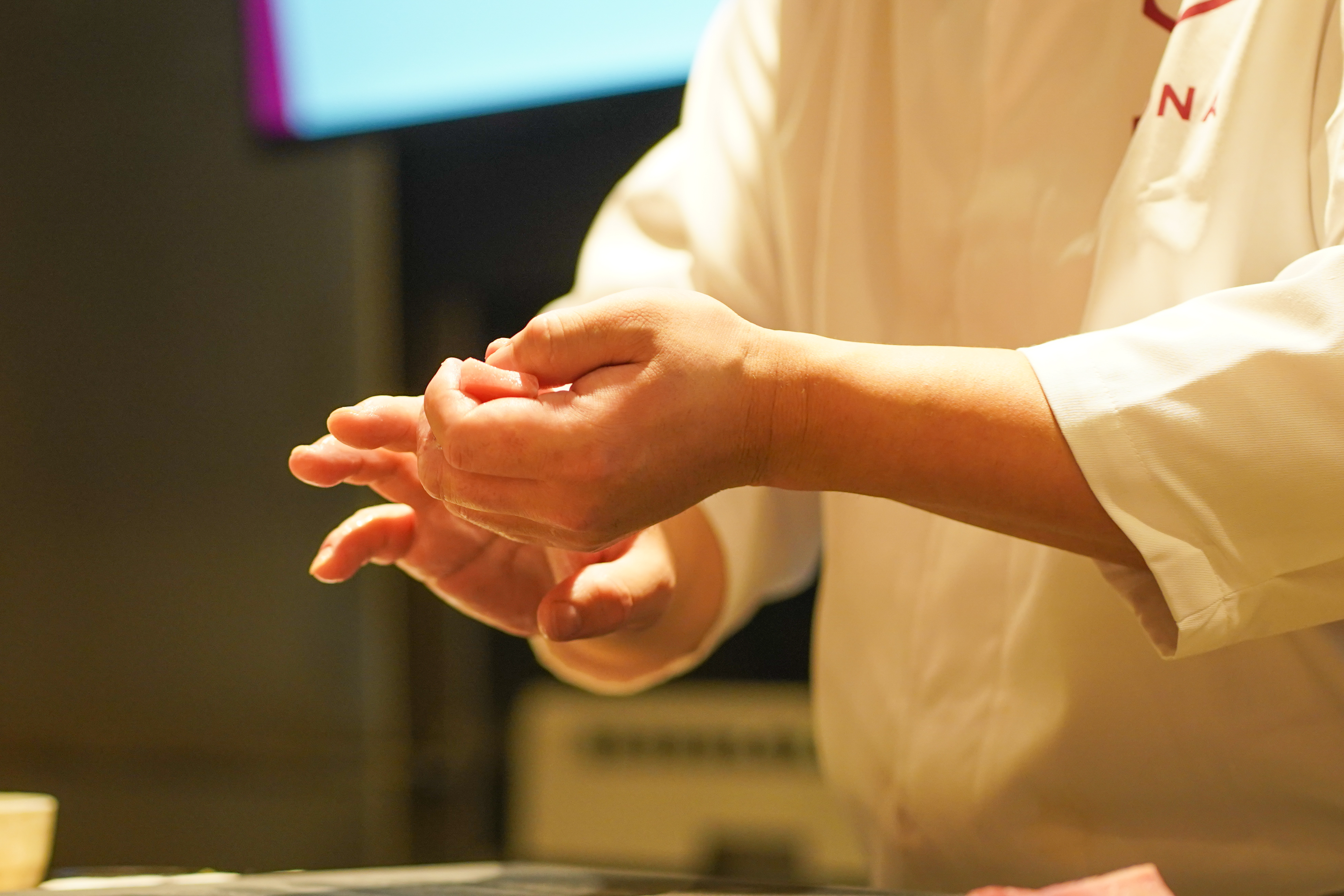
What kind of fish is being used? How has it been prepared? What techniques does the chef use when shaping each piece?
All of these details are essential to enjoying sushi.
However, during an omakase course, guests spend time not only eating each piece but also waiting for the next one to be served.
We believe that these moments between each piece are also part of the overall experience.
At REONA, we do more than simply serve sushi. We explain ingredients and Japanese food culture, incorporate small quizzes, and invite guests to compare different types of sushi.
One topic that guests particularly enjoy learning about is the different cuts of tuna.
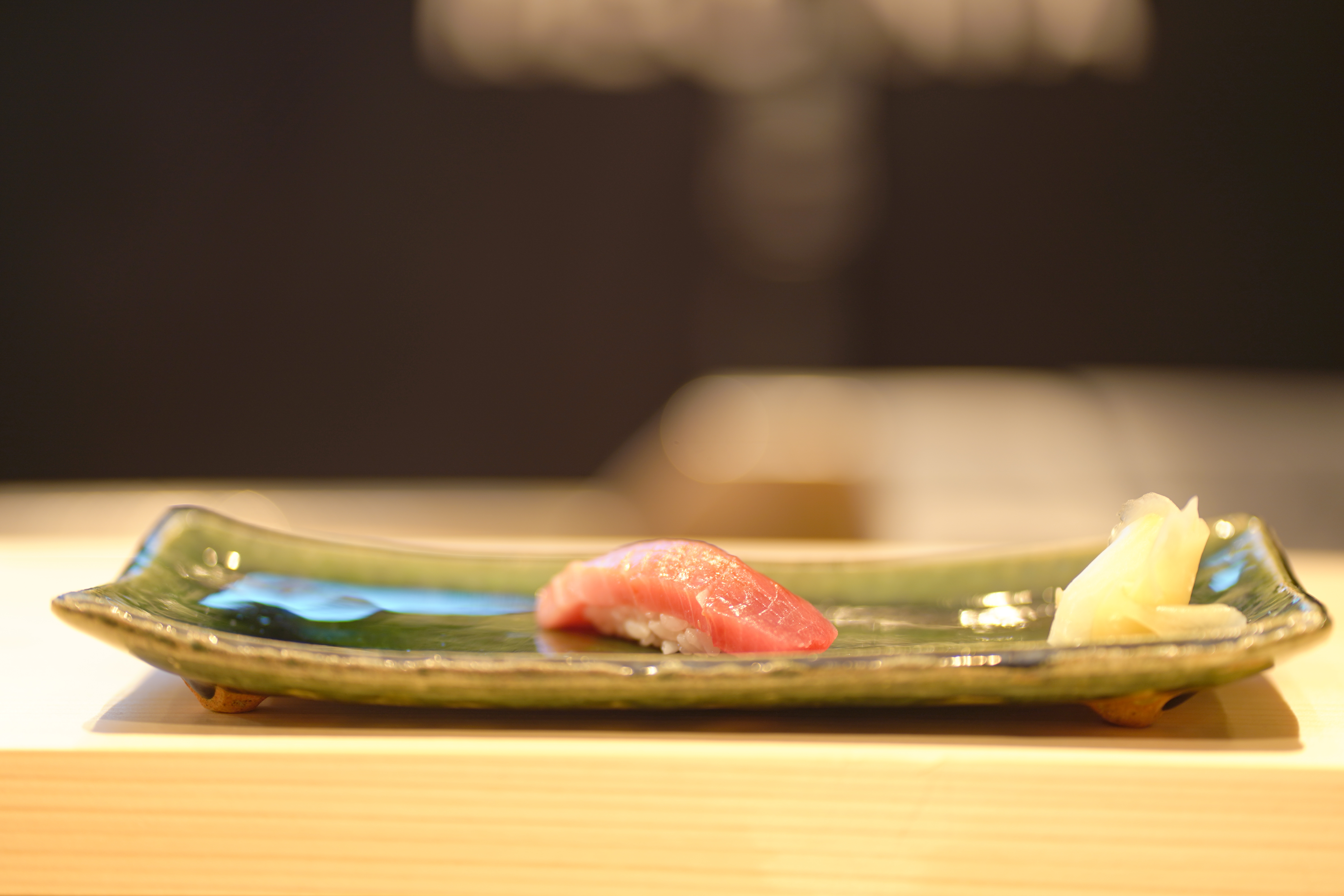
What is the difference between toro and otoro? What different cuts of tuna are there?
Even something as familiar as tuna can offer a completely different experience when you understand the characteristics of each cut.
When we explain these differences, many guests are surprised to discover just how many different cuts there are.
Comparing different preparations is another moment that often gets guests excited.
For example, we might serve hirame (flounder) alongside kombu-jime hirame, which is flounder cured with kelp.
Even when using the same fish, the flavor and texture can change significantly depending on how it is prepared.
When guests try them side by side, the difference can be much more noticeable than they expected.
Sometimes, guests are so surprised that they even ask us, "Are these really the same fish?"
Their reactions make it clear how much they enjoy discovering these differences.
Some things are difficult to notice when simply eating sushi without knowing anything about it. Learning about the preparation or comparing different versions can turn an ordinary bite into a new discovery.
The same piece of sushi can leave a very different impression depending on whether you know the story behind it.
That said, we do not believe that continuously sharing information with guests is necessarily the best approach.
Some people simply want to enjoy their meal. Others prefer to watch the chef at work. Some enjoy asking lots of questions, while others would rather focus on the sushi in front of them.
That is why the amount of explanation we provide and the timing of our conversations are just as important.

Our purpose is not to share information for the sake of sharing it. It is to help guests enjoy the sushi in front of them even more.
Enjoying one piece of sushi. Talking about its flavor. Discovering something new. Then looking forward to the next piece.
When these moments flow naturally into one another, the entire meal becomes an experience in itself.
When we interact with guests, we often begin to understand what they are most looking forward to through the conversations we have.
Some guests ask detailed questions about sushi, while others enjoy talking about their travels in Japan.
When families visit, conversations sometimes reveal what the children are particularly interested in.
These reactions provide valuable clues for us.
For example, guests who want to learn more about sushi may enjoy hearing more detailed explanations as we answer their questions.
If someone shows an interest in knives or the utensils used by sushi chefs, we might recommend Kappabashi Dougu Street in Tokyo, an area known for its shops selling professional kitchen equipment and cooking tools.
If the conversation turns to fish markets, we might ask whether they have visited Tsukiji and what they thought of the experience.
Conversations can naturally expand from sushi to Japanese food culture and travel.
We believe this is also one of the pleasures of spending time at a sushi counter.
On the other hand, there are times when it is better not to initiate too much conversation.
For example, guests visiting for business or friends meeting up after a long time may value the opportunity to talk with their companions more than anything else.
In those situations, rather than providing constant explanations, we try to offer information when there is a natural pause in the conversation or simply give guests a little more space.
Even when we provide the same explanation, different guests react differently. Something that one person finds fascinating may not be particularly interesting or necessary for someone else.
Of course, we cannot know exactly what every guest likes from the beginning.
We observe their reactions as we talk, adjust the way we explain things, and find the right balance as the experience progresses. It is an ongoing process.

I also previously worked in guest service at a hotel and at Tokyo Disneyland.
Through those experiences, I have come to realize that we cannot determine what kind of service someone wants simply based on their nationality or culture.
Just because someone is visiting from overseas does not necessarily mean they want to learn everything about Japanese culture.
Even among guests who appreciate having explanations in English, the level of detail they want varies from person to person.
I believe the important thing is not to put everyone into a single category, such as "this is how we should serve international guests."
Instead, we should pay attention to the person in front of us and think about what kind of experience would suit them.
Of course, it is impossible to understand everything about someone in a short amount of time.
Even so, by paying attention to small questions, facial expressions, and reactions during conversations, there are many things we can do to make their visit more comfortable and enjoyable.
Just as preparing sushi requires skill and attention to detail, creating a meaningful experience for guests also requires observation and thoughtful adjustments.
After the meal is over and guests leave the restaurant, what do we want them to remember?
We are, of course, always happy when someone tells us that the sushi was delicious.
Providing enjoyable food is, and always will be, the foundation of our work.
But we would be even happier if guests also discovered something new, gained a deeper understanding of Japanese sushi culture, or left with fond memories of interacting with the chef.
Personally, I am especially happy when guests mention our hospitality in their reviews.
For example, we once received the following comment:
"The staff were knowledgeable and we asked many questions! I cannot recommend this enough for people wanting a truly immersive sushi experience."
The guest appreciated not only the knowledge of our staff and the opportunity to ask many questions, but also how these interactions helped create an experience that allowed them to explore the world of sushi more deeply.
We also received this comment:
"A beautiful, comfortable experience and the care manager Moemi is incredibly experienced, easy to talk to and understanding."
This guest mentioned not only the experience itself, but also how comfortable it was to communicate with our staff and how well they felt understood.
Another guest even mentioned the emails they received before and after their visit:
"a special thank-you to Moe for her warm hospitality and clear English explanations throughout the experience. her emails before and after our visit were incredibly helpful."
It was particularly memorable for me that the guest appreciated not only the service and English explanations during the meal, but also the communication before and after their visit.
We have also received comments from guests who appreciated being able to enjoy the high-quality omakase experience they expected in Japan while receiving explanations in English, as well as guests who valued the consideration shown to their families.
"The staff provided English explanations and maintained the high quality omakase experience you'd hope for in Japan."
"Thoughtful hospitality for a family — highly recommend."
When I read comments like these, I am reminded that what guests remember is not necessarily limited to the taste of the sushi.

Of course, not every guest will leave with exactly the same impressions.
Even so, it is a great pleasure for those of us working in hospitality when something we have tried to communicate through the experience reaches our guests and they express it in their own words.
During a trip, people have opportunities to visit many different places and enjoy all kinds of food.
If there is a particular meal they still remember years later, perhaps it is not only the taste of the food that stays with them. They may also remember who they were with, what they talked about, what surprised them, and how they felt during that time.
That is the kind of experience we hope to create at REONA.
We want to be more than just a place to eat sushi. We want to be a place where guests can discover Japanese food culture through sushi, feel closer to the chef, and enjoy their meal from a perspective that may be different from what they are used to.
Achieving this does not necessarily mean adding more elaborate performances or special attractions.
It can be as simple as easing someone's concerns before their reservation, adjusting explanations based on their reactions, answering their questions thoughtfully, enjoying a conversation when they are interested, or respecting their need for a quieter dining experience.
Each of these things may seem small on its own. But we believe that together, they shape the overall impression guests take away from their visit.
We are a sushi restaurant, so naturally, we serve sushi every day.
But sushi is not the only thing we think about.
We think about how to make the entire time our guests spend with us more comfortable, enjoyable, and memorable, from the moment they enter the restaurant to the moment they leave.
We will continue to put care into every piece of sushi we serve, while also thinking about everything that surrounds it: the time, conversations, and experiences that make a visit to REONA special.