
Please note: Reservations are required; walk-ins cannot be accommodated.
Please note: Reservations are required.
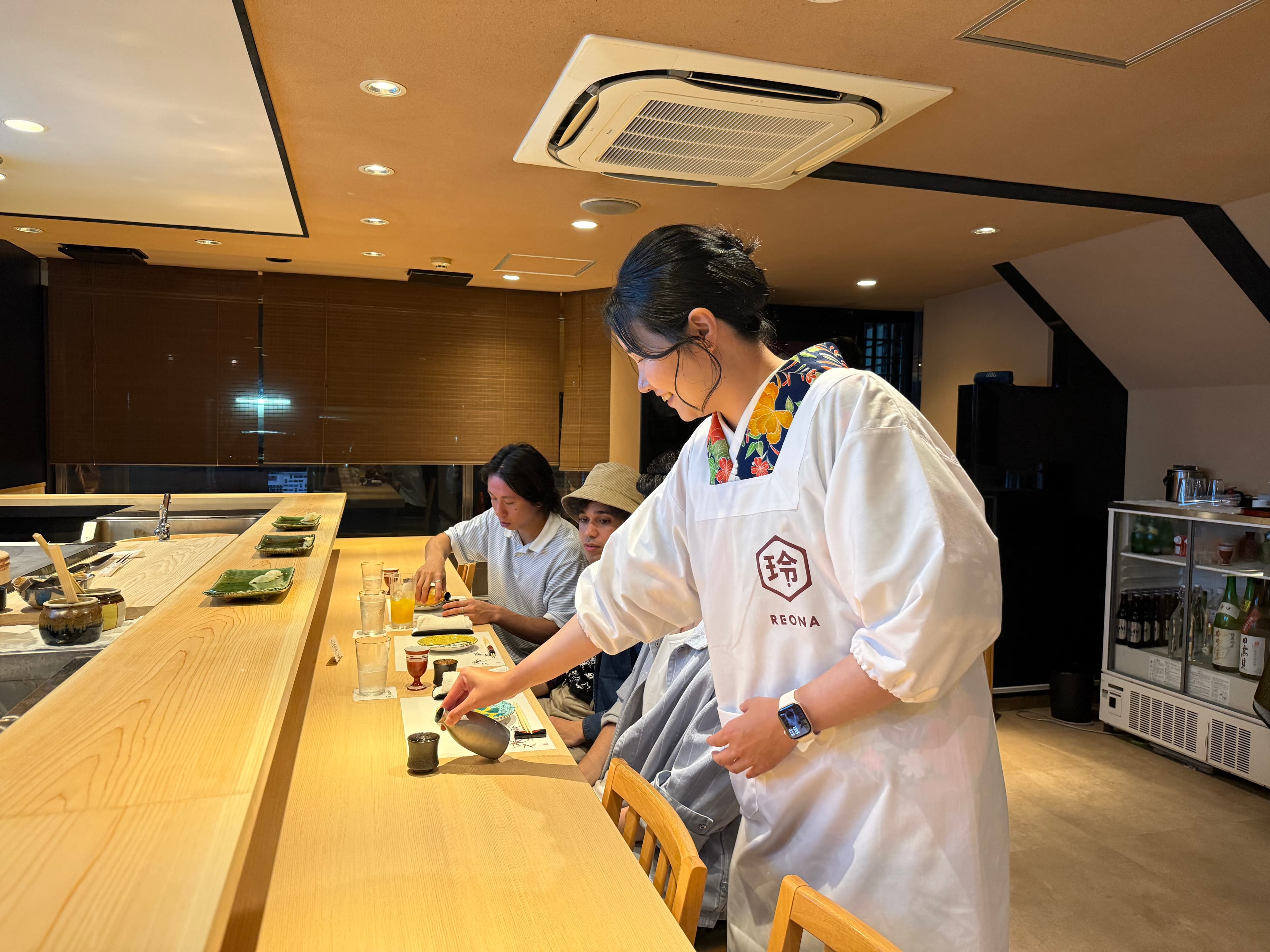

It has now been a year and a half since REONA Sushi Tokyo opened, and we’re grateful to have reached this milestone.
REONA was originally created for guests visiting Tokyo from overseas, with the aim of helping them do more than simply eat sushi. We want them to learn about sushi itself and discover how to enjoy it on a deeper level.
For that reason, welcoming international guests was never something unusual for us. From the very beginning, serving guests in English and welcoming people from around the world were simply part of what we do at REONA.
Over the past year and a half, we’ve welcomed guests from so many countries and regions, including the United States, the United Kingdom, Australia, France, Germany, Singapore, Hong Kong, and South Korea.
Through these experiences, the most important thing I’ve learned is not simply how to serve international guests.
It’s that rather than communicating only what REONA wants to share, we need to pay attention to what each guest wants to know and what they are looking forward to, then shape the experience around that individual.
That is what the past year and a half has really taught me.
REONA’s concept is “Understanding Sushi.”
We want guests to learn about Edomae sushi, not just eat it.
Why do we use a particular fish? Why do we prepare it in a certain way? What techniques are involved?
We want our guests to enjoy sushi while learning about the details behind it, too.
To support this experience, we provide explanations in English and guidance from our navigators.
However, once we started welcoming guests, I realized that people enjoy the experience in far more varied ways than I had imagined.
Some guests know a great deal about sushi and Japanese culture, while others are visiting Japan for the very first time.
Some have even never eaten sushi before.
I remember welcoming a three-generation family visiting from Guatemala. During their visit, I learned that the grandmother had never eaten sushi before.
So I took the time to explain what sushi is as a meal, the history of Edomae sushi, what sushi means to Japanese people, and how the authentic style of sushi served in Japan differs from the kinds of sushi commonly found overseas.
I explained each point one by one.
If someone is trying sushi for the first time while visiting Japan, I want them to feel comfortable and enjoy the experience without worrying about things they might not understand.
With that in mind, I remember taking extra care to explain everything to the family that day.

On the other hand, we also welcome guests who seem to know almost as much about sushi as I do, if not more.
One such guest was visiting from Hong Kong. They traveled to Japan frequently for business and told me they even had a second home in Tokyo.
Whenever they visited Japan, they would explore all kinds of sushi restaurants, from affordable conveyor-belt sushi spots to high-end sushi restaurants.
They were also very knowledgeable about Japanese geography.
For a guest like this, I could use a map to explain where a particular fish had been caught. I could also share more specialized recommendations, such as which regions are known for delicious tuna and why it is worth trying fish landed there.
Even when the goal is the same, helping guests learn about sushi, the level of detail they need can be completely different.
Experiencing these differences firsthand during service gradually changed the way I think about hospitality at REONA.
One of the most interesting things about working at REONA is that different guests respond to completely different parts of the same explanation.
When I talk about the history of sushi, some guests become curious and ask one question after another.
Others are less interested in the history and more curious about the sushi in front of them. They might ask, “How is this fish prepared?” or “Why is it eaten this way?”
Just recently, we welcomed a guest who was particularly interested in fish preparation.
They paid close attention to every movement the sushi chef made and had a detailed conversation with the chef about the preparation process.
Some guests are fascinated by Japanese food culture, while others simply want to enjoy the delicious food.
Some want to observe the chef’s techniques closely, while others prefer to enjoy their meal through conversation.
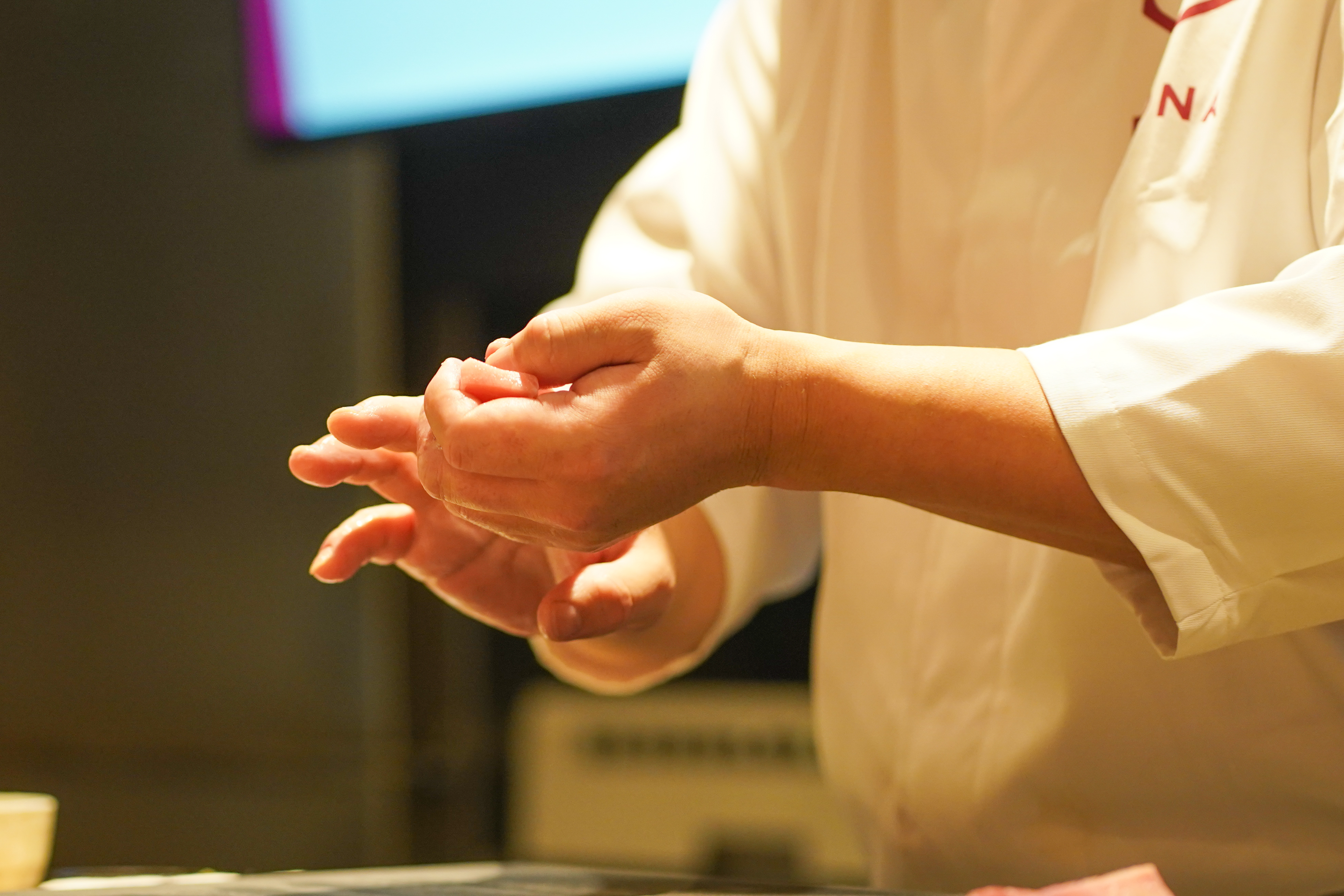
That is why we try not to make explaining things an end in itself.
We share what our guests want to know. When they ask a question, we answer it. When they show an interest in something, we may expand on the topic a little further.
On the other hand, if we can tell that they are simply enjoying their meal at that moment, we avoid interrupting them with unnecessary explanations.
I believe that these small decisions, made one after another throughout the experience, are what shape each guest’s time at REONA.
And this is not something that is uniquely necessary when serving international guests.
REONA is not my first experience working in hospitality, either.
I have previously worked at a five-star hotel and Tokyo Disneyland, where I served many different kinds of guests.
So I never really felt that I needed to provide a completely different style of service simply because someone was visiting from overseas.
Of course, cultural differences and food habits can sometimes play a role.
But these are not things we can determine based on nationality alone. We learn about each guest through our conversations with them.
One of the biggest differences I’ve noticed between working at REONA and my previous jobs is the amount of time we spend with each group of guests.
At a hotel or Tokyo Disneyland, we interact with guests in a variety of situations throughout the day.
At REONA, however, we spend more than two hours with each group, sitting across from them at the sushi counter.
That length of time makes the experience quite different from my previous roles.
Someone who seemed a little nervous when we first met might gradually begin asking questions as they enjoy their sushi.
A guest who was quiet at the beginning might start enjoying conversations with the sushi chef and navigator as the meal progresses.
On the other hand, even guests who are talkative from the start may become more focused on their food later in the experience.
Because we spend more than two hours together, we have the opportunity to observe each guest’s reactions and adjust our approach little by little as the experience unfolds.
The course may be the same, but the time each group spends with us is always different.
Since I started working at REONA, I’ve become much more conscious of this.
Compared with a year and a half ago, one of the biggest changes in my own approach is what I think about when serving guests.
When REONA first opened, I was strongly focused on making sure we communicated what REONA wanted guests to know.
I wanted them to learn about sushi and understand Edomae sushi. I wanted them to see the work that goes into each piece and discover at least a little of the depth of Japanese culture.

Of course, those feelings have not changed.
But as I’ve gained more experience, I’ve started thinking not only about what REONA wants to share, but also about what each guest wants to enjoy during their visit that day.
If a couple is celebrating an anniversary, I want them not only to enjoy the sushi but also to leave with wonderful memories of the occasion.
If a family visits with children, I want everyone to have a good time, not just the adults but the children as well.
If someone loves cooking, they might enjoy hearing more specialized details about how the fish is prepared.
On the other hand, if someone is unfamiliar with sushi, a simple, easy-to-understand explanation might make the experience more enjoyable than a highly technical one.
We need to stay true to what REONA wants to share, while adapting how we communicate it to each guest.
Realizing this has been one of the biggest lessons I’ve learned over the past year and a half.
Now that REONA has been open for a year and a half, I feel that we are still growing and evolving.
The questions and feedback we receive from guests, the inquiries they send before making a reservation, and the things we notice during service all contribute to shaping our experience, little by little.
Going forward, I want us to continue valuing the kind of restaurant we want REONA to be, while also listening carefully to what our guests actually experience when they visit us.
REONA will continue welcoming guests from all over the world.
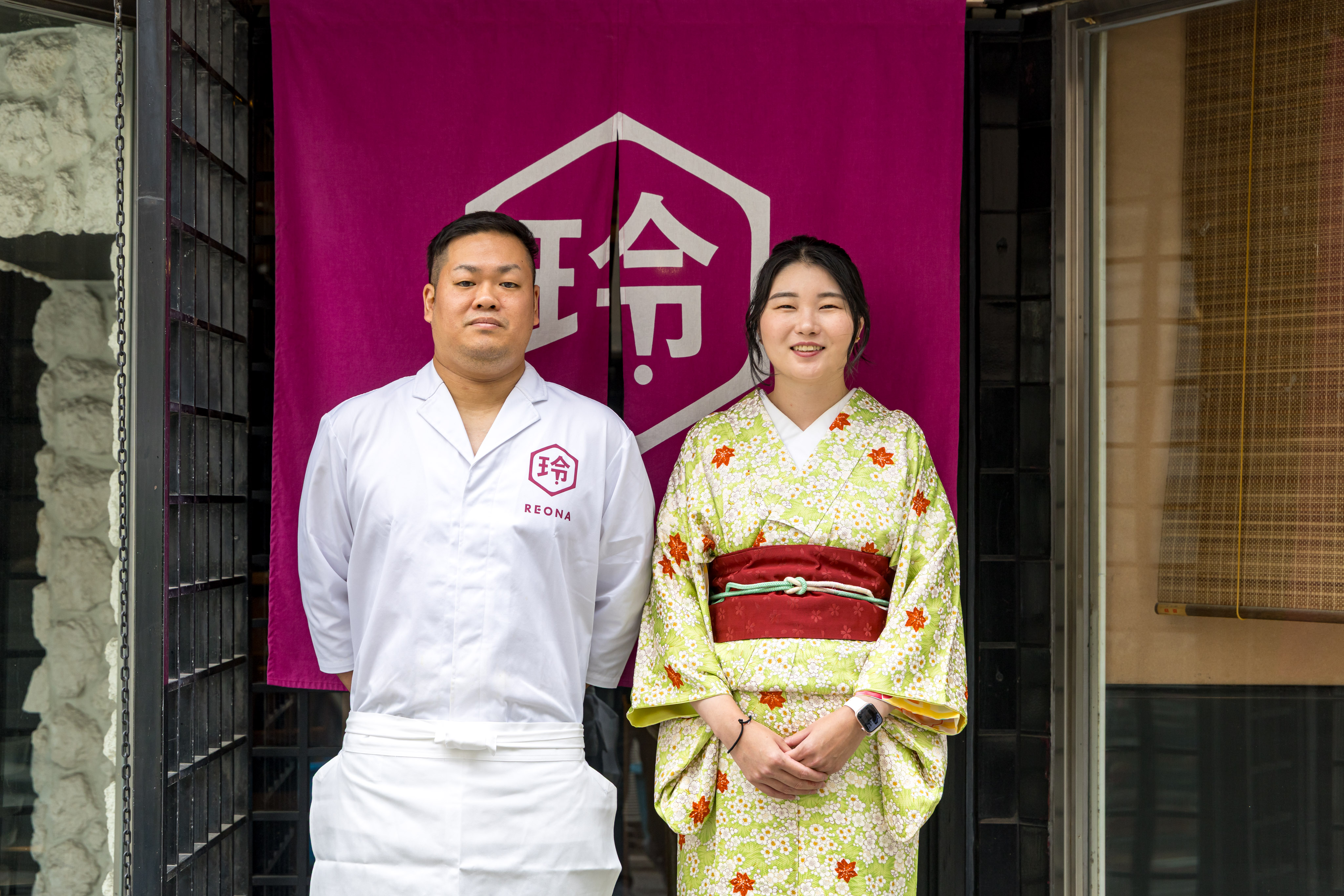
As we do, I want us to avoid making assumptions based solely on nationality or where someone comes from. Instead, we want to learn through conversation what each person is looking forward to and what they hope to get out of their visit.
We want to create a comfortable and enjoyable experience for each guest while also delivering the “Understanding Sushi” experience that is at the heart of REONA.
That is what I want us to continue prioritizing as we move forward.
What I’ve learned most over the past year and a half is not simply how to serve international guests.
It is that rather than repeating the same service in exactly the same way, we need to adapt it to each individual.
And instead of simply delivering a predetermined service, we should create the experience together with the guests sitting in front of us.
That is the most important lesson I’ve learned during my first year and a half at REONA.
I’m sure we’ll meet many more guests during REONA’s second year.
As we do, I hope we can continue learning from them, discovering things we didn’t know before, gaining new insights into our own service, and helping REONA grow little by little.