
Please note: Reservations are required; walk-ins cannot be accommodated.
Please note: Reservations are required.


At REONA Sushi Tokyo, we do more than make sushi.
We also explain sushi in English.
What kind of fish is it?
Why is it prepared this way?
What exactly is Edomae sushi?
What is the story behind the piece of sushi you are eating right now?
We share these things with our guests as they enjoy each piece of sushi.
At REONA, we have a concept called “Understanding Sushi.”
Rather than simply eating sushi, we want our guests to learn about sushi so they can enjoy each piece in front of them even more.
But why have we come to place so much importance on explaining sushi?
This time, I would like to share a little about the background behind how REONA became a sushi restaurant where we explain Japanese sushi in English.
When talking about the beginning of REONA, it is impossible to leave out MagicalTrip.
MagicalTrip is a company that has provided tours for international visitors to Japan, helping them experience Japanese culture and local neighborhoods.
Guests can walk through Tokyo, experience Japanese food culture, enjoy drinks, and discover different parts of Japan together with a guide.
The company also offers tours outside Tokyo, across Japan, and in Thailand.
So what is the connection?
Our chairman, Yasuhiro Suzuki, is also the founder of MagicalTrip.
And our Navigator, Moe, is still working as an active tour guide with MagicalTrip.
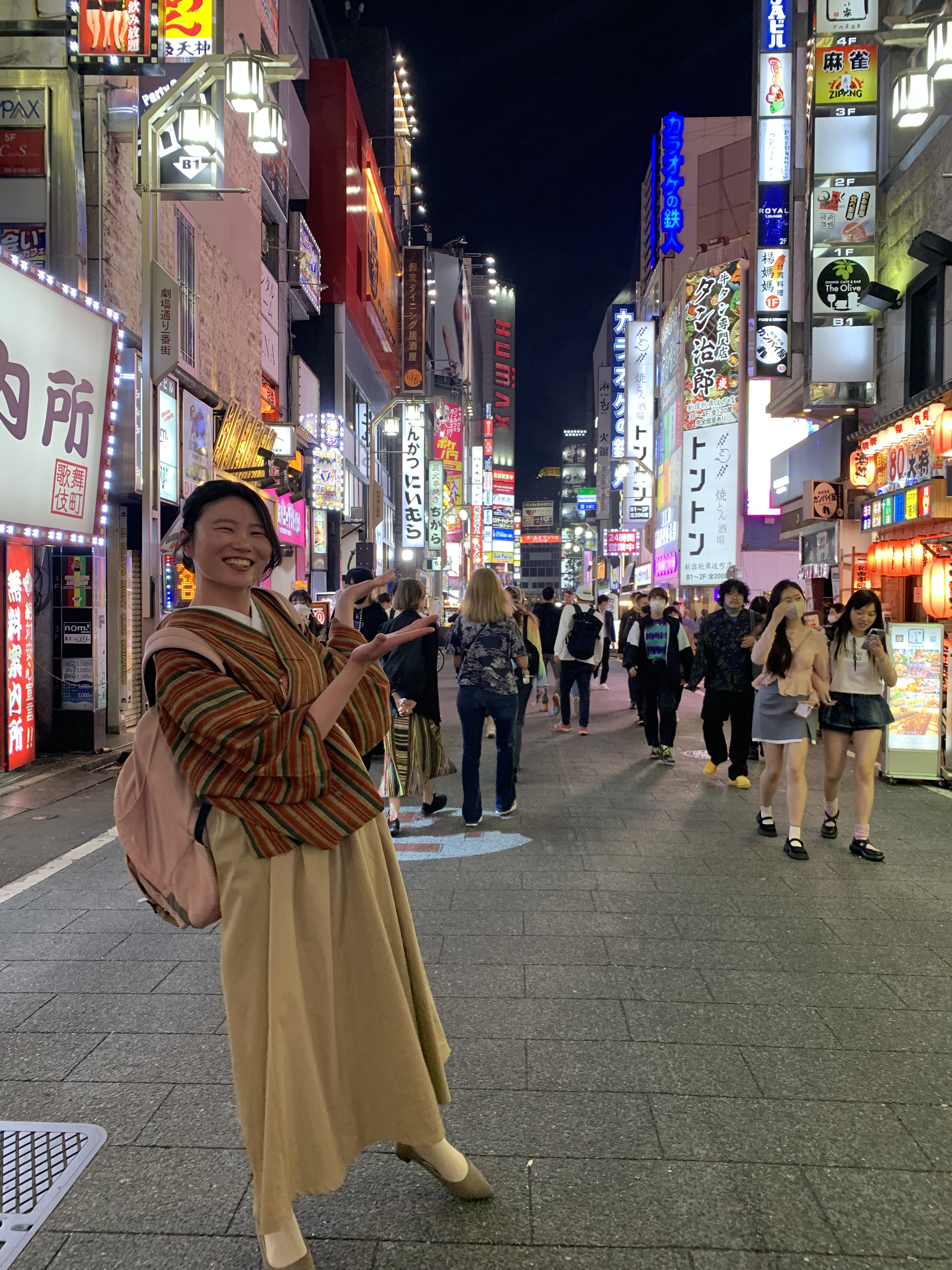
On MagicalTrip tours, guests do more than simply visit tourist attractions.
There are opportunities to eat, drink, and experience local culture.
And through these experiences, the questions guests ask are often much more detailed than we might expect.
They do not just ask, “What is this?”
They also ask questions like, “Why do people in Japan do it this way?” or “Has this been around for a long time?”
In other words, they want to understand the reasons and stories behind what they are seeing and experiencing.
When we answer those questions and see a guest respond with, “Oh, I see,” we started to realize how much value there is not only in having someone experience something, but also in helping them understand it.
Something that was previously just food can suddenly be seen as part of Japanese culture.
Instead of simply taking a photo and moving on, learning about the background can make the experience feel a little deeper.
After having these kinds of experiences again and again, we started to wonder if there was a way to share one particular part of Japanese culture on a much deeper level.
Tours allow guests to learn about Japan and its cities from a broad perspective.
But we could also spend more time exploring one particular subject in depth.
That is where we turned our attention to sushi.
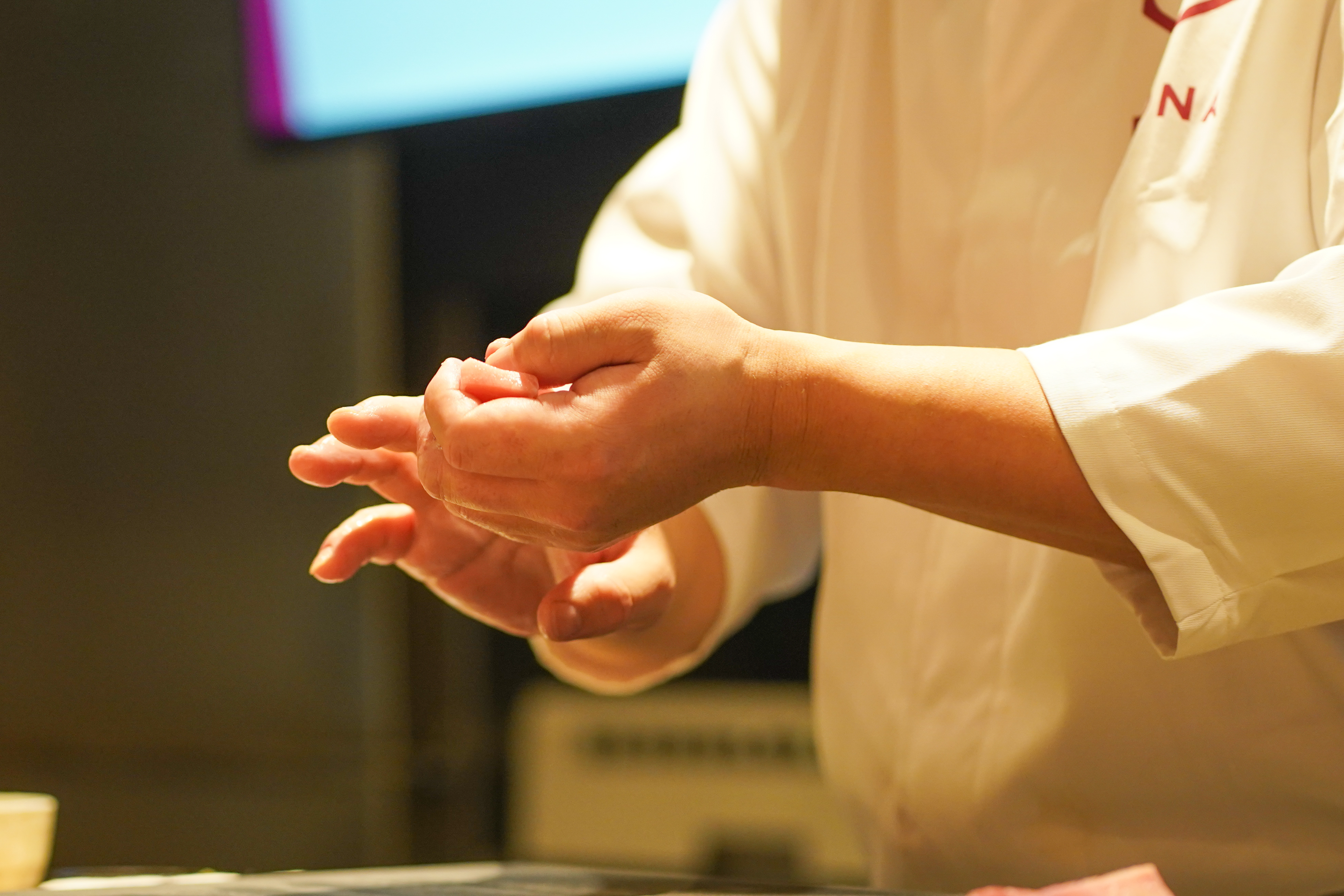
Sushi is one of Japan’s most well-known food cultures, and it is also extremely well known around the world.
That is why so many people can say, “I have eaten sushi.”
But when it comes to actually knowing about sushi, the story is a little different.
What exactly is Edomae sushi?
Why is each type of fish prepared differently?
Why can the same type of fish have such different flavors and textures?
There are surprisingly few opportunities to learn about these things.
This is where the idea behind REONA gradually began to take shape.
Of course, you can enjoy sushi without any explanation.
Eating something delicious is already a wonderful experience on its own.
In fact, I think many Japanese people enjoy sushi without needing any explanation at all.
For Japanese people, even if they do not know much about sushi itself, there is at least a shared understanding of what it means to eat sushi.
Many people have been to a conveyor belt sushi restaurant.
They may know the names of several types of sushi toppings.
Using soy sauce and wasabi is also something that is not particularly unusual for many people in Japan.
For guests visiting Japan from overseas, however, each of these things may be completely new.
That does not mean we think, “They are foreign guests, so we need to explain everything.”
Rather, we explain because there is a lot of room for people to enjoy sushi even more when they know a little about it, even though they can certainly enjoy it without knowing.
We also do not believe that there is one correct way to enjoy sushi simply because “this is what sushi is supposed to be.”
For example, if you do not know the name of the fish in front of you, you might simply remember it as “a piece of white fish.”
But if you know,
“This is a fish called ○○.”
“In Edomae sushi, this is how it is traditionally prepared.”
“This preparation allows you to enjoy this particular quality of the fish.”
then the same piece of sushi can sometimes feel a little different.

It is not only about the taste.
You also understand why it has been prepared that way.
Kohada is a good example.
Kohada is typically vinegared as part of its preparation.
This helps make its many small bones less noticeable when you eat it.
We might first tell a guest that kohada has a lot of bones.
Then, after they eat it, we can say, “Did you notice any bones? You didn’t, right? Here’s why…”
Many guests seem to enjoy this kind of little reveal.
It can lead to more questions.
“There really weren’t any bones.”
“How long do you marinate it in vinegar?”
And suddenly, the guest is not simply eating a piece of kohada.
They have also become interested in the technique of preparing fish with vinegar.
These are exactly the kinds of moments we find interesting.
And this is not something unique to sushi.
For example, when you see a traditional Japanese dish or a traditional craft, you might simply think, “That’s beautiful,” or “That looks delicious,” if you do not know anything about its background.
But once you learn a little about the history or ideas behind it, the way you see it can change.
I think that is also part of what makes travel so interesting.
You discover something you did not know.
And by learning about it, you begin to see things that you could not see before.
That is also what we are trying to do at REONA.
We are not trying to “teach” sushi.
We are giving guests information that can help them enjoy sushi more.
What they do with that information, and how they choose to enjoy it, is up to them.

However, that does not mean we should explain everything we know about sushi.
This is one of the most difficult parts of being a Navigator at REONA.
If we explained everything about one type of fish, from its history and fishing grounds to fishing methods, preparation, seasonality, and the chef’s approach, there would be no time left to actually eat the sushi.
On the other hand, if we explained nothing, it would not be the “Understanding Sushi” experience that REONA values.
That is why deciding how much to explain is also part of our job.
We watch the guest’s reactions.
We see what they are interested in at that moment.
We try to sense whether they want to hear more, or whether they would rather take their time and simply enjoy the food.
In reality, we do not know a guest’s interests from the beginning.
During the first few pieces, we pay attention to the kinds of questions they ask and how they respond to our explanations.
From there, we gradually get a sense of how to approach the rest of the experience.
Some guests ask more questions when we talk about fish.
Others become more interested when the conversation turns to Japanese food culture or their travels in Japan.
And some people simply want to focus on enjoying the food rather than listening to a lot of explanations.
Even when the course is exactly the same, what the Navigator talks about changes a little with every guest.
A Navigator is not simply reading a prepared script translated into English.
For some guests, casual conversation becomes a big part of the experience.
For others, we might spend more time talking about how a fish is filleted or how it is prepared.
For example, we recently welcomed a guest from Canada who loved preparing fish and cooking for others.
He even owned several Japanese kitchen knives because he was so interested in cooking.
For him, it was not simply about “coming to eat sushi.”
He was also very interested in how fish is handled.
So we talked in much more detail than usual about how the chef fillets fish, how much different types of fish cost in Japan, and how the preparation differs depending on the fish.

The same course can feel different depending on the guest, and the things we talk about can change too.
This is one of the things I personally find interesting about being a Navigator at REONA.
There are some basic things that we always explain.
For example, we try to tell every guest the name and characteristics of the fish, what kind of preparation is used in Edomae sushi, and how we hope they will enjoy each piece.
Beyond those basics, however, we adjust the conversation according to the guest.
The sushi chef prepares the food, while the Navigator explains the background behind it.
Together, those two elements create the REONA experience.
Especially for guests visiting from overseas, it is not unusual for them to have little knowledge of Japanese sushi culture.
That is why I also think it is important to create an environment where guests do not feel embarrassed about not knowing something.
It is okay to ask if you do not understand.
It is okay to ask about something that catches your attention.
And once you know a little more, we hope you can enjoy sushi in your own way.
That is what navigation means to us.
When people hear that we explain sushi in English for international guests, they may sometimes wonder whether we are changing Japanese culture to make it more suitable for people from overseas.
But that is not what we want to do.
We are not trying to change Japanese sushi culture for overseas guests.
Instead, we want to remove the language barrier so that they can understand the culture as it is.
There are many things that feel completely ordinary to Japanese people but are new to guests visiting from overseas.
Why this particular fish?
Why this order?
Why is it eaten this way?
Why is wasabi grated on sharkskin?
Why is sushi rice fanned and cooled to around body temperature?
We simply add some explanation from the Japanese side to help answer these questions.
That alone can make the distance between a guest and a culture feel much smaller.
Turning something into English does not mean that we need to turn Japanese culture into something else.
At the same time, when you actually try to explain sushi in English, you realize that some things that are easy to communicate in Japanese can be surprisingly difficult to explain in English.
For example, words such as “shimeru” or “shigoto o suru” are natural and familiar expressions to sushi chefs in Japan.
Simply replacing them with an English word does not always communicate what they actually mean in the context of sushi.
That is why a Navigator needs more than simple translation skills.
We need to think about how to explain the same idea in the clearest way for that particular guest.
The words we use may change, but that does not mean the thing we are communicating has to change.
In fact, we think it would be a shame if someone could not learn about a part of Japanese culture simply because they did not speak the language.
Of course, culture can be complicated.
One explanation cannot tell the whole story.
That is why, when I explain certain things, I often add phrases like, “There are several theories,” or “Long story short.”
When you research sushi, it is not unusual to find several different explanations rather than one definitive answer.
I think that is partly because sushi has existed for such a long time and has been shaped by many different people over the years.

That is why, rather than presenting one simple explanation as the “correct answer,” we try to explain different perspectives by saying things like, “There is also a theory that…”
What feels “normal” to Japanese people does not necessarily represent all of Japanese culture either.
So rather than telling our guests, “This is the correct answer,” we prefer to explain the background in a way that is easy to understand.
For example,
“This is one way of thinking about it in Japan.”
“This is how this is traditionally done in Edomae sushi.”
That is what we value when explaining Japanese sushi culture.
REONA does not aim to be simply a sushi restaurant where people can speak English.
We want our guests to learn a little about the sushi they are eating.
Then, because they know a little more, they can taste it again from a different perspective.
And by the time they leave, we hope they are thinking not only, “That was delicious,” but also, “Sushi is really interesting.”
The sushi chef who makes each piece and the Navigator who explains it through words.
Together, they create the sushi experience at REONA.
Learning a little about the techniques and background behind each piece of sushi.
That small act of “understanding” can make a meal much more interesting.
That is what we mean by “Understanding Sushi.”