
Please note: Reservations are required; walk-ins cannot be accommodated.
Please note: Reservations are required.
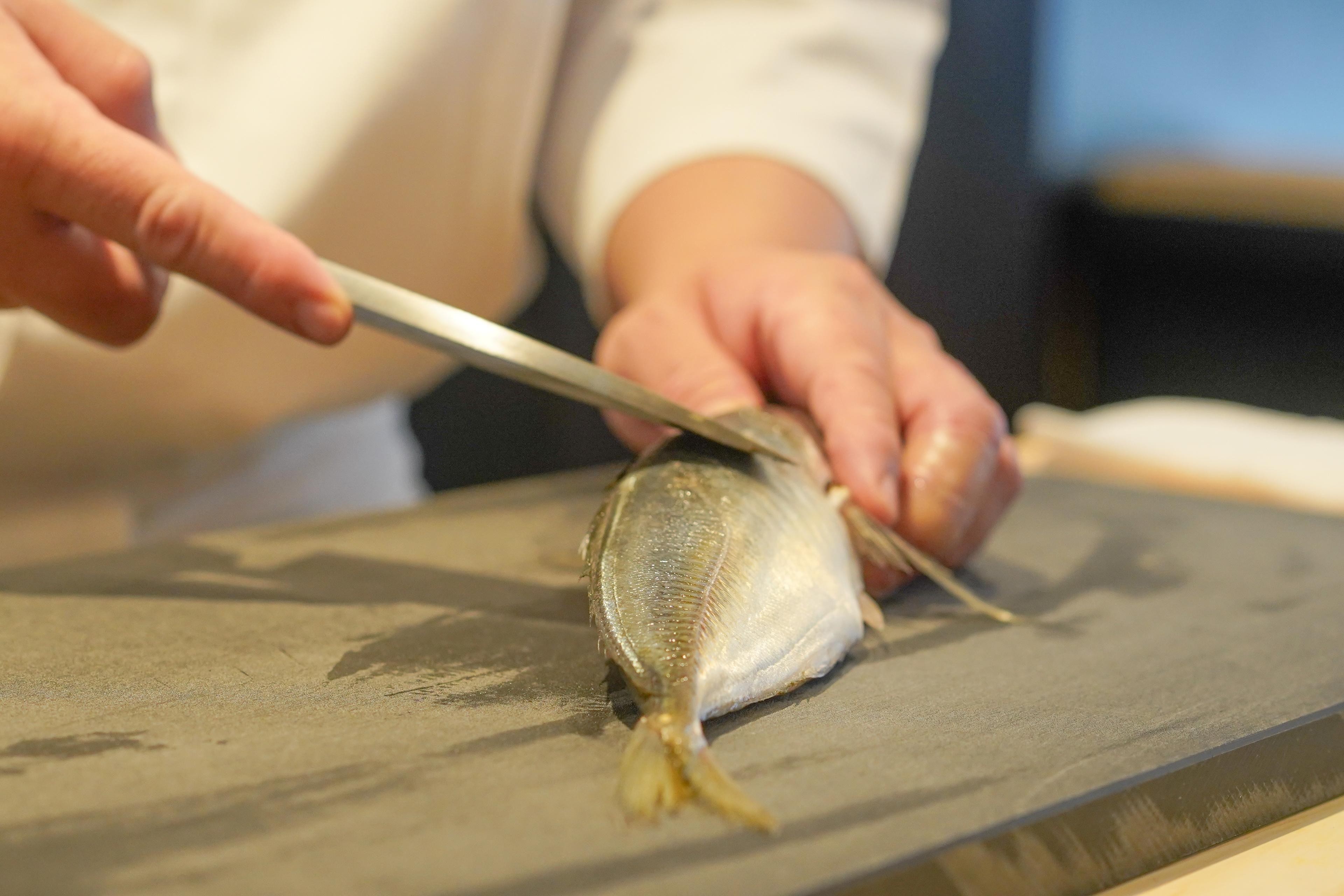

“What kind of fish is this?”
This is a question we sometimes hear from guests as they enjoy their sushi.
At REONA Sushi Tokyo, we welcome guests from around the world to experience traditional Edomae sushi at our counter.
Our sushi chef prepares each piece right in front of our guests, while our navigator explains the ingredients and preparation techniques in English, helping connect guests with the chef and encouraging conversation throughout the meal.
When a guest asks us about the name of a particular fish, the first step is simple.
“This is sea bream.”
Or, “This is amberjack.”
We tell them the name of the fish and answer their immediate question.
Of course, that alone is enough to satisfy their curiosity. Learning the name of an unfamiliar fish is also part of the enjoyment of trying sushi.
However, through our interactions with guests, we have come to realize that telling them the name of a fish does not necessarily mark the end of the conversation.
In fact, that is often where things get interesting.
“Where was this fish caught?”
“Why did the chef choose this particular fish?”
“How was it prepared?”
“How large does this fish usually grow?”
“It looks similar to mackerel. Are they actually related?”
What begins with one question can gradually lead to many more. We often encounter these moments at our sushi counter.
Perhaps learning the name of a fish is just the beginning of understanding sushi.
After introducing a fish, we sometimes go on to explain where it comes from and how it has been prepared before being served.
One example is sea urchin, or uni.
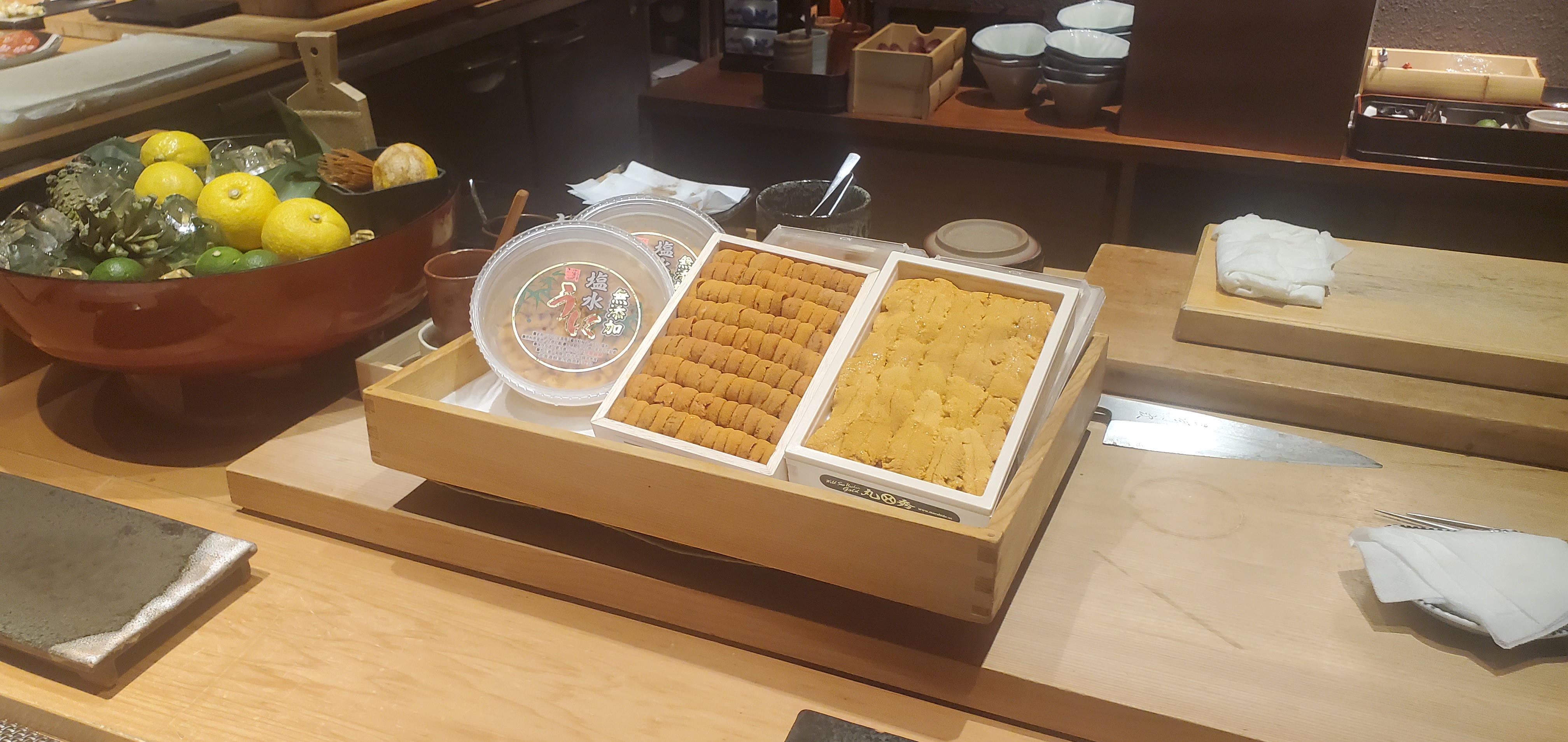
At REONA, we sometimes invite guests to compare sea urchin from different parts of the world with uni from Hokkaido, Japan.
Depending on the species and farming method, some Hokkaido sea urchins take three to four years to reach a stage where they are ready for shipment. When we share this with our guests, many become interested in learning more.
When you understand the time and effort involved in producing something, the rich flavor and natural sweetness of the uni may leave a different impression.
Rather than simply saying, “This uni is sweeter than the other one,” we explain why the differences occur, sharing stories about its place of origin and how it is produced.
This helps guests see the piece of sushi in front of them as more than just an ingredient. It becomes something connected to the ocean, the people who produce it, and the environment in which it grows.
There is also much more to sushi preparation than simply slicing a piece of fish and placing it on rice.
Depending on the type and condition of the fish, the chef may apply salt, cure it with vinegar, marinate it in soy sauce, or use other techniques. Each ingredient is carefully assessed, and the chef chooses the preparation method best suited to it.
When we share a little of this background, we sometimes notice a change in our guests' reactions.
“Why is this particular fish prepared this way?”
“Do you use the same technique for other types of fish?”
“Is this flavor coming from the fish itself, or does it come from the preparation?”
One explanation often leads to another question.
What may be part of our everyday work can be something entirely new to our guests.
Even for people who regularly enjoy sushi in their home countries, it is not always easy to find an opportunity to watch a chef work right in front of them and hear directly about the thought and techniques behind each piece.
Of course, not every guest wants to learn about ingredients and preparation techniques in detail. Some prefer to listen to explanations while enjoying their meal at a relaxed pace, while others are eager to ask questions and explore the subject more deeply.
That is why we pay attention to each guest's reactions and adjust how much we explain.
If a guest starts asking more questions, we try to share more details. If they seem more interested in simply enjoying their meal, we avoid unnecessary interruptions and give them the space to relax.
We believe the important thing is not to deliver every explanation we have prepared, but to let the conversation develop according to what each guest is genuinely interested in learning.
Conversations about sushi do not always end with the name of a fish or an explanation of how it was prepared.
Why do we use this particular fish? How did this cooking technique develop? Why does the chef serve this piece of sushi at this particular point in the course?
Following these questions can naturally lead to broader conversations about Japanese food culture.
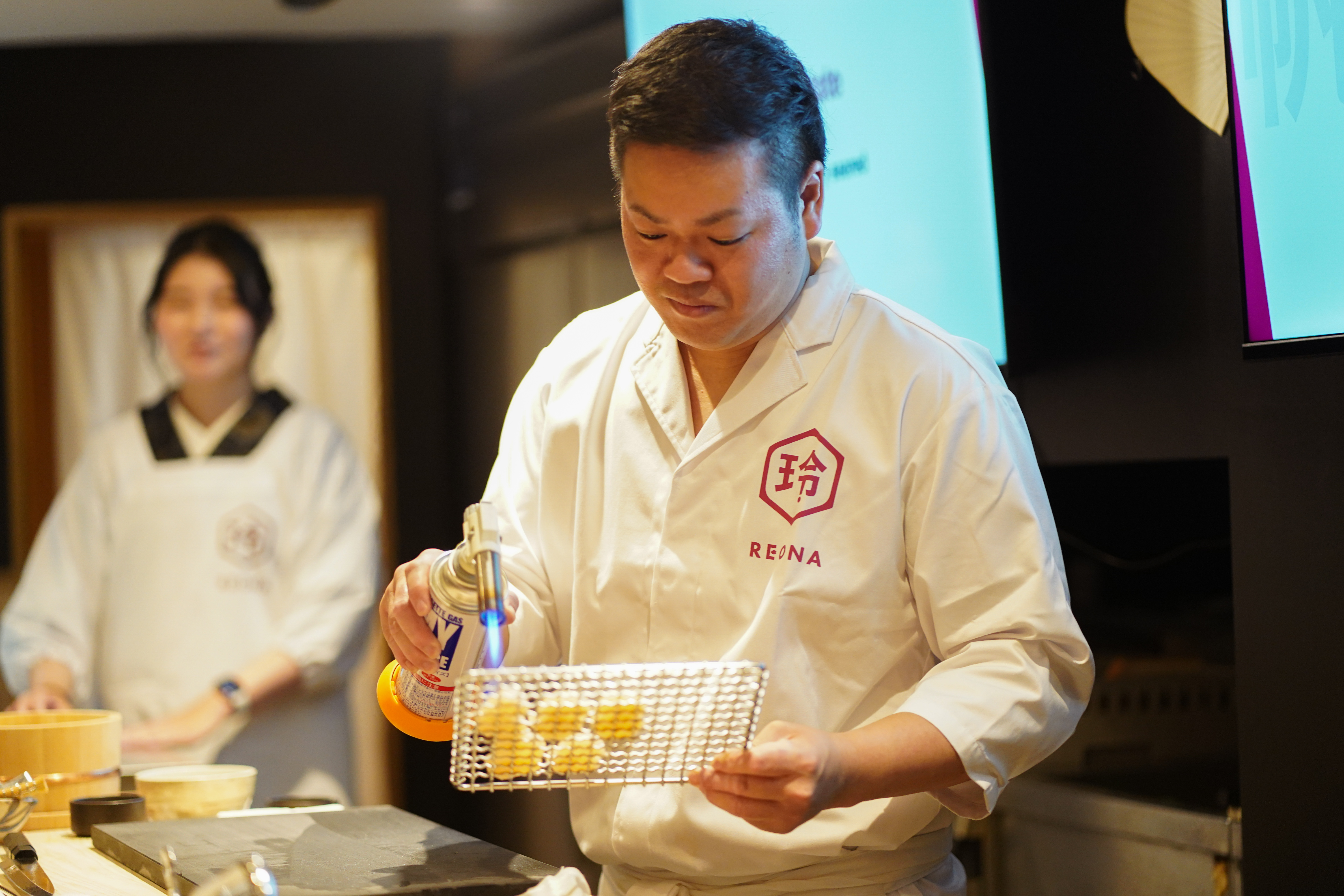
Edomae sushi has a long history of techniques developed to bring out the best in each ingredient. Rather than simply serving ingredients as they are, sushi chefs have traditionally applied various methods to make them more enjoyable.
Before modern refrigeration became widely available, people needed different ways to preserve fish while maintaining its quality. Techniques such as curing fish with vinegar, marinating it in soy sauce, and simmering it were closely connected to these practical needs.
Today, advances in refrigeration and transportation allow ingredients from all over the world to reach our tables.
Even so, the preparation techniques passed down through generations of Edomae sushi chefs remain an important part of the tradition.
Of course, modern Edomae sushi is not simply about preserving old techniques exactly as they were. Chefs continue to work with the ingredients available each day, carefully assessing their condition and preparing every piece accordingly.
One example that allows guests to experience the difference preparation techniques can make is flounder.
At REONA, we serve both fresh flounder and flounder that has been prepared using kombu-jime, a traditional technique in which fish is cured between sheets of kelp. Our kombu-jime flounder is prepared over a period of two days.
“We have cured this flounder with kelp for two days.”
When we explain this, guests are often surprised.
“Two whole days?”
Then, after tasting both versions, they are sometimes surprised all over again.
“Are these really the same fish?”
This is a reaction we hear quite often.
Even when the fish is exactly the same species, the flavor, texture, and aroma can change depending on how it is prepared.
Of course, guests can enjoy the sushi simply because it tastes good, even without knowing anything about the preparation. However, understanding that the chef has spent two days preparing the flounder can make discovering the differences between the two versions even more interesting.
Learning how much time and skill the chef has invested in a single piece is part of what makes dining at a traditional sushi counter special.
Through conversations like these, guests' interest can gradually expand beyond sushi itself and into Japanese food culture.
They may become curious about the importance of seasonal ingredients, the techniques used to bring out the natural qualities of each ingredient, or the chef's approach to preparing food for the people who will enjoy it.
Learning about sushi can also become an opportunity to discover the broader philosophy behind Japanese cuisine.
Exploring Japanese food culture through a single piece of sushi.
That is another special pleasure of enjoying sushi at the counter.
We do not believe that you need to have extensive knowledge of food to enjoy a meal.
You can enjoy delicious sushi without knowing the names of the fish. You can appreciate its flavor without understanding the techniques used to prepare it.
Even so, there is no doubt that learning about the background of what you are eating can broaden your enjoyment of the experience.
Take nodoguro, also known as blackthroat seaperch, for example.

A guest once told us that they had tried to buy nodoguro in Canada and were quoted a price of 500 US dollars.
Hearing a story like that naturally raises expectations for the piece of nodoguro that is about to be served.
Nodoguro is known for its rich, fatty flavor, and many guests are surprised by how delicious it is when they try it.
Furthermore, it is not as widely distributed overseas as it is in Japan, so depending on the country or region, it can be quite difficult to find.
Understanding how rare the fish is and what makes it valuable can increase the anticipation before tasting it and make the experience even more memorable.
Of course, a higher price does not automatically mean something tastes better, and a rare ingredient will not necessarily suit everyone's preferences.
However, learning about the background of an ingredient can help us appreciate aspects of it beyond its flavor alone.
Think about a single piece of sushi placed in front of you. If you eat it without knowing anything about it, your reaction might simply be, “That was delicious.”
But what if you knew where the fish came from, what condition it was in, and why the chef chose a particular preparation technique?
You might pay closer attention to its aroma, texture, and the way its flavors develop as you eat it.
Having some knowledge can help you notice things you might otherwise have overlooked. We believe that is another way to enjoy food.
At the same time, what we value is not simply sharing knowledge with our guests in a one-way conversation.
Guests ask questions about things they are curious about, we answer them, and those answers lead to new conversations. We hope that these interactions themselves become part of what makes the sushi experience enjoyable.

At REONA Sushi Tokyo, we believe that enjoying sushi is about more than simply eating. We want our guests to discover more about sushi through conversations with the chef.
Our role as navigators also goes beyond simply translating English and Japanese.
We help guests understand the thought and intention behind the chef's work, connect their questions and interests with the chef, and create opportunities for meaningful conversations between them.
Even if it all begins with a small question like, “What kind of fish is this?”
That one question might lead to a conversation about where the fish comes from, how it is prepared, and eventually, the wider world of Japanese food culture.
We would be delighted if our guests could enjoy this kind of experience during their time with us.
There is no single correct way to enjoy sushi.
You can simply enjoy eating it. You can focus on the chef's techniques. You can learn about the ingredients, their origins, and the history behind them.
And, of course, asking questions whenever something catches your interest is another wonderful way to enjoy the experience.
A small conversation that begins with a single piece of sushi.
Perhaps that conversation can make the meal in front of you just a little more special.