
Please note: Reservations are required; walk-ins cannot be accommodated.
Please note: Reservations are required.
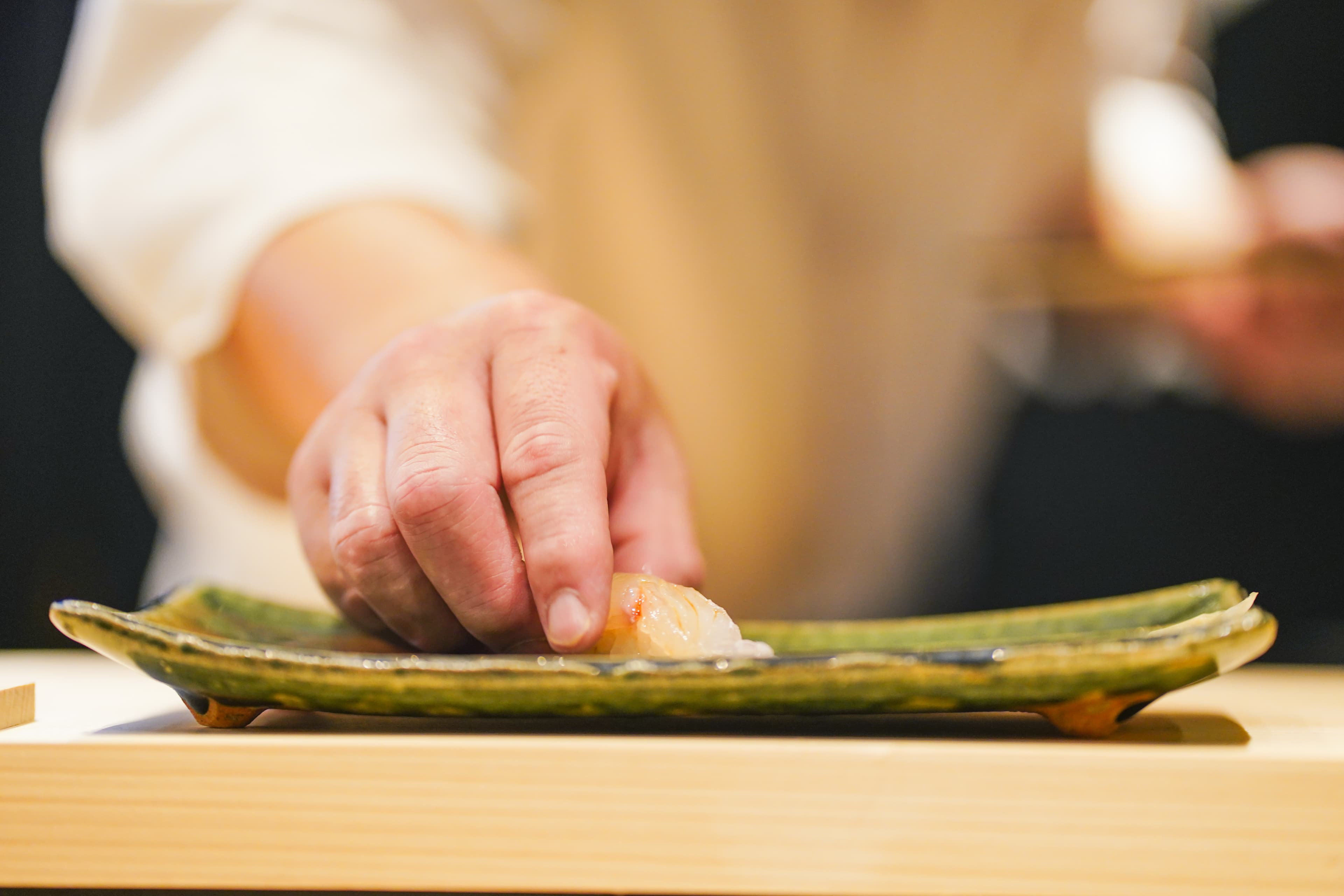

When searching for omakase sushi in Tokyo, you will find restaurants offering courses for under ¥10,000, while others charge ¥20,000, ¥30,000, or even more.
They are all called “omakase sushi,” so why is there such a wide difference in price?
When people think of high-end sushi, they may assume that the price reflects expensive ingredients or the skill and reputation of the chef.
Of course, these are both important factors.
However, one thing worth understanding when choosing an omakase sushi restaurant in Tokyo is that the price you pay is not necessarily determined solely by the number of pieces you eat or the types of fish served.
The ingredients, the preparation involved, the chef’s skills, the time you spend at the counter, and whether you have the opportunity to learn about the food all contribute to the experience.
It is the combination of these elements that creates an experience unique to each restaurant.
In this article, I will explain why omakase sushi prices vary so widely in Tokyo and what to consider when choosing a restaurant beyond the price itself.
When comparing omakase sushi restaurants in Tokyo, the first thing most people look at is the course price.
However, there are several reasons why prices differ.
One of the main factors is the type and quality of ingredients used. Courses featuring premium tuna, sea urchin, and other rare seafood tend to have higher ingredient costs. Prices can also fluctuate depending on the season and the availability of ingredients.

The time and effort required for preparation, the chef’s experience, the restaurant’s location, the number of seats, and the level of service provided can also affect operating costs and pricing.
This is particularly true of small sushi restaurants with limited counter seating. The number of guests they can accommodate at one time is limited.
They still need to cover the costs of ingredients, preparation, staff wages, rent, and other operating expenses while serving a relatively small number of guests.
Even among restaurants in the same price range, however, what they prioritize can vary considerably.
Some restaurants may build their omakase courses around rare ingredients and premium seafood.
Others may focus on traditional Edomae sushi techniques or the experience of spending time at a counter, close to the chef.
Some also put considerable effort into the overall dining experience, including drink pairings, explanations of the dishes, and attentive service.
In other words, when comparing omakase sushi prices in Tokyo, it is worth looking beyond which restaurant uses more expensive ingredients and considering what each restaurant values most. Doing so can change the way you approach choosing a restaurant.
I also visit high-end sushi restaurants on special occasions, and I have found that experiences can vary enormously, both within the same price range and across different price ranges.
At some restaurants, the chef works quietly and concentrates intently on making each piece of sushi. At others, the chef actively engages with guests and explains the sushi in such detail that you might even say they go a little overboard.
I have visited restaurants where the service was excellent, but the quality of the ingredients did not quite meet my expectations despite the high price. On the other hand, I have also been pleasantly surprised by relatively affordable restaurants where I thought, “I can't believe I'm getting something this good at this price!”
One restaurant that particularly stands out in my memory is a small Edomae sushi restaurant at the northeastern edge of Tokyo.
It had just five counter seats, but the chef and his wife welcomed us warmly and took the time to explain each piece of sushi. We had a wonderful time there.
The bill was around ¥35,000 for two people.
I imagine that eating Edomae sushi of a similar quality in Ginza could easily cost twice as much.
I remember how satisfying the experience was, especially considering the relatively reasonable price.
When people think about sushi, many naturally focus on the fish itself.
Of course, the quality of the fish matters.
However, the taste of sushi is not determined solely by the type or price of the fish.

In Edomae sushi, chefs use a variety of techniques to bring out the best in each ingredient.
These include curing fish, applying salt, marinating it in vinegar, soaking it in soy sauce, simmering it, steaming it, and searing it.
These techniques are not applied in the same way to every ingredient. Chefs choose their approach according to the type and condition of the fish and the flavor they want to achieve.
Some fish are best enjoyed as they are, while others develop a more pronounced flavor through careful preparation.
One classic example is zuke, a technique in which lean tuna is marinated in soy sauce. It is one of the signature techniques of Edomae sushi.
The purpose is not simply to add seasoning. By considering the condition and flavor of the fish during preparation, the chef can improve the overall balance of the piece, including how the fish pairs with the sushi rice.
Conger eel, known as anago, is another ingredient whose flavor and texture can vary depending on how it is simmered, seasoned, and finished.
This work is not limited to the moment the chef shapes the rice and places the fish on top in front of you.
It also includes the hours spent preparing ingredients before service and the judgment required to assess their condition. Much of this work takes place out of sight of the guests at the counter.
Incidentally, I hear that preparing conger eel is particularly labor-intensive. According to one of our chefs, it is the ingredient he least wants to work with because it takes so much effort to prepare. Haha.
Sushi rice is another essential component of sushi. The way the rice is cooked, the vinegar mixture, the temperature, and how well it complements the fish can all influence the overall taste of each piece.
At higher-priced omakase sushi restaurants, the course is not necessarily built around a selection of expensive seafood alone. Many chefs carefully construct the entire menu through their techniques and the work that goes into each ingredient.
Of course, a more expensive omakase course will not automatically suit everyone's tastes.
Your ideal restaurant may depend on whether you want to enjoy rare ingredients, experience traditional Edomae techniques, or something else entirely.
When considering the price, it is worth looking beyond the types of fish on the menu and paying attention to the philosophy behind how the sushi is prepared and served.
The appeal of omakase sushi goes beyond the food itself.
At a sushi counter, you can watch the chef handle the fish, shape the rice, and prepare each piece of sushi right in front of you.
The movement of the chef's hands as they cut the fish, the amount of pressure used to shape the rice, and the timing of placing the fish on top are all details that might go unnoticed when you only see the finished dish.
At the counter, you can observe these details naturally as part of the dining experience.
Then, a freshly made piece of sushi is placed in front of you.
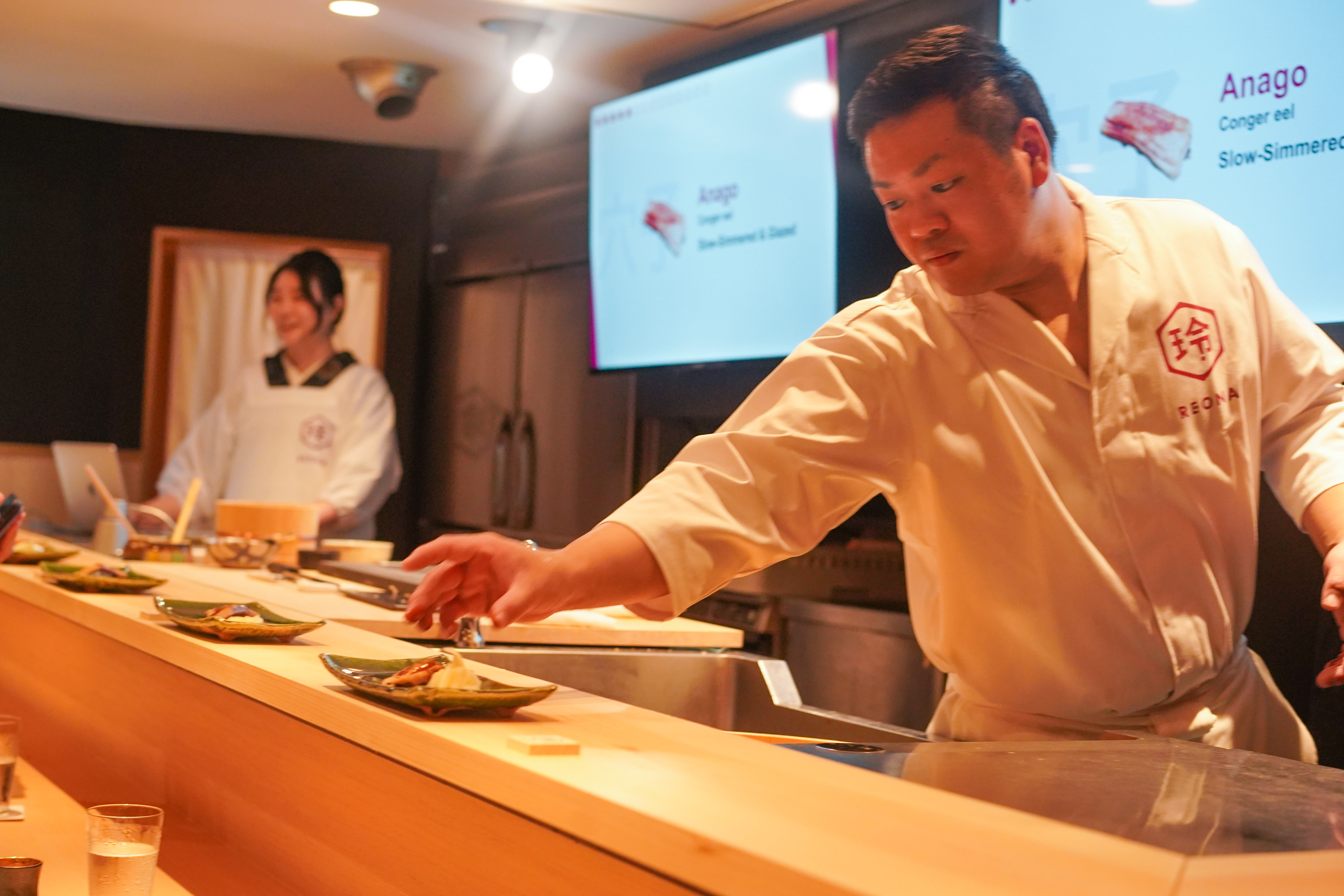
This entire sequence is part of what makes dining at a sushi counter so enjoyable.
Depending on the restaurant, conversation with the chef can also be a major part of the experience.
You might ask about the fish, learn about seasonal differences, or find out what techniques were used to prepare the piece in front of you. These conversations can reveal things you might never have noticed if you were simply eating the sushi without knowing anything about it.
One thing that overseas guests particularly enjoy is that the conversations are not limited to sushi.
They are often just as interested in hearing about everyday life in Japan from our chefs and navigators.
For example, they might ask, “How often do Japanese people eat sushi in their everyday lives?”, “What are the differences between food culture in the Kansai and Kanto regions?”, or “Do people in Japan really eat fugu? Is it good?”
The conversations often extend well beyond sushi itself.
Of course, not every sushi restaurant centers its experience around conversation.
Some prioritize allowing guests to focus quietly on the food, while others encourage interaction with the chef.
Neither approach is inherently better than the other. What matters is the kind of experience you want to have.
For visitors from overseas, in particular, eating sushi can also be an opportunity to experience Japanese culture.
Even if you are already familiar with sushi, learning about the different types of fish and how they are prepared may give you a new perspective.
For those who are less familiar with sushi, having the dishes explained as they are served can make it easier to explore the world of sushi and feel more comfortable trying something new.
As most of us can probably relate to, unless you are particularly adventurous, trying unfamiliar foods can sometimes make you hesitate.
From my daily interactions with guests, I feel that traditional Edomae sushi can present this kind of hurdle for some international visitors.
That is where explanations can make a difference. We talk about the characteristics of the fish, how it has been prepared, its place in sushi tradition, its flavor profile, and even what other types of fish its taste might resemble.
By sharing this information, we hope guests will feel more comfortable thinking, “Maybe I'll give it a try.”
Sea urchin, or uni, is one example.
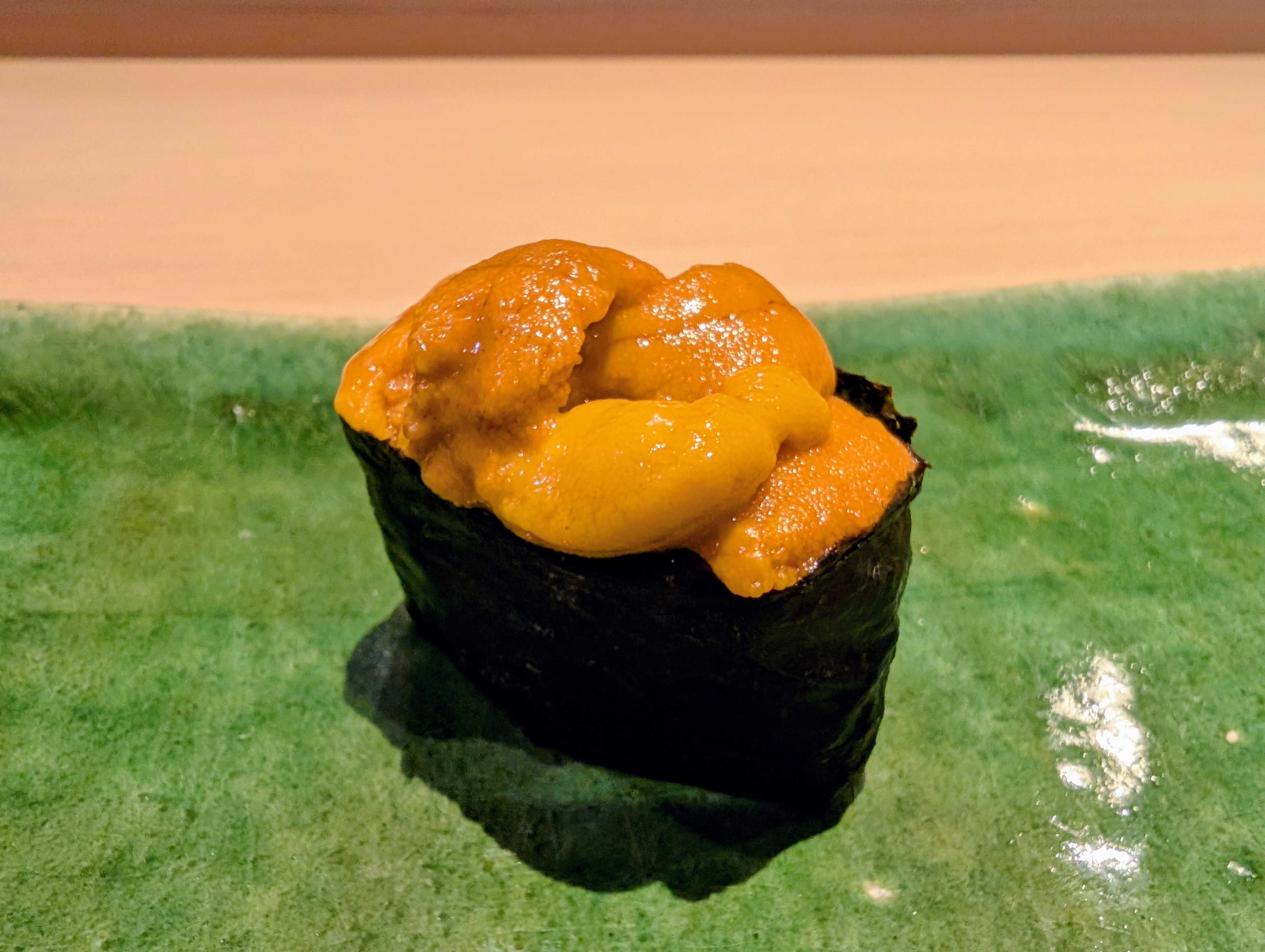
It is a well-known sushi ingredient, yet many people have never tried it because they find its appearance unappealing.
When explaining sea urchin to guests, I often talk about how to appreciate its flavor.
Even people who enjoy sea urchin generally do not eat it in large mouthfuls. Instead, you can savor a small amount together with the sushi rice, appreciating its oceanic aroma, meltingly creamy texture, and the sweetness that spreads across your palate.
Sea urchin may also be treated with substances such as alum during distribution and processing.
Depending on the treatment, its distinctive flavor and texture can change.
At REONA Sushi Tokyo, we use fresh raw sea urchin landed in Hokkaido, allowing guests to enjoy its natural sweetness and creamy texture.
Of course, some people still find that they do not like it.
Sometimes, I tell guests, “If you don't enjoy the taste of fresh Hokkaido sea urchin, it might be difficult to find another sea urchin that you enjoy more. Perhaps sea urchin itself just isn't for you.”
Hearing this, some guests reconsider and say, “Well, maybe I'll give Hokkaido sea urchin a try, at least.”
At REONA Sushi Tokyo, we believe that understanding the background of sushi is just as important as eating it.
How is sushi made? Why does it taste the way it does?
We want our guests to enjoy each piece more deeply by learning about these things as they eat.
Even when eating the same fish, your impression of it may change once you understand what goes into preparing it.
Enjoying the food, watching the chef at work, learning about sushi, and appreciating the time you spend at the counter are all part of the value of an omakase sushi experience.
So far, we have looked at some of the reasons why omakase sushi prices vary in Tokyo.
But when it comes to choosing a restaurant, what should you look for?
I recommend starting by thinking about what you want from your sushi experience.
Do you want to enjoy a generous selection of rare ingredients and premium seafood?
Are you interested in the preparation techniques and craftsmanship that define Edomae sushi?
Would you like to have conversations with the chef?
Or are you looking for a special experience that will become a memorable part of your trip to Japan?
Your priorities will influence which restaurant is right for you.
Before making a reservation, look beyond the course price and check the menu, the restaurant's concept, how long the meal takes, the available drinks, and whether explanations of the dishes are provided.
For example, if you are experiencing authentic omakase sushi for the first time, you might prefer a restaurant where you feel comfortable asking questions and can enjoy the meal while learning about the food.

On the other hand, if you are already knowledgeable about sushi and want to focus on the chef's techniques and the ingredients themselves, you may prefer a restaurant where you can enjoy the food quietly without much conversation.
The important thing is not to judge a restaurant solely by whether it is expensive or affordable.
Of course, your budget matters. There is no need to choose a restaurant that costs more than you are comfortable spending, and a higher price does not automatically guarantee greater satisfaction.
However, the price alone cannot tell you what kind of experience awaits you at a particular restaurant.
The key question is whether the experience you are looking for matches what the restaurant offers.
By choosing a restaurant with that in mind, you may discover qualities that are easy to overlook when comparing prices alone.
Tokyo has omakase sushi restaurants across a wide range of price points. Each has its own philosophy and its own priorities.
I encourage you to look beyond the price and consider the experience each restaurant offers when choosing one that suits you.
I hope your sushi experience in Tokyo becomes more than just a memory of eating delicious food. If it gives you the opportunity to discover something new about Japanese food culture, I believe it can become an even richer part of your journey.