
Please note: Reservations are required; walk-ins cannot be accommodated.
Please note: Reservations are required.


“Is Japanese sushi really this fast?”
I once heard this from an international guest during a conversation at REONA Sushi Tokyo.
That day, I was guiding a guest from overseas at the REONA sushi counter.
After we had gone through a few pieces of sushi, the guest asked me, “Is Japanese sushi really this fast?”
For a moment, I thought, “Fast?”
But after talking with them, I realized that what they really meant was, “Why does the food come out at such a quick pace?”
Thinking back, that particular reservation was for two people, and everything moved along at a good pace. The sushi was being served, drinks were being enjoyed, and conversation was flowing smoothly.
At first, I found the question a little surprising.
I am used to eating sushi in Japan myself, so to me, it feels completely natural to sit at a sushi counter, have one piece of sushi served to you, eat it, and then have the next piece served.
That kind of pace at a sushi counter is something I had never really questioned.
But for guests visiting Japan from overseas, it may not feel that way at all.
Of course, when they said “fast,” they did not literally mean that the experience felt rushed.
They were watching one piece of sushi come out, eating it, and then seeing another piece appear.
The chef was making sushi one piece after another right in front of them.
Seeing that whole sequence, I think they simply felt, “Japanese sushi has such a fast pace.”
That conversation made me realize that even when Japanese people and international guests are doing the exact same thing, “eating sushi,” they may have completely different expectations about how the time should flow.
For many of us in Japan, eating sushi at a counter means having sushi made for you and eating it right there in front of the chef.
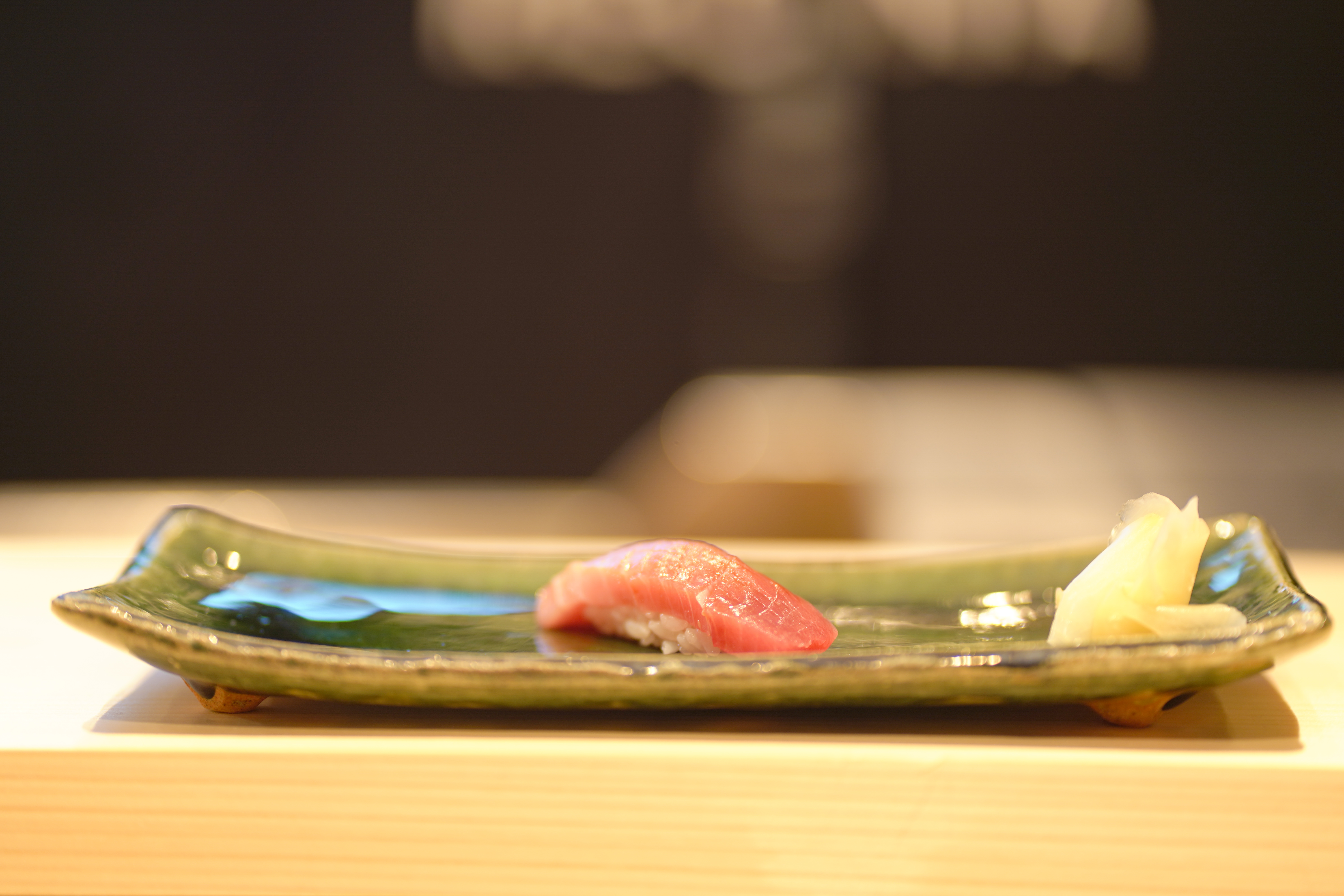
Especially with Edomae sushi, it is common to receive one piece at a time and eat it while it is freshly made.
So for us, there is nothing particularly unusual about sushi being served one piece at a time.
For some international guests, however, a dining style where several dishes arrive together and you enjoy conversation while eating may feel more familiar.
Of course, this varies from country to country and from person to person, and there are plenty of people overseas who are already familiar with sushi counters.
Still, for someone experiencing a traditional Japanese sushi counter for the first time, the speed and timing of the food itself can be part of the experience.
Especially with an omakase, you are not deciding what comes next.
The chef cuts the fish, shapes the sushi rice, and places one piece in front of you.
You finish it, and then the next piece comes.
This continues throughout the meal, so someone experiencing it for the first time may wonder, “Am I supposed to eat at this pace?”
There is also something about sushi that is difficult to explain with words alone: the “pace” of sushi.
Since I started working in this industry, I have become much more aware of that pace.
So why is sushi served one piece at a time?
Of course, every restaurant has its own approach, but at a sushi counter, an important part of the experience is eating the sushi just after it has been made.

The tradition of eating sushi one piece at a time at a counter also has a connection to the history of sushi.
According to materials from Japan’s Ministry of Agriculture, Forestry and Fisheries, nigiri sushi became popular during the Edo period as something ordinary people could easily eat at street stalls. Later, high-end sushi restaurants began to emerge.
The style of eating sushi at a counter that we know today also became established through this history.
The style of having a chef make each piece of sushi right in front of you may seem completely normal to us in Japan, but when you think about it, it is actually quite unique.
The temperature of the sushi rice, the condition of the fish, the way the knife is used, and the seasoning all matter.
The chef makes each piece and serves it immediately so that the guest can enjoy it at its best.
So rather than thinking of sushi as a meal where several dishes are served together, it may be more accurate to think of each piece as an individual dish that is completed and served one at a time.
At REONA Sushi Tokyo, we also let our guests experience this flow of Japanese sushi firsthand.
International guests sometimes ask us, “Why do you serve sushi one piece at a time?”
When that happens, I explain it by saying something like, “Because the chef wants you to eat each piece at its best. It’s served right after it’s made.”
The guest can actually watch the chef cut the fish, shape the sushi rice, season the piece, and place it in front of them.
Then they eat it right away.
For someone seeing this for the first time, I think this entire sequence is part of the Japanese sushi experience.
Once they understand that, guests who initially felt like they had to “eat quickly because the next piece is coming” sometimes begin to relax.
Eating sushi quickly is not the point.
You can take the time to enjoy each piece.
Just understanding that can change the atmosphere of the meal quite a bit.
What I find interesting is that once guests understand how it works, they often start enjoying the rhythm of the sushi themselves.
They look toward the chef, wondering what will come next.
A piece arrives, and they eat it.
They enjoy the flavor and have a little conversation.
Then the next piece arrives.
The time that initially felt “fast” gradually becomes time that simply flows around the sushi.
Another thing I have noticed from working at the counter is the difference in how quickly people eat.
In fact, even with the same 14-piece omakase course, the amount of time a meal takes can vary quite a lot from group to group.
Once, I guided a group of four guests from overseas, and every time they ate a piece of sushi, they asked questions such as, “What kind of fish is this?” or “Why is it seasoned this way?”
We spent quite a lot of time talking about each individual piece.
On another day, I had a group of the same size who simply enjoyed the sushi at a faster pace. Their explanations were shorter, and we moved on to the next piece more quickly.
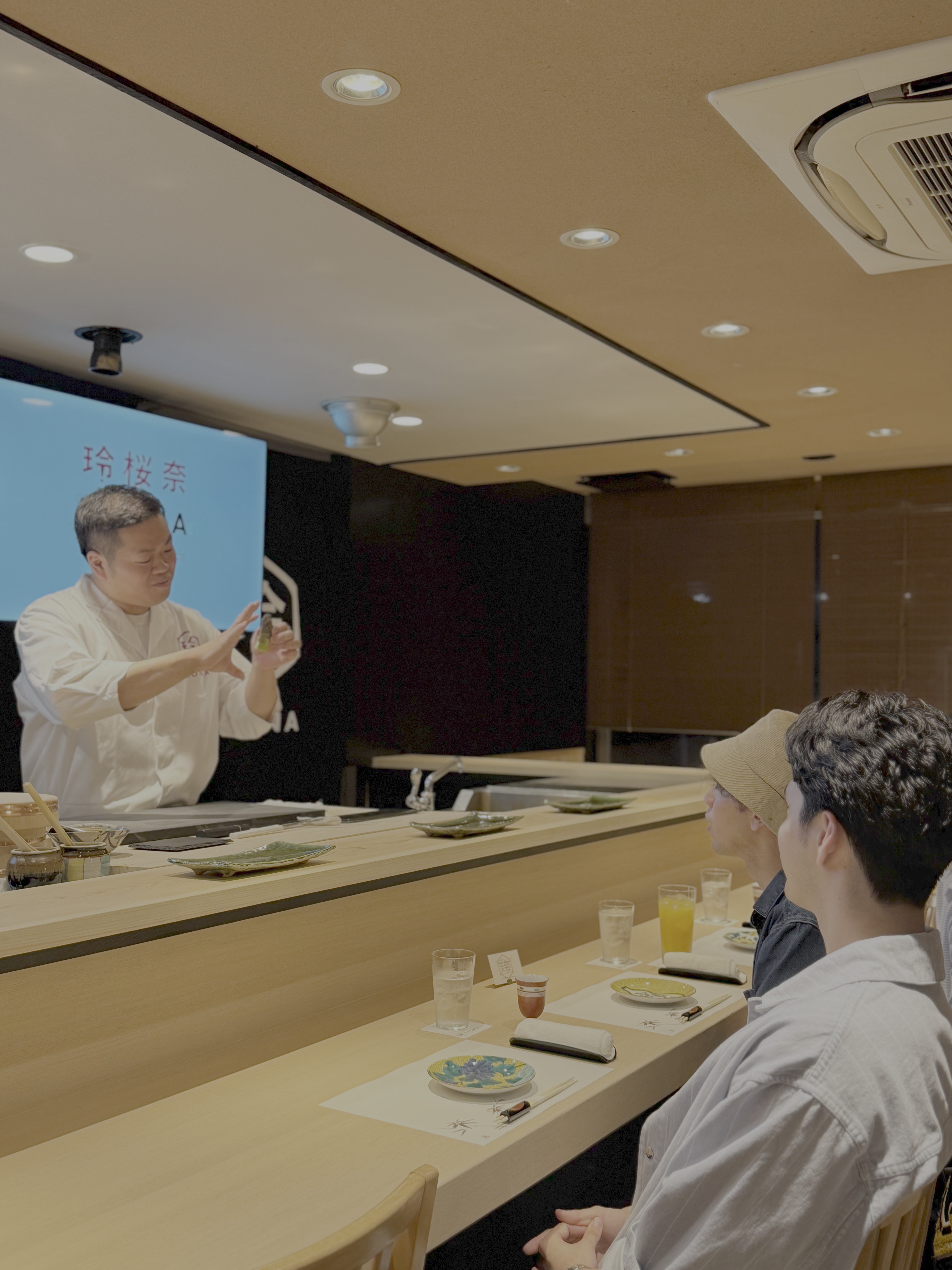
This is not about which approach is right.
Even with the exact same course, every guest has a different pace that feels comfortable to them.
It is also not something that can be determined simply by nationality.
Still, when serving international guests compared with Japanese guests, I sometimes notice differences in how much people talk during a meal and how much time they spend on each dish or piece.
At a Japanese sushi counter, the chef and guests are sitting close to each other, so the flow of eating, drinking, and talking can sometimes move along quite compactly.
For some international guests, on the other hand, a meal can also be a time to enjoy conversation.
They have traveled to Japan with family or friends, so naturally, they may want to talk about their trip, discuss what they are experiencing, and enjoy the sushi at the same time.
I think that is completely natural.
That is why, rather than simply thinking, “We need them to eat faster,” it is important to find a pace that feels comfortable for the people sitting at the counter.
For example, we might wait just a little longer before serving the next piece.
We might adjust when we ask about another drink.
We might spend a little more time explaining the sushi.
On the other hand, if a group is eating quickly, we can keep the explanations concise and maintain a faster pace.
Even with the same omakase course, not everyone eats at the same speed.
The right pace depends on the guests sitting in front of you that day.
I think these kinds of adjustments are also one of the advantages of a sushi counter.
Because the guests are sitting right in front of you, you can see how quickly they are eating and watch their expressions.
Do they want the next piece right away after finishing one?
Do they look like they want to continue their conversation?
Do they want to take a photo?
Do they have a question?
Do they look like they want to take a short break?
Sometimes, you can pick up on these things even when the guest does not say them directly.
Of course, we cannot read everything perfectly.
That is why I place a lot of importance on talking with our guests.
For example, if the guests are having an animated conversation after finishing a piece, I sometimes wait instead of immediately starting the explanation for the next piece.

On the other hand, if the guests are watching the chef’s hands closely and waiting for the next piece, I try not to interrupt that rhythm.
I look at them and think, “What are they enjoying right now?”
Even that small awareness can change the timing of when the next piece is served.
This is difficult to put into a manual.
You cannot simply decide, “Serve the next piece five minutes later.”
You watch the people sitting in front of you and make small adjustments as you go.
I think these small adjustments are one of the interesting parts of the Japanese sushi counter experience.
And sometimes I think back to the guest who once asked me, “Is Japanese sushi really this fast?”
What feels completely normal to Japanese people, such as having sushi served one piece at a time, can be a completely new part of Japanese food culture for someone visiting from overseas.
In other words, the things that feel most ordinary to us can become surprisingly interesting when we take the time to explain them.
Why is sushi served one piece at a time?
Why should you eat it right after it is made?
Why do you sit directly in front of the chef at a sushi counter?
Why do people even pay attention to how much soy sauce they use?
By unpacking these small questions one by one, the experience can change from simply “eating sushi” to gaining a little more understanding of Japanese sushi.
Working as a navigator at REONA Sushi Tokyo, I sometimes get unexpected questions from guests visiting Japan from overseas.
And those questions often make me realize, “I guess this is something Japanese people simply take for granted.”
Things that are so ordinary when you live in Japan that you do not even notice them.
International guests teach me to see those things from a different perspective.
That is one of the things I find so interesting about this job.
“Is Japanese sushi really this fast?”
These days, when I hear that question, I actually feel a little happy.
Because within that small sense of surprise is an opportunity to understand Japanese sushi a little better.