
Please note: Reservations are required; walk-ins cannot be accommodated.
Please note: Reservations are required.
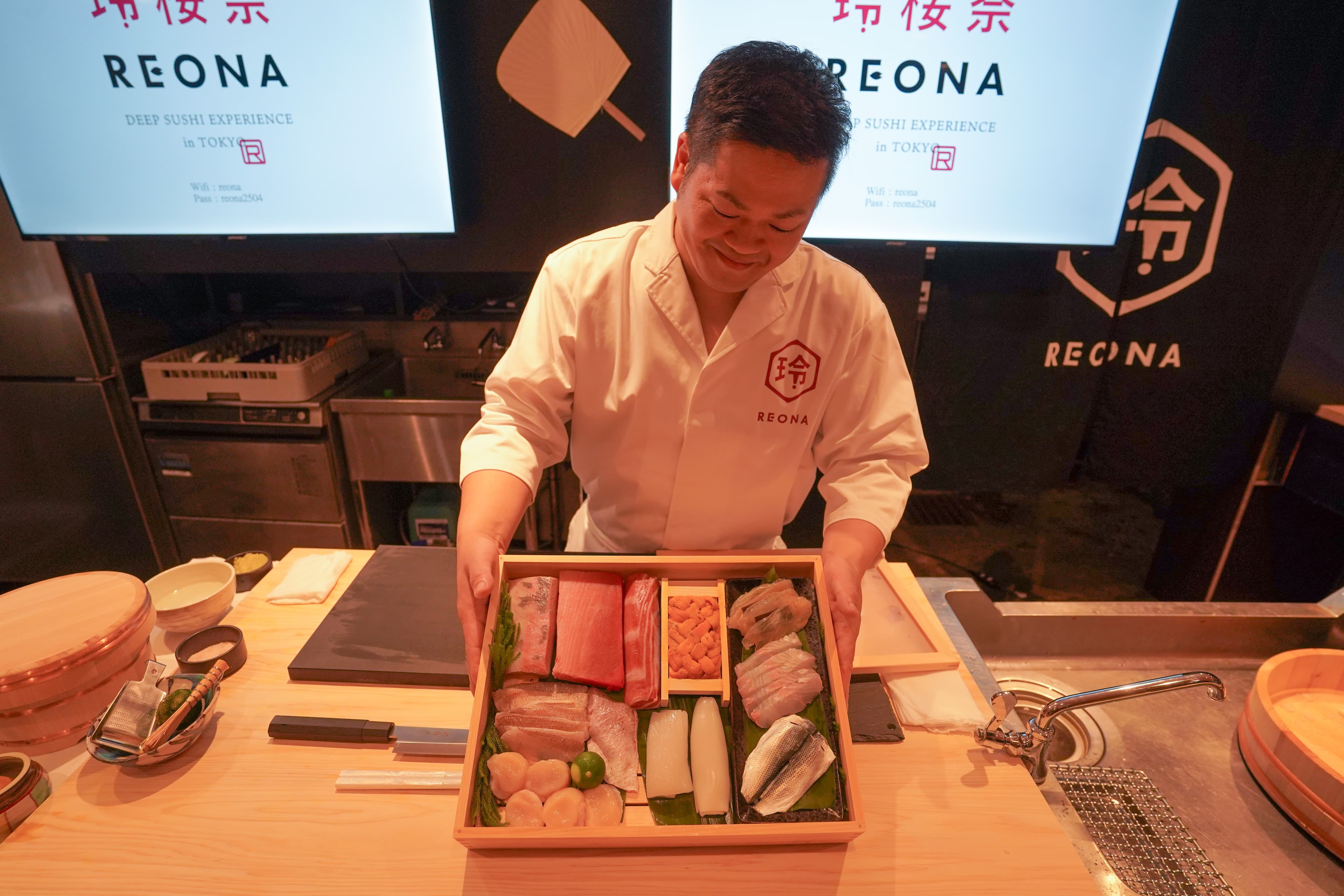

At REONA Sushi Tokyo, we welcome guests from around the world almost every day. People with completely different cultures, languages, and backgrounds sit around the same counter and share time together through one common language, sushi.

For us, that moment never feels routine. Even when we serve the exact same course, the atmosphere changes depending on who is sitting in front of us. Some guests become fascinated by the ingredients. Others become interested in history, etiquette, or craftsmanship. Some ask many questions, while others quietly take everything in. Every evening becomes a different kind of experience because every guest brings a different perspective to the counter.
Today, we would like to share one story from an American family who visited us, and through their experience, introduce the kind of moments that naturally happen at REONA.
If you're considering an omakase experience with your family in Tokyo, we've put together a guide with more details about visiting REONA with children.
One evening, we welcomed a family visiting Japan from the United States. It was a couple traveling with their young child.
Before the reservation, they asked us a question we hear very often.
“Is it really okay to bring children?”
In Japan, omakase sushi restaurants are often seen as quiet and formal spaces. Because of that image, many parents feel nervous about bringing small children. In fact, there are still many sushi restaurants that do not easily accommodate families with young kids, and for international visitors especially, that can create a strong psychological barrier.
Alongside the language barrier, many guests also worry about manners. During conversations with overseas visitors, one topic that often comes up is how well behaved Japanese children appear to be. Many people are surprised to see elementary school children commuting alone on trains so calmly and independently. Some guests even tell us they are worried people in Japan might think their child is not behaving properly compared to local children.
At REONA, we want to remove as much of that anxiety as possible.
On this particular evening, we prepared a kid friendly menu for the child and welcomed them into our kids room while the parents enjoyed a full omakase course at the counter. Sometimes our staff also spends time with children so parents can fully relax and focus on their meal.
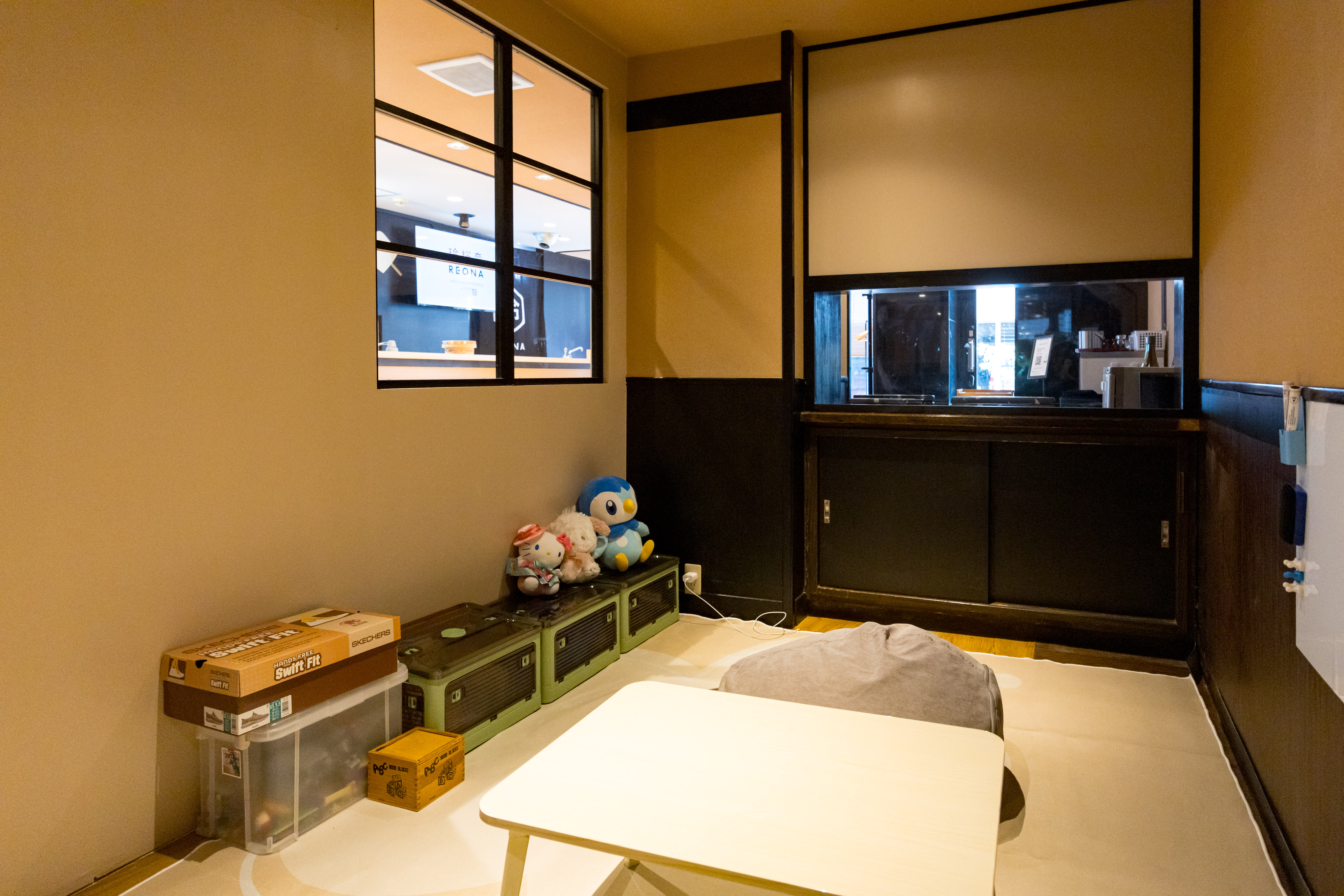
When the family first arrived, we could immediately sense their nervousness. We could see expressions that seemed to say, “Will this really be okay?” and “I hope we are not disturbing anyone.”
But little by little, the atmosphere changed as the meal continued.
Their expressions softened. Conversations became more relaxed. Smiles naturally appeared. The couple gradually stopped worrying about their surroundings and simply enjoyed spending time together.
That transformation left a strong impression on us.
At the end of the evening, they told us,
“We never imagined we could have an experience like this.” “It was such a relief that our child enjoyed it too.” “It honestly felt like our first date in years.”
Moments like that remind us why we created REONA.
Thankfully, many families from around the world have shared similar feedback on googlemap with us. Creating an environment where parents can enjoy authentic sushi without giving up time with their children has become one of the most meaningful parts of what we do.
During the course, one guest asked a very natural question while holding a piece of sushi.
“Should I dip this in soy sauce?”
We hear this quite often.
Many international guests are used to adding soy sauce themselves when eating sushi. Some even dip the rice side directly into the soy sauce, causing the sushi to fall apart. Of course, none of that is “wrong.” Different cultures naturally develop different ways of eating.
But when a small explanation is added, the experience changes completely.
At REONA, every piece of sushi is already seasoned before being served. Because of that, each piece is designed to be eaten exactly as it is.
The temperature of the rice. The condition of the fish. The balance of nikiri soy sauce and wasabi. Everything is carefully adjusted so the flavor feels complete within a single bite.
We also change the amount of wasabi depending on the topping. For richer fish, we may use slightly more. For cleaner flavors like squid or scallop, we use less. These small adjustments create balance across the entire course.
When guests hear that explanation, their expressions often change immediately.
“So the flavor is already complete.”
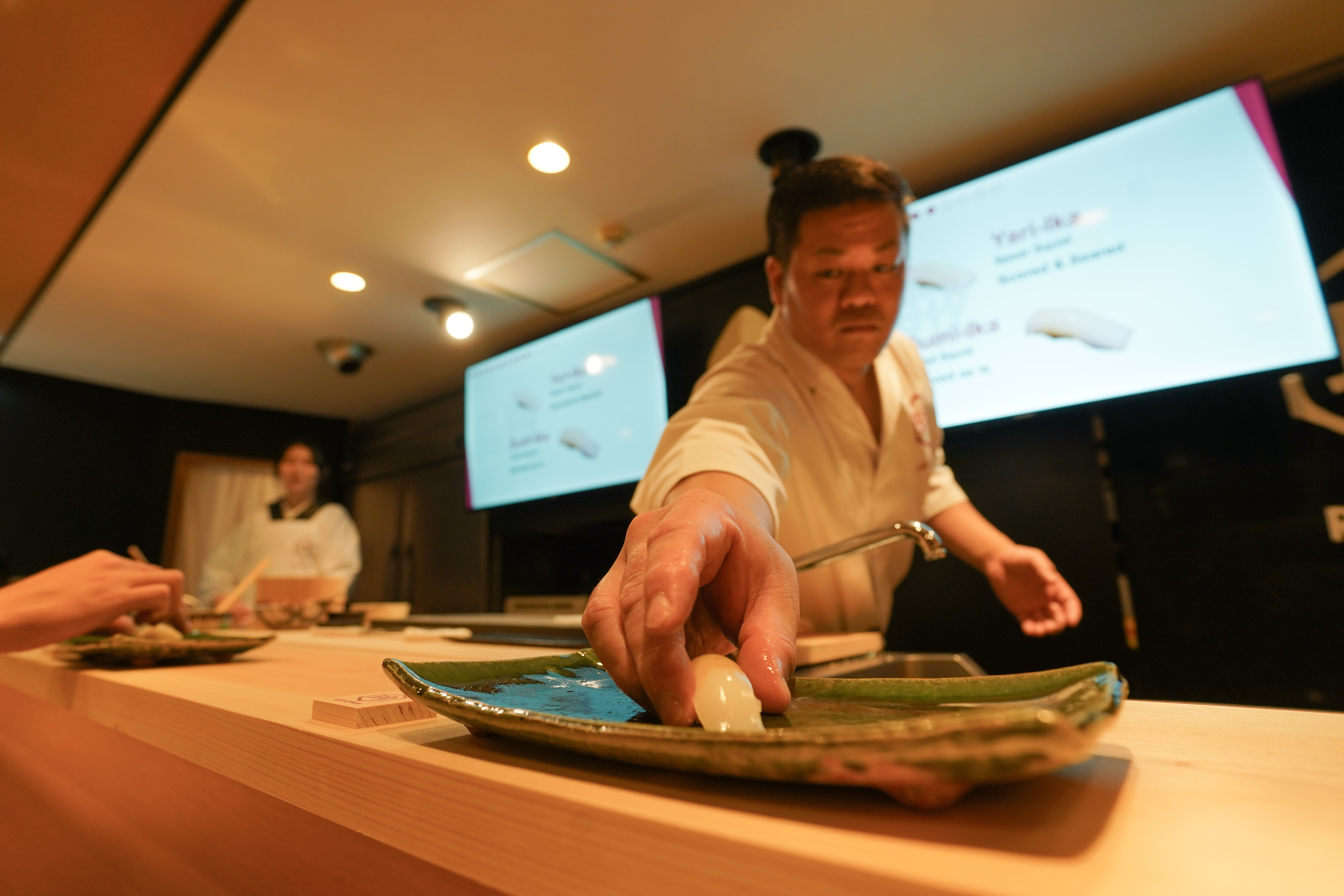
From there, the conversation naturally expands.
Why use nikiri soy sauce? Why season each piece differently? Why does the rice temperature matter so much?
One small question leads to another discovery.
What could have ended as simply “delicious sushi” becomes an experience connected with understanding. Guests begin paying attention not only to taste, but also to intention, craftsmanship, and the philosophy behind each decision.
For us, that process is the heart of what we call “Rikai.”
At REONA Sushi Tokyo, the entire experience is guided in English.
But what matters most to us is not simply “speaking English.” What matters is being understood.

Anyone can memorize information from a script. But what we aim for goes far beyond that. We carefully watch each guest’s reactions and expressions, then adjust how deeply we explain things and what words we choose in the moment.
Some guests want detailed explanations about fish aging techniques or Edo period food culture. Others simply want to relax and enjoy conversation naturally without too much information. We believe hospitality means understanding that difference and responding accordingly.
We want conversations to feel natural and interactive rather than one sided. That is something only people can do. It is not something AI or machines can replace.
Personally, I often feel that the hospitality mindset I learned while working in luxury hotels has deeply shaped the way I communicate with guests today.
One good example is uni.
Some guests absolutely love it. Others are nervous even looking at it. Because of that, before serving uni, we always ask about the guest’s experience and preferences first.
For first timers or hesitant guests, we explain the flavor, texture, appearance, and even the fact that some Japanese people dislike it too. That often helps guests feel more comfortable and open minded about trying it.
On the other hand, guests who already enjoy uni often become interested in deeper topics such as seasonality, regional differences, freshness, and how chefs evaluate quality.
These conversations can only happen when we understand the guest sitting in front of us.
Hospitality is not simply explaining information. It is creating the experience together through conversation.
Our six seat counter also plays an important role in that experience. Because the space is small, we can easily notice how each guest is feeling and respond carefully in real time.
On this particular evening, we naturally adjusted things like changing the pacing while watching the child’s condition, creating quiet moments for the couple to focus on each other, exploring topics guests showed interest in more deeply, and serving drinks at the right moment.
These small details gradually build an experience that guests remember as something far beyond dinner.
Tokyo is home to many world class sushi restaurants.
Among them, what REONA aims to create is a sushi experience that goes beyond simply eating.
We want guests not only to enjoy flavor, but also to understand the background and meaning behind what they are tasting. Through that understanding, we hope people become more interested in Japan itself.
Since opening REONA, I have come to feel strongly that sushi is not simply food. It is culture.
Even something as simple as eating sushi immediately after it is served reflects an old Edo aesthetic called “iki.” Receiving something naturally at its best possible moment, without unnecessary hesitation or movement, is part of the philosophy behind the experience.
Once guests understand ideas like that, even a single piece of sushi begins to look different.
At the end of the evening, this family told us something that stayed in our minds.
“We didn’t just eat sushi. We learned the culture itself.”
For us, that sentence perfectly captures the experience we hope to create.
If you are looking for a memorable sushi experience in Tokyo, we would love to welcome you to REONA Sushi Tokyo.
For families traveling with children, we've also put together a guide to planning your visit to REONA.
We look forward to sharing new discoveries with you across our small counter.