
Please note: Reservations are required; walk-ins cannot be accommodated.
Please note: Reservations are required.
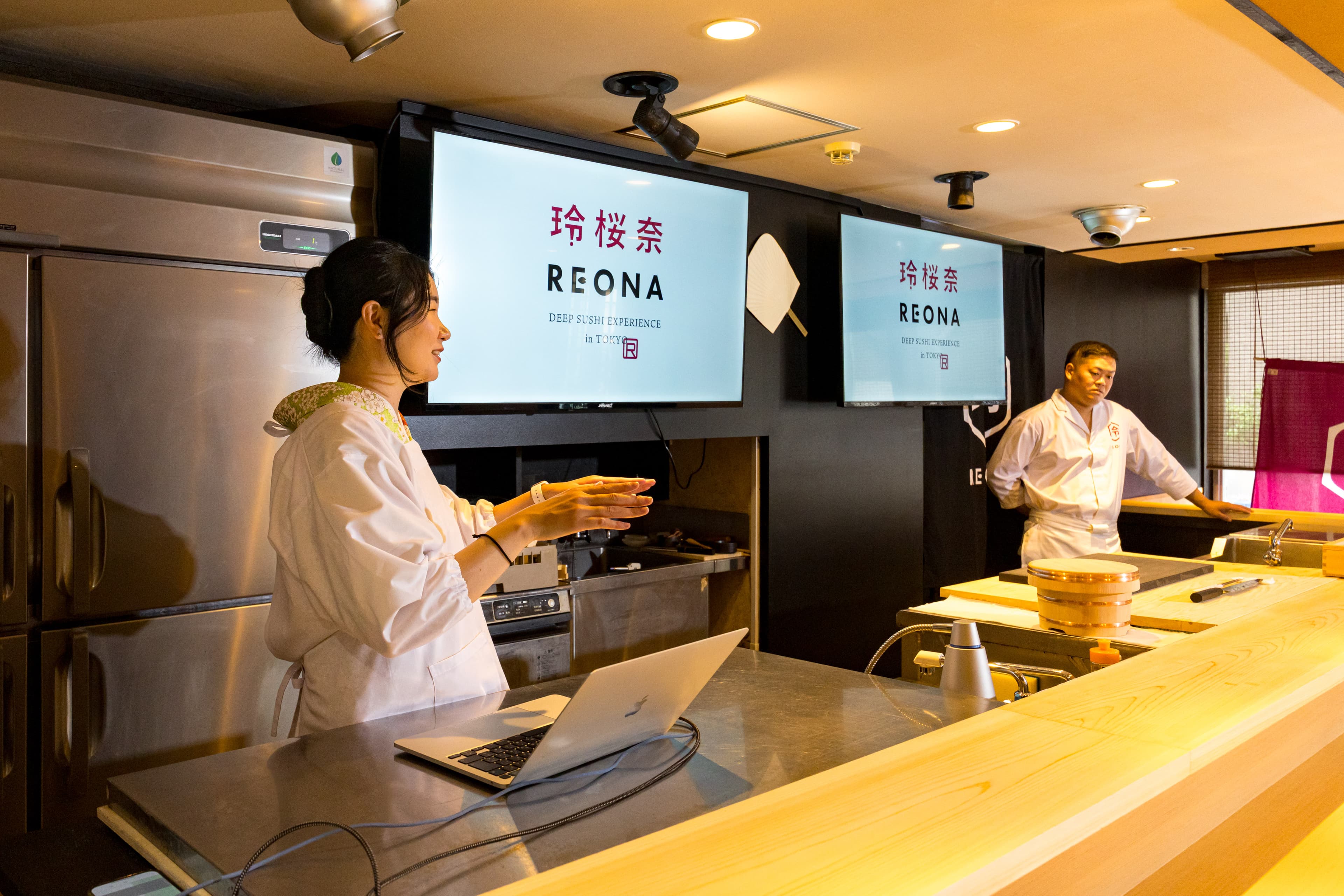

"Great food speaks for itself."
Some people may believe that.
After all, sushi is a remarkably simple dish.
A sushi chef prepares each piece right in front of you, and you enjoy it one piece at a time.
Even without any explanation, it can be an unforgettable meal.
That's exactly why some people feel that explaining sushi too much takes away from its elegance.
At REONA Sushi Tokyo, however, we intentionally explain sushi in English.
We talk about the fish.
The history of Edomae sushi.
Why each preparation method is used.
Why every piece is seasoned differently.
Throughout our omakase course, we share the story behind each piece of sushi.
Of course, sushi is delicious even without any explanation.
But there is a reason why we place such importance on what we call "Rikai" (Understanding).
Today, you can find sushi almost anywhere in the world.
The United States.
Europe.
Australia.
Southeast Asia.
In some cities, it's actually easier to find sushi restaurants than it is in Japan itself.
Sushi has truly become one of the world's favorite cuisines.

At the same time, sushi has evolved differently outside Japan.
Many restaurants focus on rolls.
Creative sushi featuring avocado, cream cheese, or other local ingredients has become incredibly popular.
One of our Navigators, Kamei, even told us about eating mango sushi while visiting Canada. (!!)
Of course, we don't see this as a bad thing.
Cuisine naturally evolves alongside local culture, and that's simply another expression of Sushi.
However, many international guests who visit Japan ask us the same question:
"What makes authentic Japanese sushi different?"
One example is soy sauce.
Outside Japan, many people believe sushi is something customers season themselves by dipping it into soy sauce.
In traditional Edomae sushi, however, that's often not the case.
The chef finishes each piece before serving it.
Some pieces receive just the right amount of soy sauce.
Others are seasoned with salt.
Some are finished with citrus.
The seasoning changes depending on the fish.
Especially at high-end sushi restaurants in Japan, it's common for the chef—not the guest—to decide exactly how much soy sauce each piece needs.
Every adjustment has a purpose.
For guests who have eaten Sushi many times overseas, the differences often come as a surprise.
We frequently receive questions such as:
"Do Japanese people really turn sushi upside down before eating it?"
"You don't mix all the wasabi into the soy sauce?"
"Is gari (pickled ginger) supposed to go on top of the sushi?"
These are perfectly reasonable questions.
They simply reflect how differently sushi has developed around the world.
Many guests tell us afterward:
"It felt like a completely different cuisine."
"Now I'm wondering what I've been eating all these years."
"Authentic sushi has so much more variety than I expected."
We don't simply want our guests to experience those differences.
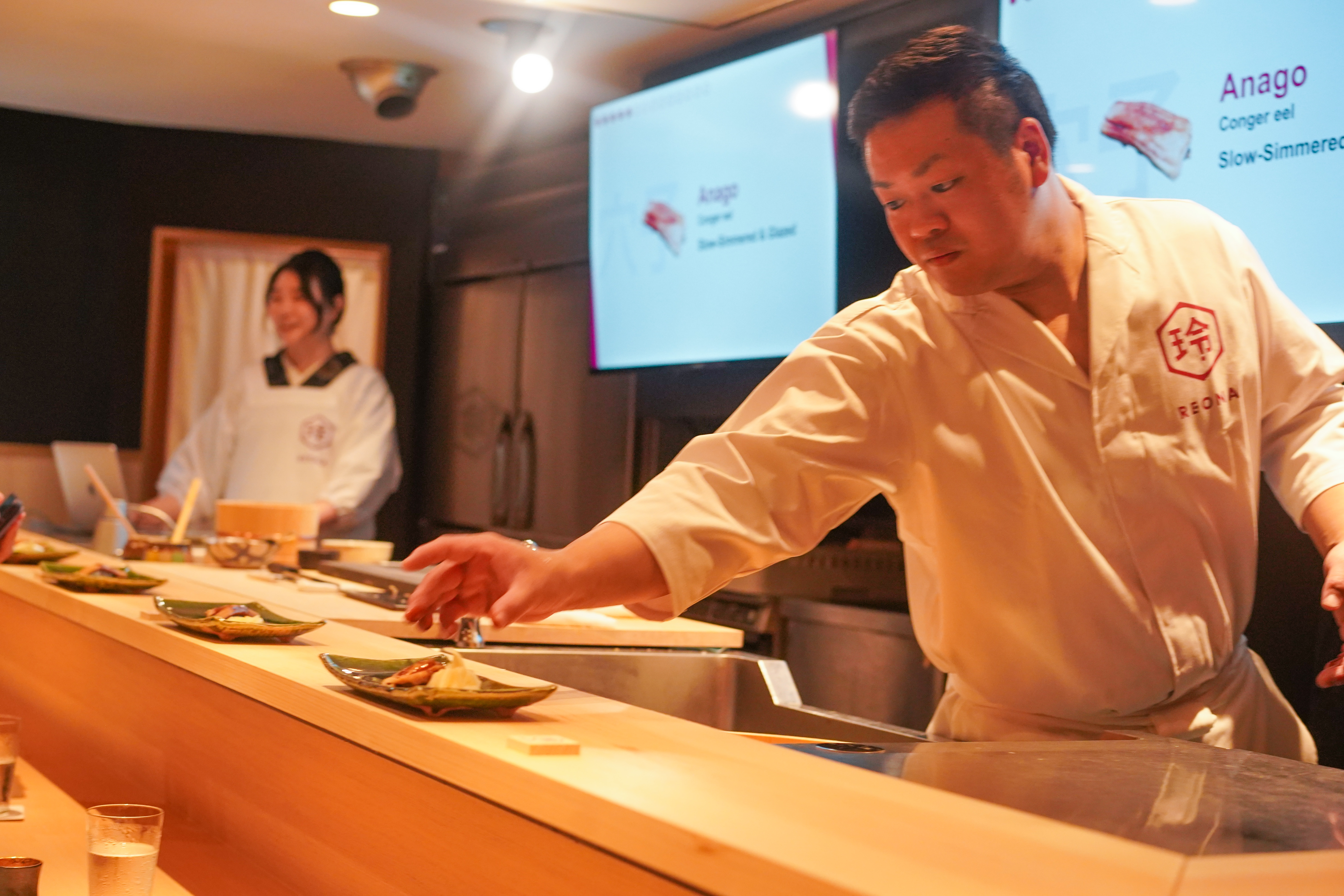
We want them to understand why those differences exist.
At REONA, one of our core values is "Rikai" (Understanding).
Take tuna, for example.
Even though it's the same fish, its flavor changes dramatically depending on where it was caught, the season, and the cut being served.
Why did we choose this particular tuna today?
Why is this lean cut marinated?
How do we adjust the amount of wasabi, nikiri soy sauce, or even the level of searing based on the fish's condition that day?
Once you understand those decisions, each piece of sushi begins to look—and taste—completely different.
One phrase we often tell our guests is:
"It's all about the balance."
In fact, we've even had guests quote that exact phrase in their Google reviews.
Sushi isn't just about the fish.
Nor is it just about the rice.
The temperature of the fish.
The temperature of the rice.
The amount of wasabi.
The amount of soy sauce.
The pressure used when shaping the sushi.
Even the timing of when you eat it.
Every one of these elements works together to complete a single piece of sushi.
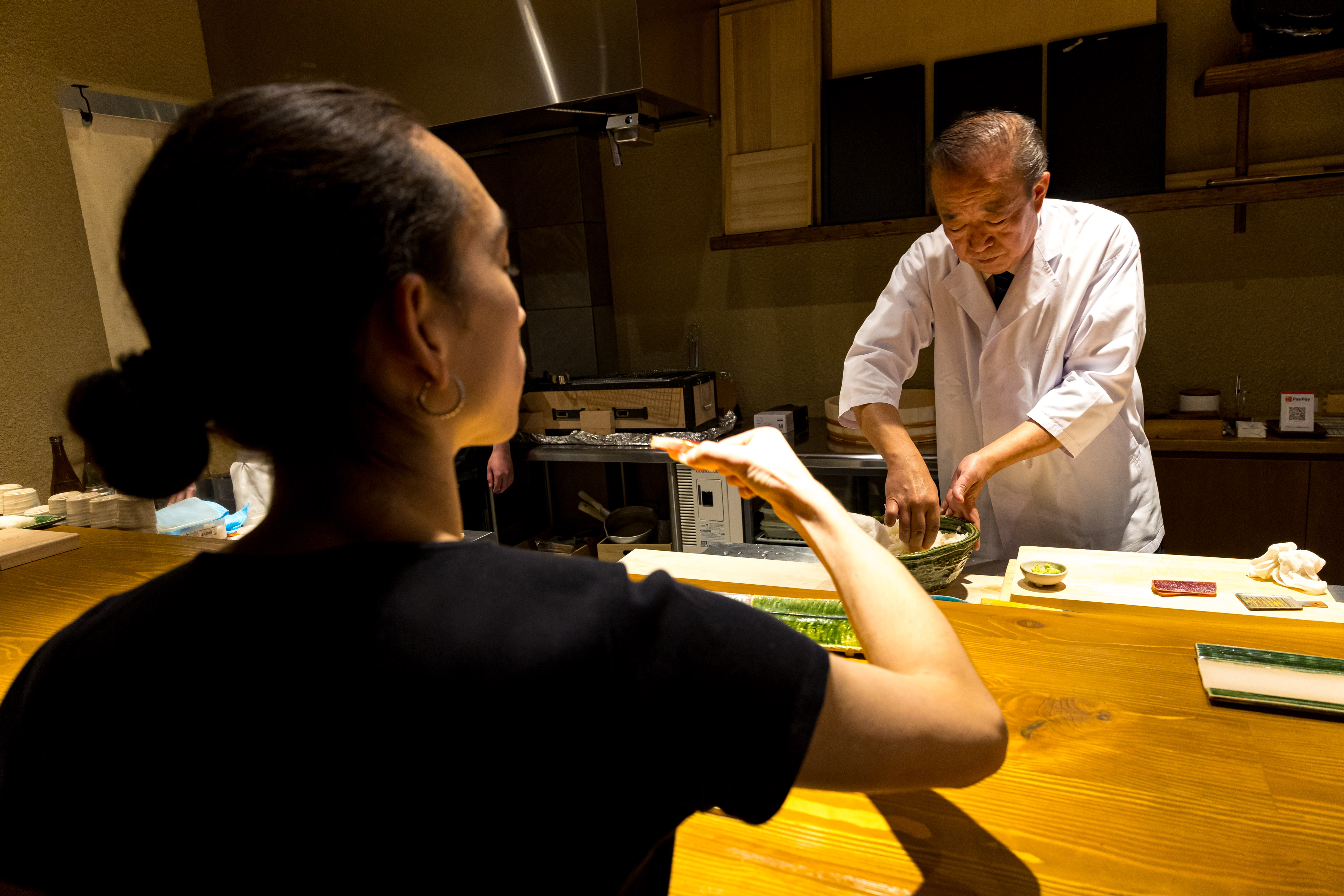
That's why we recommend enjoying each piece exactly as the chef serves it whenever possible.
Take anago (conger eel), for example.
Did you know that the firmness of the sushi rice is adjusted to match the texture of the topping?
When the topping is soft, the rice is intentionally shaped more gently as well.
Because of that, soft toppings like anago are surprisingly delicate. If they're handled too much, the rice can begin to fall apart.
That's why we often give our guests a quick heads-up before they eat it:
"Be careful—this one is very soft."
One reason is that some international guests like to pick up a piece of sushi to take a photo, set it back down, and then pick it up again before eating.
With anago, that extra handling can cause the sushi to lose its shape because both the fish and the rice are intentionally soft.
As we often say,
"It's all about the balance."
Each type of sushi has been designed to be enjoyed in a particular way.
There are small tips that help you experience it at its very best.
Of course, your personal preferences always come first.
Some guests don't enjoy wasabi.
(Personally, I'm not a fan of wasabi either, so I completely understand!)
Others may prefer to add extra soy sauce.
That's perfectly okay.
But before making any changes, we simply hope you'll first experience the balance the chef intended.
Once you understand why each piece is prepared that way, sushi becomes even more fascinating.
Many of our guests tell us things like:
"It completely changed the way I see sushi."
"I realized I'd been eating sushi without ever thinking about it."
"I've learned things here that no other omakase restaurant has ever explained."
"I never imagined there was so much depth behind the sushi I've been eating all my life."
"I even tried ingredients I'd never tasted before, and it gave me a much deeper appreciation for Japanese culture."

There's one thing we'd like to make clear.
We don't explain sushi because we want to impress people with our knowledge.
Nor do we want to lecture guests by saying,
"Do you know this?"
or
"This is what authentic Edomae sushi is."
That's not our goal.
What we value is conversation.
We enjoy answering our guests' questions.
We love hearing them say,
"I never knew that!"
Just as importantly, we often learn something new from our guests as well.
Sometimes they'll tell us:
"That's how we eat sushi in my country."
"This fish is considered a luxury ingredient where I'm from."
Or they'll surprise us with something completely unexpected.
"We even deep-fry sushi."
(Yes, apparently that's really a thing!)
Some guests have explained that they put tempura inside a sushi roll... and then deep-fry the entire roll.
The first time I heard that, I couldn't help but ask,
"You deep-fry sushi?"
Moments like these naturally become cultural exchanges.
That's why, at REONA, we don't think of it as "time to explain."
We think of it as "time to have a conversation."
We also never let explanations interrupt the rhythm of the meal.
If a guest is curious and asks many questions, we're always happy to dive deeper.
On the other hand, if someone simply wants to relax and enjoy the sushi quietly, we respect that too.
Adjusting our distance and communication style to each individual guest is an important part of our hospitality.

Sushi is one of Japan's most iconic foods.
But we don't believe we're serving sushi alone.
We believe we're introducing guests to Japan itself through sushi.
For example:
The appreciation of seasonality.
The philosophy of bringing out the best in an ingredient by adding as little as possible.
The culture of chefs spending decades refining their craft.
The reason seasonal fish changes throughout the year.
Why sushi is served one piece at a time.
Each of these reflects a uniquely Japanese way of thinking.
One concept we especially love sharing is the idea of subtraction.
In many countries, great dishes are created by adding flavors and ingredients together.
Japanese cuisine, on the other hand, often reaches perfection by taking things away.
Rather than layering flavors, the goal is to reveal the natural beauty of the ingredient itself.
Many of our international guests tell us things like:
"I feel like I understand Japanese culture better now."
"I didn't just fall in love with sushi—I fell in love with Japan."
Those are some of the happiest moments for us.
Of course, we don't expect anyone to remember every fish name or every technique.
You don't have to memorize everything.
But if you leave with just one thought—
"Ah... so that's why."
—then your sushi experience becomes something much more meaningful.
That's why we continue explaining sushi in English every single day.
Our goal isn't to explain sushi for the sake of explaining it.
Our goal is to help our guests discover Japan more deeply through sushi.
And that's exactly what "Rikai" means to us.

Ultimately, we don't expect our guests to remember every detail.
You don't have to remember every fish name.
You don't have to memorize every technique.
If you leave Japan with just one small realization—
"Now I understand why."
—then we believe your sushi experience has become something truly special.
That's why we continue to explain sushi in English every day.
Not because our goal is simply to explain sushi.
But because we hope sushi can become a doorway to discovering Japan itself.
Through every conversation, every question, and every piece of sushi, we hope our guests gain a deeper appreciation for Japanese culture.
That is the meaning of "Rikai" as we see it.
At REONA Sushi Tokyo, we don't simply serve sushi.
We share the stories behind it, the craftsmanship within it, and the culture that shaped it.
Because we believe the most memorable sushi experience isn't just about what you eat—
It's about what you come to understand.