
Please note: Reservations are required; walk-ins cannot be accommodated.
Please note: Reservations are required.
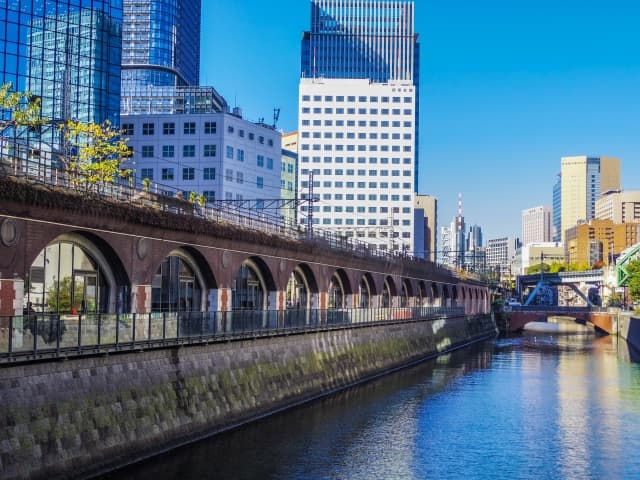

Have you heard of Kanda?
It does not have a symbolic temple gate or shopping street like Asakusa. It is not a town where a huge crossing or skyscrapers stand at the front of the image, like Shibuya or Shinjuku. For many people visiting Tokyo from overseas, Kanda may not be the first area that comes to mind.
But Kanda is one of the easiest places to feel how Tokyo’s culture has been built up over time. It is one of Tokyo’s oldest shitamachi areas, and many elements of the common people’s culture that shaped Edo and Tokyo are layered here.
It is also within walking distance from Tokyo Station. You will find one of Tokyo’s representative shrines, a place of learning, old soba restaurants, rows of secondhand bookstores, and if you walk a little farther, the modern culture of Akihabara.
I was born in Tokyo, and through MagicalTrip I have spent years creating experiences for international guests. Through that work, I have felt many times that Tokyo’s appeal cannot be fully understood only through the easy-to-recognize cityscapes of Shibuya or Shinjuku. Even though I’m from Shibuya myself!
When I walk through Kanda, I feel another, deeper face of Tokyo. Walking through Kanda and feeling the layers of Tokyo culture is, to me, a very good entrance into understanding Tokyo more deeply.
That feeling is also connected to why we opened REONA Sushi Tokyo in the Kanda area as a place for understanding sushi, not just eating it.
I designed this Kanda walking route around one main concept and three points of view. The concept of Kanda is the culture of everyday Tokyo. In present-day Tokyo, formerly Edo, Kanda is one of the places where common people’s culture took root and flourished.
The first way to feel that culture is to see Kanda as a town of faith. Kanda Myojin Shrine, Nikolai-do, and the Catholic Kanda Church are all in this area. Edo was once one of the largest cities in the world, and from Edo to modern Tokyo and into the present, Kanda gives you a sense of how many different kinds of people have been accepted here.
The second is a place where Tokyo’s food culture began and still lives strongly. Kanda has many restaurants that have been open for more than a century, including Kanda Matsuya, Kanda Yabu Soba, Botan, Shoeitei, Mimasuya, and Owariya. Many of them are places that Tokyo locals themselves think, “I want to go there someday.” Because Kanda is a town of ordinary people, its food culture is not about flashy luxury. It is where you can feel original Tokyo food culture.
The third is a town of learning and the arts. Historically, literacy in Japan was very high. Even 200 years ago, ordinary people enjoyed advanced mathematics almost like puzzles. Japan has long been a country that loves learning. In Kanda, a town of ordinary people, Yushima Seido stood as a center of learning, and later Jimbocho developed into the world’s largest secondhand bookstore district. Scholars and artists gathered here, cafés became their salons, and some of that retro atmosphere still remains today.
The interesting thing about Kanda is that you can experience all three of these in one walk.
 Source:VISIT CHIYODA(https://visit-chiyoda.tokyo/app/spot/detail/50)
I recommend starting your Kanda walk at Kanda Myojin Shrine.
For us Tokyoites, Kanda Myojin is one of the most famous shrines in Tokyo, alongside Meiji Jingu. It has long watched over the historical shitamachi area, and the contrast between its bright vermilion shrine buildings and the calm atmosphere around it is wonderful. If you visit in the morning, you can also feel the stillness before the town fully wakes up.
What you should look at here is not only the building itself. Kanda Myojin is an old place of worship, but it also sits between Akihabara, a symbol of modern Tokyo, and the historical shitamachi of Kanda. In that sense, it almost feels like a boundary between Tokyo’s present and its past. A historic shrine is still alive inside the daily life of today’s Tokyo. That feeling is the entrance to Kanda.
If you come to Tokyo in May, you may be lucky. You might be able to see Kanda Matsuri, the festival of Kanda Myojin and one of the Edo Three Great Festivals. Its scale is incredible.
 Source:Wikipedia(https://en.wikipedia.org/wiki/Yushima_Seid%C5%8D)
A short walk from Kanda Myojin brings you to Yushima Seido. Yushima Seido is a Confucian site dedicated to Confucius, the ancient Chinese scholar, and it is also connected to the origins of school education in Japan.
That is why, as I did too, many students today visit to pray for success in their exams. Yushima Seido feels very different from a shrine. The atmosphere inside is quiet and disciplined.
Kanda was a town of ordinary people, so it was mainly a town of merchants and craftspeople. But it was also a town of learning. Yushima Seido preserves that side of Kanda.
 Source:Wikipedia(https://ja.wikipedia.org/wiki/%E8%81%96%E6%A9%8B)
Near Yushima Seido, you will find a beautiful piece of architecture called Hijiribashi Bridge.
When magazines introduce the Kanda area, they almost always choose a photograph that includes Hijiribashi. Once you see its elegant arch from a distance, it makes sense. From the bridge, you can see the river, the railway lines, and the height differences of the town all at once.
Inside the modern view of trains passing by, you can feel a calmer, more historical Tokyo that you cannot see in Shibuya or Shinjuku.
Hijiribashi is not a place where you need to stay for a long time. But please pass through it and take in the atmosphere of the town from above.
 Source:VISIT CHIYODA(https://visit-chiyoda.tokyo/app/spot/detail/470)
Near Ochanomizu Station stands the Holy Resurrection Cathedral, commonly known as Nikolai-do. When you see Nikolai-do so close to Kanda Myojin and Yushima Seido, you can feel the diversity that has existed in Tokyo for a long time.
I am proud that Tokyo has long been an international city. You can feel that interesting side of the city in Kanda, where a Shinto shrine, a Confucian hall, and an Orthodox cathedral all stand near one another. This overlap is one of the special charms of the Kanda area.
You can go inside, and even just looking at the exterior gives you the feeling that a different time has suddenly appeared inside the city.
If you have come all the way to Kanda, please choose an old restaurant for lunch.
Old buildings that have remained for generations. Real flavors that have been maintained over a long period of time. Experiencing this is a special moment that tourists who only visit Shibuya, Shinjuku, and Asakusa do not get. I strongly recommend it.
Kanda also has a wide range of restaurants. There are old soba restaurants, chicken sukiyaki, yoshoku, izakaya, tempura, and more. Depending on which restaurant you choose, you will see a slightly different face of Kanda.
I’ll list a few of my recommendations. But whichever you choose, there will probably be a long line of Japanese customers. Be patient and wait. It is worth it.
 Source:Tabelog(https://tabelog.com/tokyo/A1310/A131002/13000340/dtlphotolst/4/smp2/)
Kanda Matsuya is one of Kanda’s representative soba restaurants. Along a large street in Kanda, between rows of modern buildings, an old wooden building suddenly appears. I still remember being moved when I first saw it.
What they serve is soba, the soul food of Tokyoites. Soba is more than just a dish. For people in Tokyo, it is one of the central foods of Edo-era dining culture and a local soul food. If you want to feel Tokyo through the building and the atmosphere as well as the food, this is a good place.
My first menu recommendation is "Goma soba". The roasted aroma of sesame and the rich aroma of soba come together, and you can feel the depth of what looks like a very simple dish. Then there is "Tempura soba". The tempura in a soba restaurant is different from what you get at a tempura specialty restaurant. It is almost a different dish. The thick batter is crisp at first, then gradually melts into the soup and changes the taste of the soba. Please try it.
Eating soba in Kanda is also a quiet way to experience Tokyo’s food culture. It may take a little courage to go in, but please give it a try.
 Source:Wikipedia(https://ja.wikipedia.org/wiki/%E3%81%8B%E3%82%93%E3%81%A0%E3%82%84%E3%81%B6%E3%81%9D%E3%81%B0)
Kanda Yabu Soba is another place that cannot be left out when speaking about Tokyo’s soba culture. It is also extremely famous. So many chefs trained at Yabu Soba and later opened soba restaurants across Japan with “Yabu Soba” in the name.
Compared with Kanda Matsuya, the building has a more refined, ryotei-like feeling. The original building unfortunately burned down about 10 years ago, so you cannot enjoy the old building itself anymore. But some lanterns and interior items survived the fire and still give a sense of history.
The soba dipping sauce that has been passed down over the years is excellent. With seafood and various kinds of broth mixed into it, I would call it one of the finest examples of Tokyo soba. When you order soba, you can also hear their distinctive old-style order calling. For Tokyoites, that lifts the mood too.
Around Kanda, there is a culture of enjoying soba as part of daily life. It is not a special experience created for tourists. Its charm is that you can taste something Tokyo people have loved for a long time.
 Source:VISIT CHIYODA(https://visit-chiyoda.tokyo/app/spot/detail/363)
Botan is another famous restaurant serving a traditional Tokyo dish, chicken sukiyaki.
When people say sukiyaki, they usually think of beef. But in the past, beef was not a meat that people in Japan commonly ate. So more than 100 years ago, Botan made sukiyaki with chicken, a meat ordinary people were more familiar with.
Chicken sukiyaki seems to have been very popular in Tokyo at the time, but today it has almost disappeared. As far as I know, Botan is the only restaurant I can confidently call a famous place for it. It is truly a traditional taste you can only have here.
Since its founding, Botan has cooked without using gas or electricity, using only high-quality charcoal. The building itself also keeps a wonderful atmosphere that makes you feel the daily life of people in the past. If you get to eat chicken sukiyaki at Botan, you can proudly tell people in Tokyo about it.
 Source:Tabelog(https://tabelog.com/tokyo/A1310/A131002/13000349/dtlphotolst/1/smp2/D-normal/5/)
If you are tired of eating only Japanese food and want something more familiar, how about Shoeitei?
Shoeitei has been popular since the early days of "Yoshoku", Japanese style Western cuisine, and it also has more than 100 years of history. People in Tokyo’s shitamachi valued tradition, but they also loved new things. Eating dishes that came from the West was once very fashionable.
This restaurant in Kanda was also a place where ordinary Tokyo people came with excitement on special days. Its reputation was strong enough that famous Japanese novelists and artists also visited. If you are coming to Tokyo from the West, this is a place where you can feel how food from your own culture was reinterpreted in Japan and developed into a major food category that continues today.
My recommendation is "Omurice", one of the representative yoshoku dishes. It is a dish made by wrapping chicken rice, which is also yoshoku, in egg. The rice is cooked with good chicken, butter, and ketchup. Japanese people of all ages, from children to adults, love this dish.
Then there is "Hamburg". This dish, based on Hamburg steak, is another representative yoshoku dish alongside omurice. Minced meat is cooked softly while keeping plenty of meat juice inside, and you eat it with an excellent "Demi-glace sauce".
Demi-glace sauce? This too is actually a Japanese style Western sauce. It is based on the French sauce demi-glace, but in Japan it developed in its own way into a sauce rich with the flavor and sweetness of vegetables. It is one of the core sauces of Japanese yoshoku. I have heard that it is not used so much in French cuisine anymore. But in Japan, that sauce remains. It is interesting that Japanese yoshoku continues part of classical French food culture in a different form.
 Source:VISIT CHIYODA(https://visit-chiyoda.tokyo/app/spot/detail/50)
Once you are full from lunch, let’s walk a little. The place ahead is Jimbocho.
Jimbocho is known as the world’s largest secondhand bookstore district. Along the main streets and in the side streets, specialty bookstores and secondhand bookstores line the area. People looking for books are part of the everyday scenery here. The good thing about Jimbocho is that you can enjoy walking even without a specific book in mind.
Just looking at the spines of the books outside the shops lets you feel the history of knowledge and culture. Literature, art, architecture, film, manga, old maps, ukiyo-e. Each shop has a different focus, so simply walking around brings discoveries.
Recently, I have also seen more foreign visitors buying ukiyo-e and old Japanese books. For us Japanese people, of course, manga is a big part of the appeal. Manga from decades ago is sold just as it was at surprisingly low prices. There are children’s books, and there are specialized books that make you wonder who on earth reads them.
In my feeling, there are close to 100 secondhand bookstores. You could spend a whole day just going around them. For visitors from overseas in particular, I think it can feel like being surrounded by a completely different culture. Tokyo has many shopping areas, but Jimbocho is not simply a place to buy things. It is a place where people’s interests and knowledge have accumulated through books.
In Jimbocho, choosing a few bookstores as destinations makes it easier to see the character of the town.
Yamada Shoten is a fascinating place for people interested in ukiyo-e, art books, and related materials.
Being able to touch the visual culture of Edo and modern Japan during a walk through Tokyo is a very Jimbocho experience.
 Source:Official website(https://www.yamada-shoten.com/onlinestore/store.php)
Yumeno Shoten and @Wonder have selections centered around subculture. Just going inside makes me excited.
Manga, film, music, old magazines. You will find things here that you would never encounter in a neatly arranged large bookstore.
 Source:Official website(http://www.yumeno-manga.com/index.html)
Yamada Shoten Address and map:1-8 Kanda Jimbocho, Chiyoda-ku, Tokyo 101-0051, 2nd and 3rd floors Yumeno Shoten Address and map: Kanda Kosho Center 2F, 2-3 Kanda Jimbocho, Chiyoda-ku, Tokyo 101-0051 @Wonder Address and map: Kaitakusha Building 1F and 2F, 2-5-4 Kanda Jimbocho, Chiyoda-ku, Tokyo 101-0051
If this is your first time walking through Kanda, I recommend a route like this.
This route is not about rushing through every spot. Kanda is not a town for collecting sightseeing points. It is a place where you walk and feel the layers of the town. If you have time, stopping at a side street or a shop that catches your eye may leave the strongest memory.
From here, I will suggest a few extra ways to enjoy the area.
If you get tired from walking, having coffee around Jimbocho is a good way to spend time. Because Jimbocho has long been visited by scholars and artists, there have always been many cafés where those people gathered.
Today, young Japanese people also come looking for that Showa retro atmosphere. But these places have not simply become “modern.”
 Source:Tabelog(https://tabelog.com/tokyo/A1310/A131003/13011637/dtlrvwlst/B446038706/)
I do not go to cafés that often, so I asked a coffee-loving friend for his recommendation. He said Trois Bagues is a very good choice. His name is Sena Kanda, by the way. It is almost as if he exists to introduce Kanda. Haha.
Here is his recommendation. “Hello everyone. If you go to Kanda and Jimbocho, please try Trois Bagues. This café is located in the basement of a building near Jimbocho Station. It is the opposite of an open, airy terrace café. It is a Showa retro café. When you go down into the basement of the mixed-use building, you enter a calm space wrapped in dark lighting. This shop serves aging coffee, made by resting green coffee beans for a long time before roasting, as well as coffee made from aged beans. Coffee brewed with a flannel drip has bitterness, but the aftertaste is clean. I love it. Please spend a slow moment there with their famous gratin toast.”
If you stay around Kanda and Jimbocho until evening, please have dinner here too. Scholars and artists often care deeply about food, and the restaurants chosen by such people are waiting for you.
For tempura, I especially recommend Hachimaki. For sushi, I recommend Jimbocho Hishitani. Both are excellent, and compared with eating in a tourist area like Asakusa, the value for money is far better.
Most of all, I personally go to both of them, and I can recommend them with confidence.
 Source:Google Maps(https://maps.app.goo.gl/ZT1sMygExcQ8XXC99)
Hishitani is a local favorite that serves fish dishes. Above all, the owner and chefs here have the kind of skill that would stand out even in Tsukiji, one of the fiercest sushi districts. Their sushi and Japanese dishes are simply wonderful.
In my view, ingredients and cooking like this could easily cost two or three times more at a high-end restaurant in Ginza. At Hishitani, you can enjoy them in a relaxed space at a reasonable price.
What I personally think is wonderful is that they serve sushi in small sets of several pieces at a time. It feels like a short version of Omakase. If you find a piece you like, you can order more of that sushi.
They also offer a set course where you can enjoy excellent sushi, Japanese dishes, and sake. That said, it seems quite busy on many days at both lunch and dinner. It is probably better to go right when they open, or visit a little later.
 Source:Tabelog(https://tabelog.com/tokyo/A1310/A131003/13022740/dtlphotolst/1/smp2/)
Kanda Tempura Hachimaki is an old tempura restaurant in Jimbocho. It is also known as a restaurant loved by Edogawa Ranpo, one of Japan’s representative mystery novelists.
It is exactly the kind of Tokyo style tempura restaurant I like, and its signature dish is tendon, a tempura rice bowl covered with plenty of delicious sauce. The menu includes tempura made with large shrimp, squid, and seasonal vegetables, tempura rice bowls with tempura on top of rice, and side dishes such as sashimi.
If you sit at the counter, you can watch the chef frying tempura right in front of you. Enjoy freshly fried tempura in a lively atmosphere.
 Source: Tabelog (https://tabelog.com/tokyo/A1310/A131002/13000630/dtlphotolst/4/smp2/)
I also strongly recommend enjoying Kanda at night. It would be a waste to go to another town.
If you go back toward Kanda, there are many izakaya options. This is not a tourist restaurant district. These are places used every day by people who work in Tokyo and by local people. That is the charm of this area. If you want to enjoy a local atmosphere, try spending the night in Kanda instead of Tokyo Station or Nihonbashi.
Among them, Mimasuya, founded in 1905, has long been loved by many izakaya fans. The first thing I recommend is the old-fashioned exterior. I think you will be moved by its retro, tasteful appearance.
Inside, there are tatami seats and table seats. Menu slips hang on the walls, and Japanese style lights are attached to the ceiling. The whole restaurant has a relaxed, everyday atmosphere. Enjoy sake with fresh sashimi, soy-based simmered dishes, and small plates. It is a place where you can feel the core of Japanese izakaya culture.
 Source:Official website(https://www.tokyo-dome.co.jp/enjoy/post-02/)
After walking through Kanda, Ochanomizu, and Jimbocho, Tokyo Dome City is also an option if you are traveling with children or if the weather is bad.
Tokyo Dome City brings together sightseeing, food, shopping, and attractions. It has a different atmosphere from historical Kanda, but after walking for half a day, it can be useful if you want to add something easier and more entertaining.
Especially on a family trip, children can get tired if the plan is only town walking. In that case, after a cultural walk through Kanda and Jimbocho, changing the mood a little at Tokyo Dome City can help balance the day.
 Source:VISIT CHIYODA(https://visit-chiyoda.tokyo/app/spot/detail/499)
Akihabara is close to Kanda Myojin, and you can also walk there at the end of this route. The interesting thing about this route is that a historic place like Kanda Myojin connects naturally to the electronics, anime, and game culture of Akihabara.
Old Tokyo and new Tokyo sit next to each other within walking distance. That is another charm of walking around Kanda. If you try to understand Tokyo through only one image, you will miss its layers. Walking from Kanda to Akihabara makes that easy to see.
REONA Sushi Tokyo is located in the Kanda and Ochanomizu area.
If you walk around this area before your meal, the sushi experience may feel a little different. Kanda still has old soba restaurants, bookstores, places of learning, and places of faith. After feeling that context of the town, sitting at the counter for sushi can make you realize that Tokyo’s food culture does not exist by itself. It is an extension of the city’s history and everyday life.
What REONA Sushi Tokyo values is not only eating, but understanding sushi as you taste.
Walking through Kanda is a little similar. You are not just moving from one spot on a map to another. You gradually feel why this town has shrines, places of learning, bookstores, and old restaurants.
In that sense, a walk through Kanda is a good prelude to enjoying Tokyo’s food culture more deeply.
Kanda may look a little plain to people who are only looking for easy-to-understand tourist landmarks. But for anyone who wants to feel Tokyo’s history, learning, faith, food, books, and everyday culture all at once, Kanda is an incredibly rich area. From Kanda Myojin to Yushima Seido, Hijiribashi, and Nikolai-do. Then old restaurants, and the secondhand bookstore streets of Jimbocho.
Even in half a day, you can see that Tokyo is both a new city and a city that has built up a long history.
Before or after your meal at REONA Sushi Tokyo, please take a little time to walk through Kanda. You may find a quieter, deeper side of Tokyo that you may not see in the usual tourist areas