
Please note: Reservations are required; walk-ins cannot be accommodated.
Please note: Reservations are required.
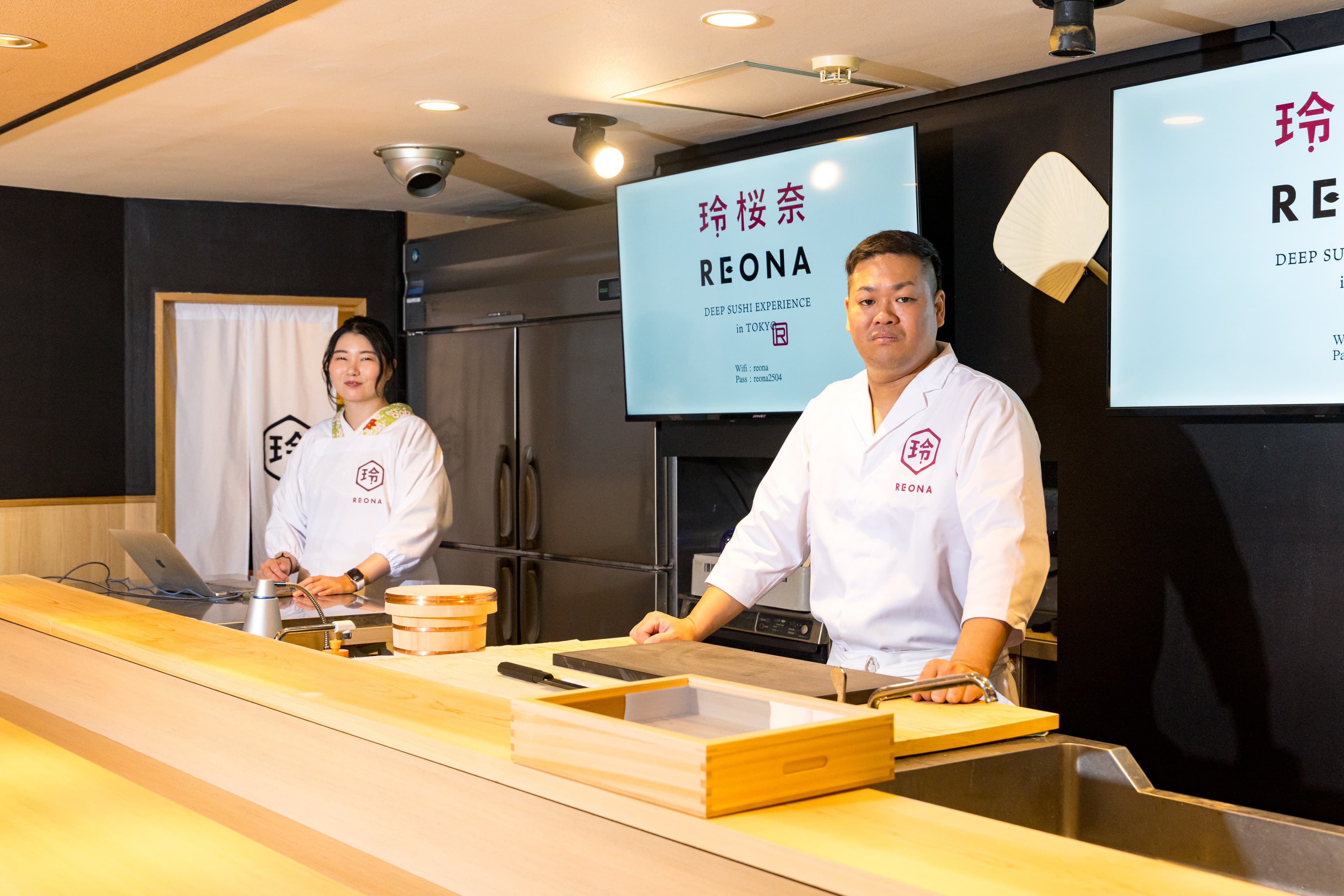

“If I’m going to eat sushi in Tokyo, I want to make sure I choose a really good restaurant.”
This is something we are often asked not only by visitors from overseas, but also by international residents living in Japan.
When you search online, you will find plenty of sushi restaurants that describe themselves as “foreigner-friendly” or “English-friendly.”
But in reality, a restaurant where English is spoken and a restaurant where you can have a satisfying experience are not necessarily the same thing.
Omakase is not simply about eating a meal.
There may be conversations with the sushi chef, or moments when you discover something new, such as wondering, “Why is this fish prepared this way?”
The time you spend at the counter is also part of what makes an omakase experience special.
That is why, when choosing a sushi restaurant, it can be surprisingly important to look beyond whether English is spoken and consider what kind of experience the restaurant offers.
In this article, we would like to share what we at REONA Sushi Tokyo keep in mind when welcoming guests from overseas.
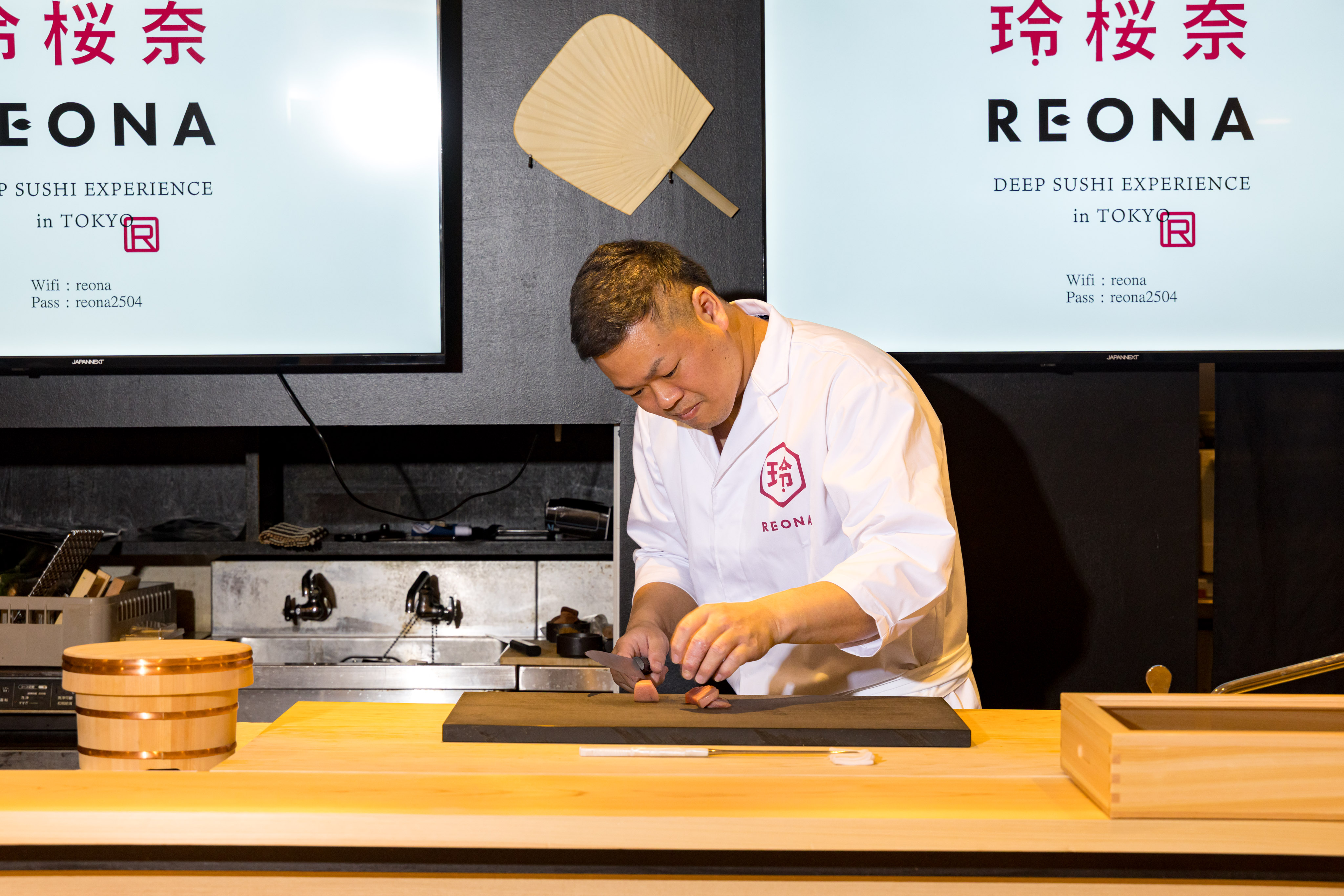
There are countless sushi restaurants in Tokyo.
From casual and affordable restaurants to high-end sushi counters, there are plenty of options. But for international travelers, we often hear that they simply do not know which one to choose.
One of the most common concerns we hear is:
“I looked at the website, but I don’t really understand what it says.”
In fact, there are still many sushi restaurants whose websites are only available in Japanese.
Some restaurants also accept reservations by phone only.
For someone who does not speak Japanese, even making a reservation can therefore become difficult.
And the uncertainty does not necessarily end once you arrive at the restaurant.
There may be concerns such as:
If you're traveling with children, it's also worth checking whether the restaurant can offer a comfortable omakase experience for families.
At REONA, we also receive messages from guests saying things like:
“This is our first omakase experience, so we are a little nervous.”
“I don’t speak Japanese. Is that okay?”
If you have traveled all the way to Japan to enjoy sushi, we want you to take home a memory of saying, “That was so much fun!” rather than a memory of feeling nervous or uncertain.
That is the feeling we have when we welcome our guests every day.
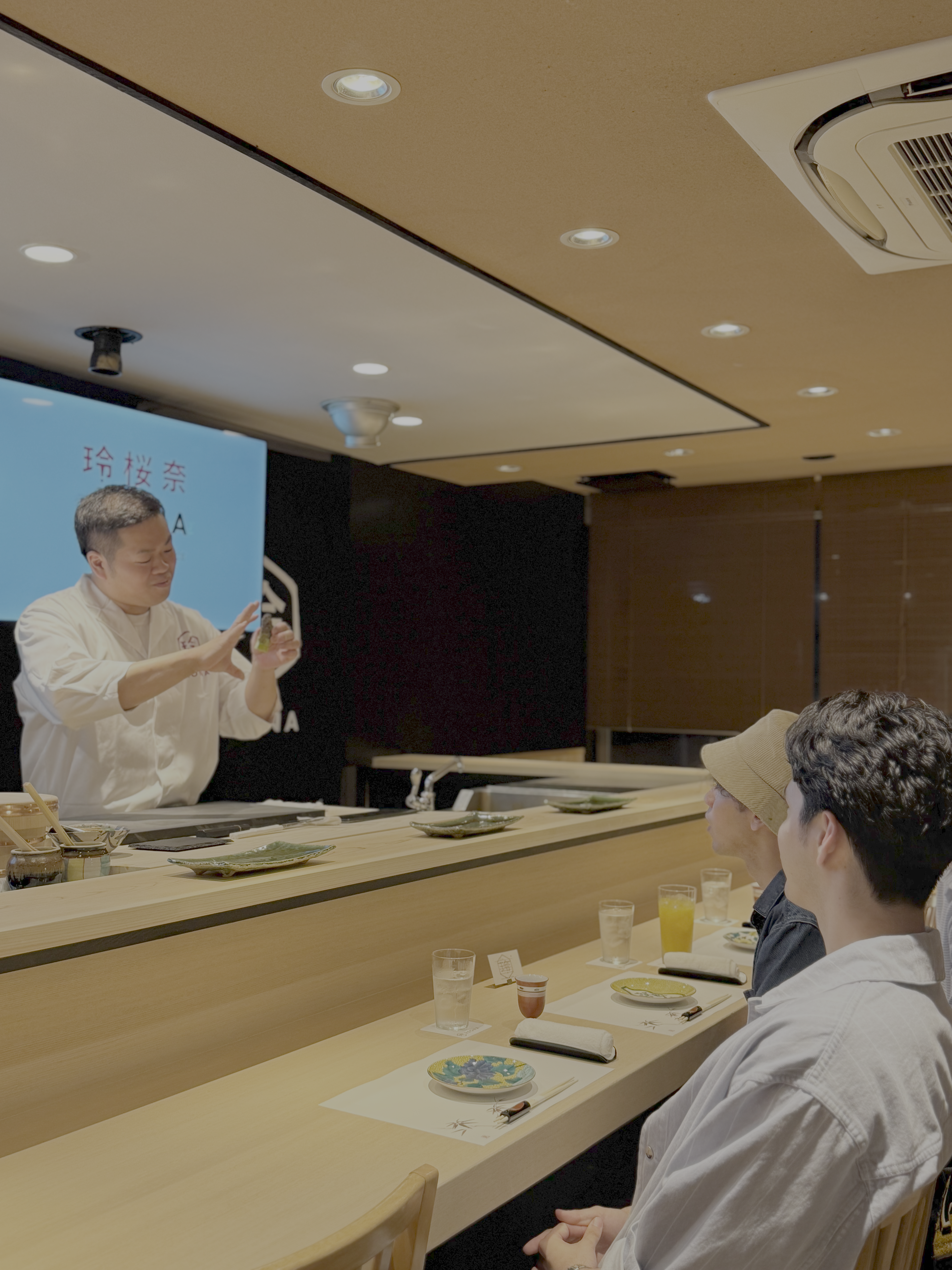
When people hear “English-friendly,” they often imagine that the restaurant simply has staff who can speak English.
Of course, that is important.
But personally, I believe that being able to communicate clearly is even more important.
For example, why do we prepare fish in a particular way for Edomae sushi?
Why is each type of fish cut differently?
Why are there some pieces of sushi that you are not supposed to dip in soy sauce?
When you understand the background behind these details, a single piece of sushi can become much more interesting.
I once had the opportunity to guide international guests during a business dinner for a Japanese company.
What the Japanese guests said to me afterward was not,
“Your English is very good.”
Instead, they said,
“Your explanations were really easy to understand.”

Simply translating what the sushi chef says in Japanese into English can be done by an interpreter.
But communicating the culture behind those words, as well as the things that Japanese people may take for granted, is something different.
We try to explain things in a way that allows international guests to think, “Oh, I see!” while also sharing some of the cultural differences between Japan and other countries.
We also adjust how much we explain depending on the guest’s reactions.
Sometimes we think, “They seem interested in this, so perhaps I should explain a little more.”
Other times, we can tell that a guest simply wants to focus on enjoying the food, so we avoid talking more than necessary.
Rather than simply speaking English, it feels more like we are trying to find the right distance and level of communication for each individual guest.
Our goal is not simply to speak English.
Our goal is to help people fall in love with sushi.
REONA is a small sushi restaurant with only six counter seats.
Guests sometimes say, “That’s a small number of seats.”
But I believe there are many things we can do precisely because we have only six seats.
It allows us to have natural conversations with each guest.
One day, we ended up talking about baseball with a couple visiting from the United States.
On another occasion, a child cautiously tried uni for the first time and smiled when they said, “It’s delicious!”
Because we only have six seats, the atmosphere is different every day.
We hear about our guests’ travels and sometimes recommend places for them to visit while they are in Japan.
Not long ago, a guest told us they were planning to visit Kyoto in July, so we recommended that they experience the Gion Festival.
Sharing recommendations for places and events that can only be enjoyed during a particular season is also part of the conversation that makes traveling in Japan special.
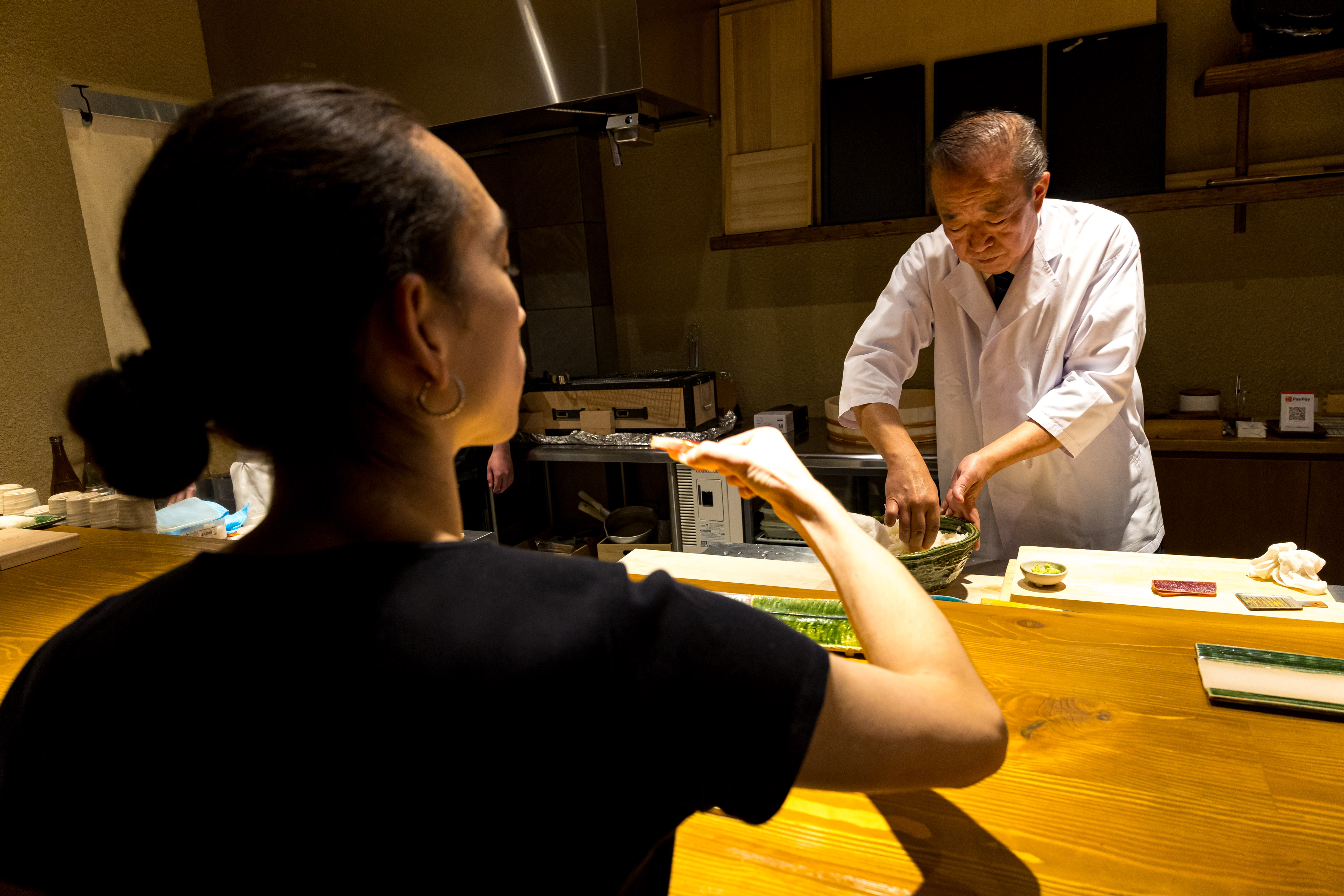
Of course, we can also easily check in with guests during the meal.
“Are you okay with wasabi?”
“Is the pace too fast for you?”
“Would you like me to take a photo for you?”
These small interactions are one of the advantages of being a small restaurant.
When people hear “high-end sushi restaurant,” they may imagine an atmosphere that feels formal or intimidating.
But we want our guests to relax as much as possible and simply enjoy their time with us.
In fact, the experience begins before you even arrive at the restaurant.
At a minimum, we send three emails to our guests:
For some guests, we exchange more than ten emails before they even arrive.
“Can we bring a stroller?”
“My child cannot eat fish roe.”
“It’s my wife’s birthday, so could you take a photo for us?”
We take the time to work through each of these questions and requests before the day of the reservation.
We communicate almost entirely in English for these exchanges, although we are happy to communicate in Japanese if requested.
For us, making a reservation is not the end of the process.
We want our guests to feel comfortable and reassured from the moment they make their reservation, long before they sit down at the counter.
In fact, we often hear from guests who tell us,
“We had given up on going to a high-end sushi restaurant because we have children.”
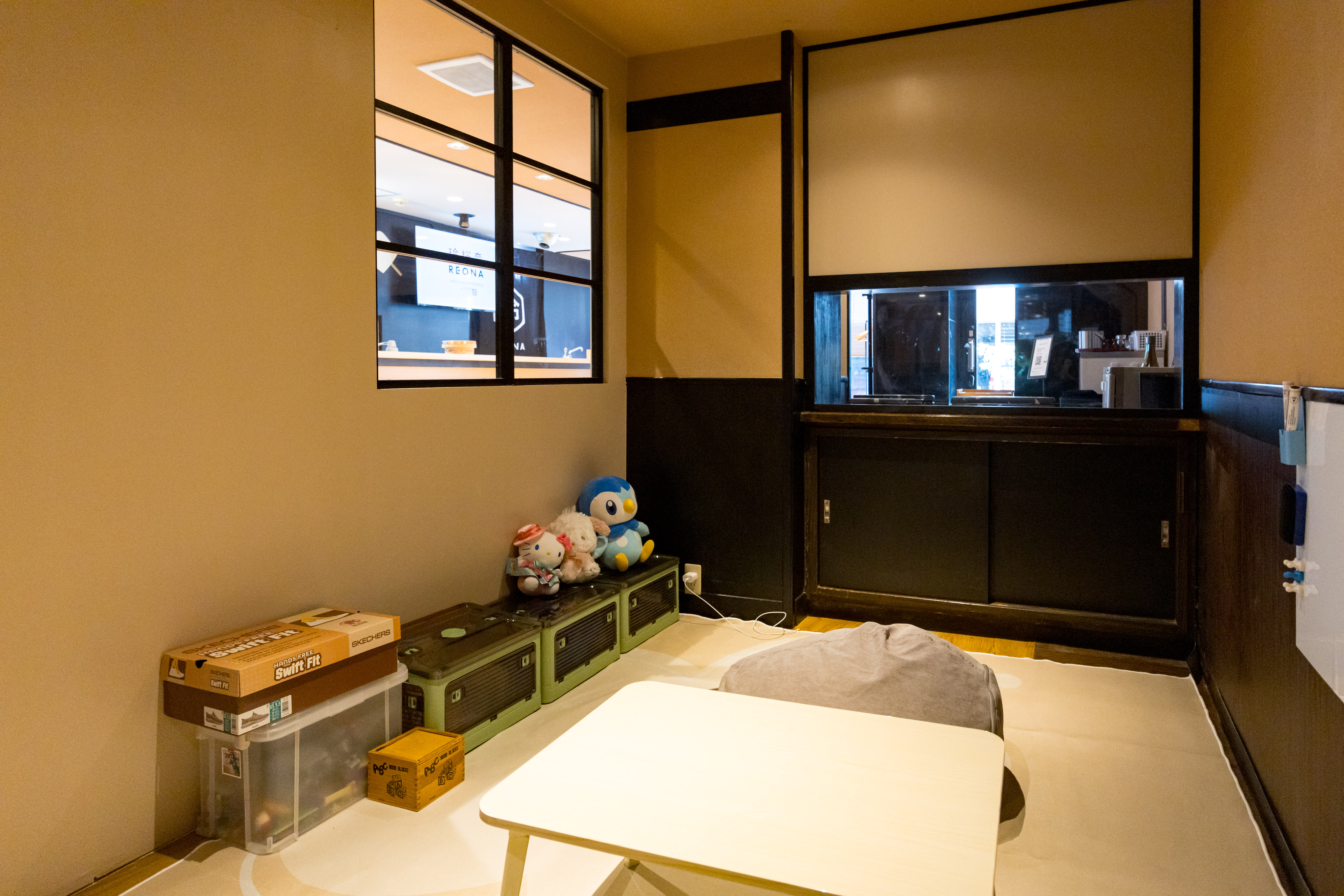
That is why at REONA, we provide a kids’ menu and a kids’ room so that families can enjoy their time with us comfortably.
My favorite thing to hear is not necessarily, “We’ll come back.”
It is when someone says,
“I recommended you to my friends.”
We have actually had guests introduce their friends to us, and those friends then introduced other people as well.
Sometimes a guest arrives and says,
“I came here because ○○ recommended you.”
Or,
“My boss recommended that I come here.”
“My friend came here before and told me I absolutely had to try it.”
There are moments when we hear a name we have never met before and realize that this new guest came to us because of someone who had visited us previously.
It is not advertising.
It is something being passed from one person to another.
And for us, there is nothing more rewarding than that.
There are so many wonderful sushi restaurants in Tokyo.
That is why we hope you find the one that is right for you.
If you are looking for a place where you can enjoy sushi comfortably in English, learn more about sushi, and experience omakase as more than just a meal, including the conversations and interaction at the counter, we hope you will feel,
“This seems like a place where I can make a reservation with confidence.”
If you do, then we feel that there was a reason for us to write this article.
We look forward to welcoming you at the counter someday.