
Please note: Reservations are required; walk-ins cannot be accommodated.
Please note: Reservations are required.
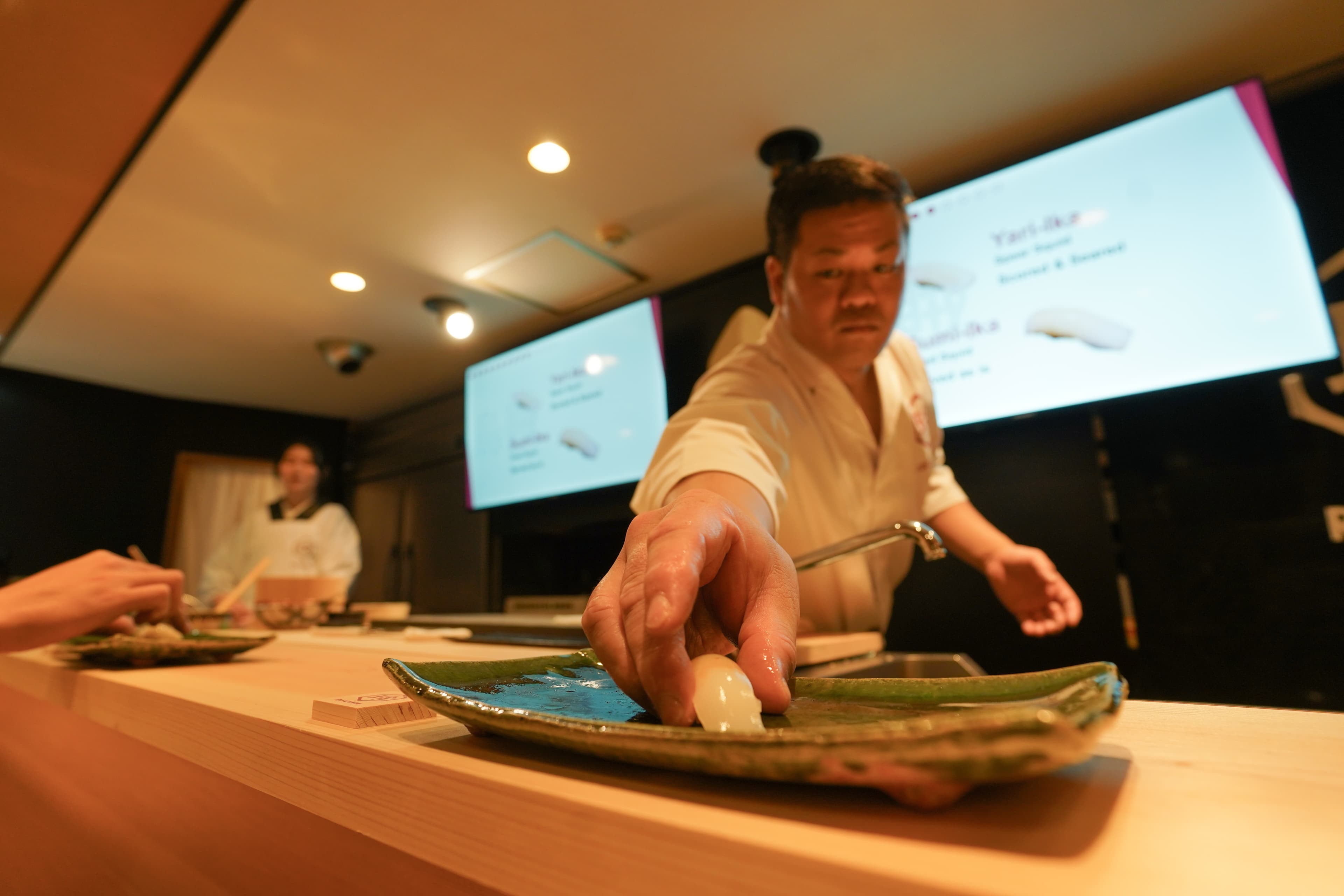

At REONA Sushi Tokyo, we often get questions from guests visiting from overseas.
One question we hear quite often is, “Should we wait until everyone has received their sushi before we start eating?”
Especially for guests experiencing a Japanese sushi counter for the first time, when to eat can be something they are not quite sure about.
For someone visiting Japan from overseas, there can be a small moment of confusion at a sushi restaurant.
When a piece of sushi is placed in front of you, is it okay to eat it right away?

For example, when four people go to a restaurant together, many people are used to waiting until all the dishes have been served before everyone starts eating.
So when a piece of sushi is placed in front of them at the counter, they may think, “The others haven’t received theirs yet, so I should wait.”
But with Edomae sushi, there is generally no need to do that.
In fact, at REONA, we sometimes see guests leave their first piece of sushi untouched while they wait.
When we say, “Please, go ahead,” they sometimes look surprised and ask, “I don’t have to wait for everyone else’s sushi?”
If a piece of sushi is placed in front of you, you can simply eat it.
That is one of the things that is important to understand when enjoying Edomae sushi.
Why is that?
It has to do with the importance of timing in Edomae sushi, as well as a Japanese sense of aesthetics known as “iki.”
With Edomae sushi, a piece of sushi is essentially finished the moment it is shaped and prepared by the chef.
This is quite different from a style of dining where all the dishes are prepared first and then brought out to everyone at once.
At the counter, the chef makes each piece of sushi in front of the guest, one at a time.
The piece is then placed in front of the guest at the moment the chef feels it is in its best condition.

In other words, rather than thinking, “Wait until everyone has received their sushi,” Edomae sushi is more about eating the piece in front of you when it is served.
This does not mean that you have to eat quickly.
It means that the chef has prepared the sushi to be enjoyed in the condition they think is best at that moment.
For example, imagine four guests sitting at the counter.
The chef serves a piece of sushi to the first guest.
That guest eats it.
Then the chef serves the second, third, and fourth guests.
After that, the next piece goes to the first guest again.
This continues as the sushi is served one guest at a time.
This way of serving is possible because there is no need to finish four dishes at exactly the same time.
Rather than serving everything together, the focus is on letting each piece be enjoyed in its best condition at that particular moment.
So if your sushi comes out before everyone else’s, there is no need to wait. Please go ahead and enjoy it.
There is also a connection to the Japanese sense of “iki.”
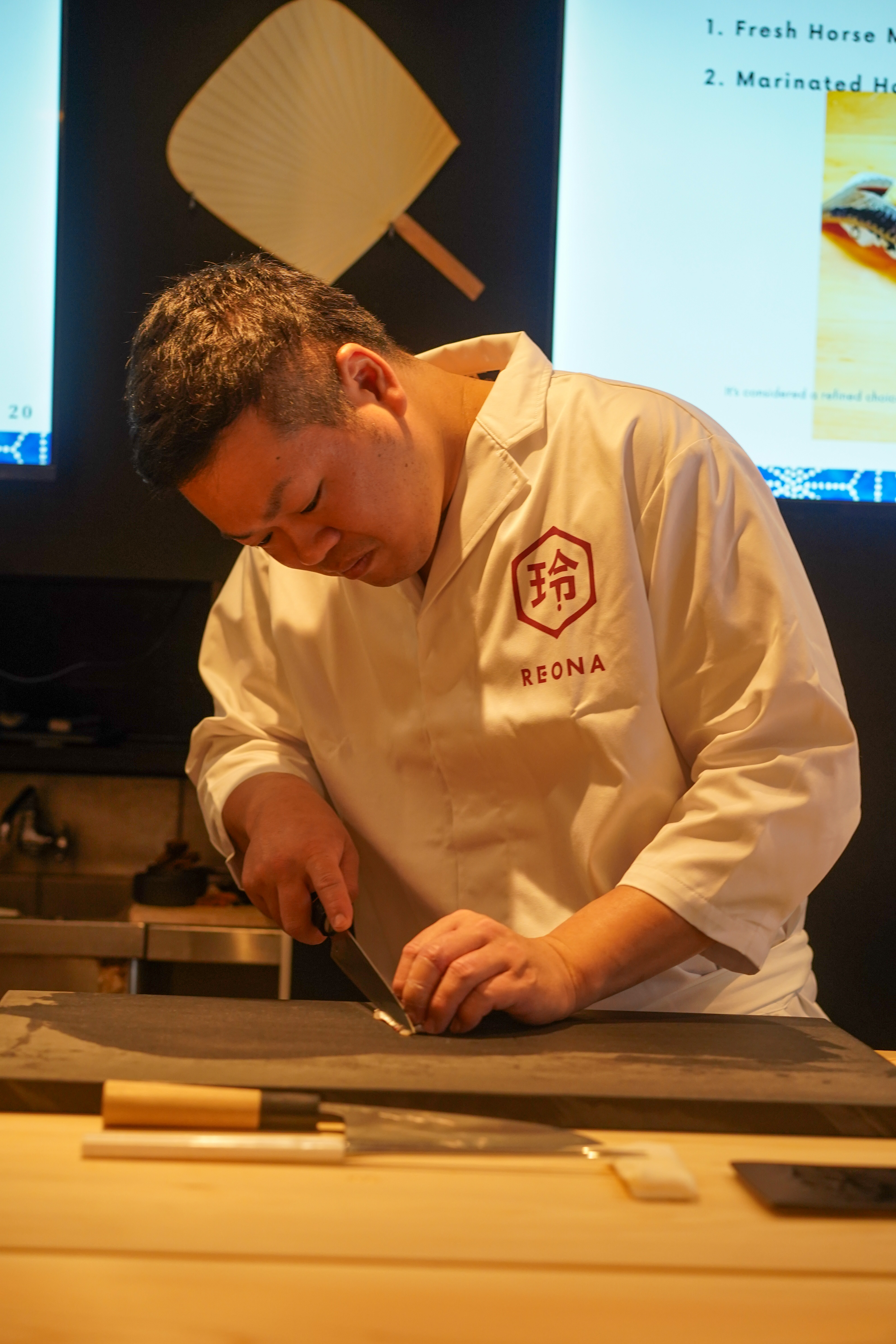
“Iki” is a uniquely Japanese sense of aesthetics that is difficult to translate into a single English word.
It can be associated with being refined, not doing more than necessary, understanding what someone else means without them having to say it, and naturally going along with the flow of the moment.
You can see some of this way of thinking in Edomae sushi as well.
The chef makes one piece of sushi in front of you and places it in front of you.
You eat it.
The chef then starts preparing the next piece.
This simple rhythm becomes part of the communication between the chef and the guest at the counter.
If everyone waits until all four guests have received their sushi, the first piece made will simply sit there for longer.
Of course, the taste does not suddenly become bad after a few minutes.
But once time passes from the moment the chef decided that the sushi was ready to be served, its condition gradually changes.
That is why simply eating the sushi placed in front of you can also be seen as receiving the work of the chef.
Rather than thinking of it as a strict rule about how to eat sushi, it may be easier to think of it as a rhythm that the chef and guest create together.
So why does timing matter so much?
One reason is temperature.

When people think about sushi, they often focus on the freshness and quality of the fish.
But the temperature of the sushi rice is also extremely important.
Sushi rice is not simply made with cold rice.
In many places overseas, sushi rice is often served cold.
I remember the sushi I had in Canada. Both the rice and the fish were so cold that they felt like they had just come out of a refrigerator.
At a restaurant in Canada that called itself a “high-end sushi” restaurant, they even placed the sushi on crushed ice to keep it cold before serving it.
As a Japanese person, I remember being pretty surprised by that.
With traditional sushi, however, the rice is kept close to body temperature, and the chef considers the balance between the temperature of the rice and the fish when making each piece.
When those temperatures come together, they create a particular sense of balance in your mouth.
But if you leave the sushi sitting there, the temperature of the rice gradually changes.
The moisture on the surface changes as well.
The temperature of the fish changes too.
As a result, the texture, aroma, and the way the sushi comes apart in your mouth can gradually change.
That is why sushi chefs pay close attention to both the timing of making the sushi and the timing of serving it.
For example, imagine your sushi is placed in front of you and you think, “I’ll wait until everyone else has theirs.”
You wait a few minutes.
Those few minutes are not simply time spent waiting.
They are a few minutes passing from the moment the chef intended you to enjoy that piece.
If you want to enjoy a piece of sushi in the condition the chef intended, the moment it is placed in front of you is generally the right time to eat it.
This is something you can experience most clearly at a sushi counter.
You watch the chef cut the fish.
They take the rice.
They put the fish and rice together.
They shape the sushi.
Then they place one piece right in front of you.
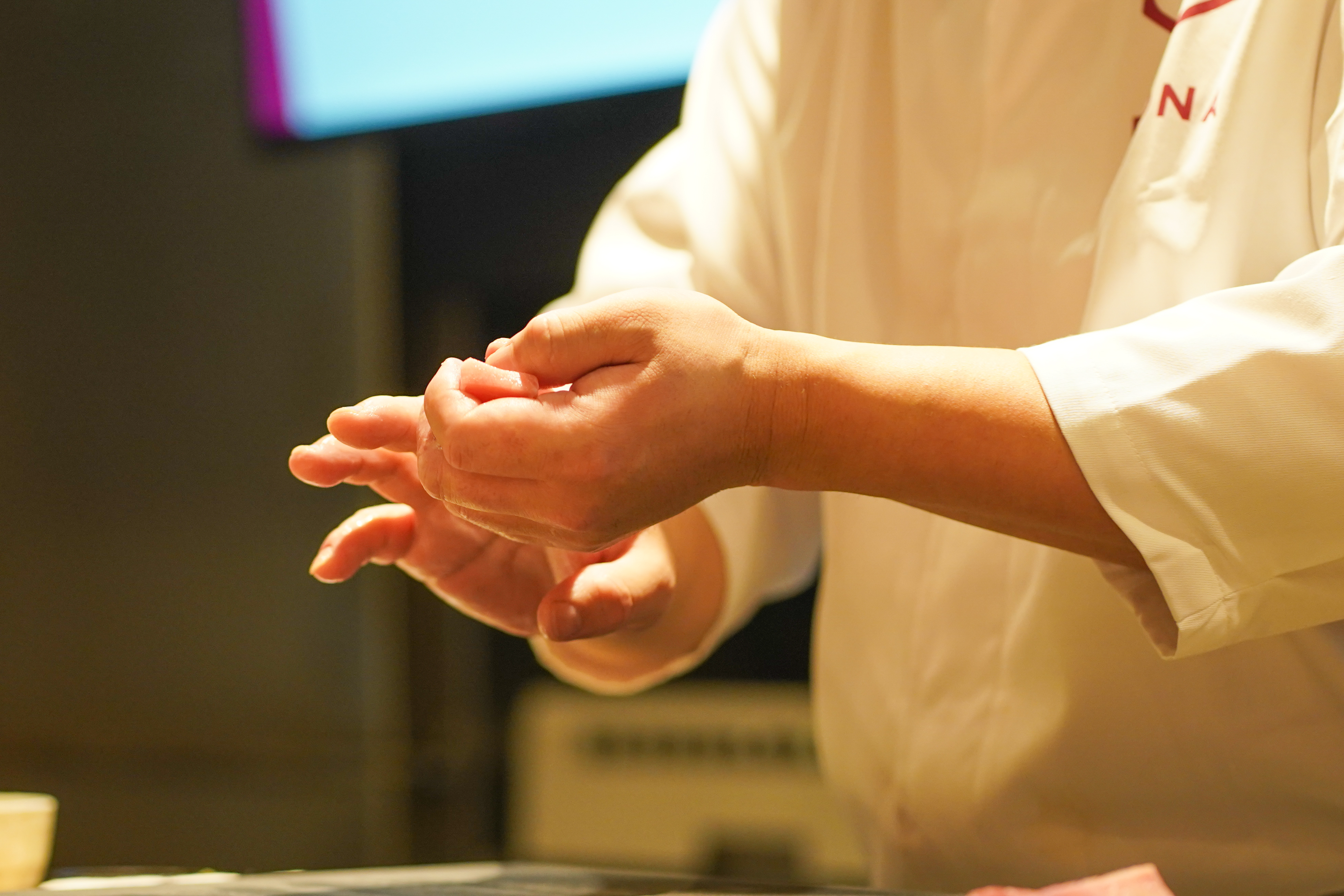
Even without being told, “Please eat,” you can naturally understand from watching the process that it is time to eat that piece.
By the time you finish, the chef is already preparing the next one.
This creates a unique rhythm at the counter.
It is a little different from sitting at a table and having several dishes placed in front of everyone at once.
Neither way is right or wrong.
In Japanese sushi culture, however, there has traditionally been an emphasis on serving each guest something at the moment when it is at its best.
That is why, when international guests visit a sushi counter for the first time, we usually explain at the beginning that they do not need to wait for everyone else’s sushi.
Even then, some guests still look around at everyone else after a piece has been placed in front of them.
When that happens, we sometimes say, “Now. Please go ahead and enjoy it.”
They may look surprised and ask, “Really? Now?”
Some guests are a little surprised at first.
Sometimes they even ask, “Is it really okay to eat it?”
But once they experience this style of dining, they often say, “Ah, I see. So that’s why you eat it right away.”
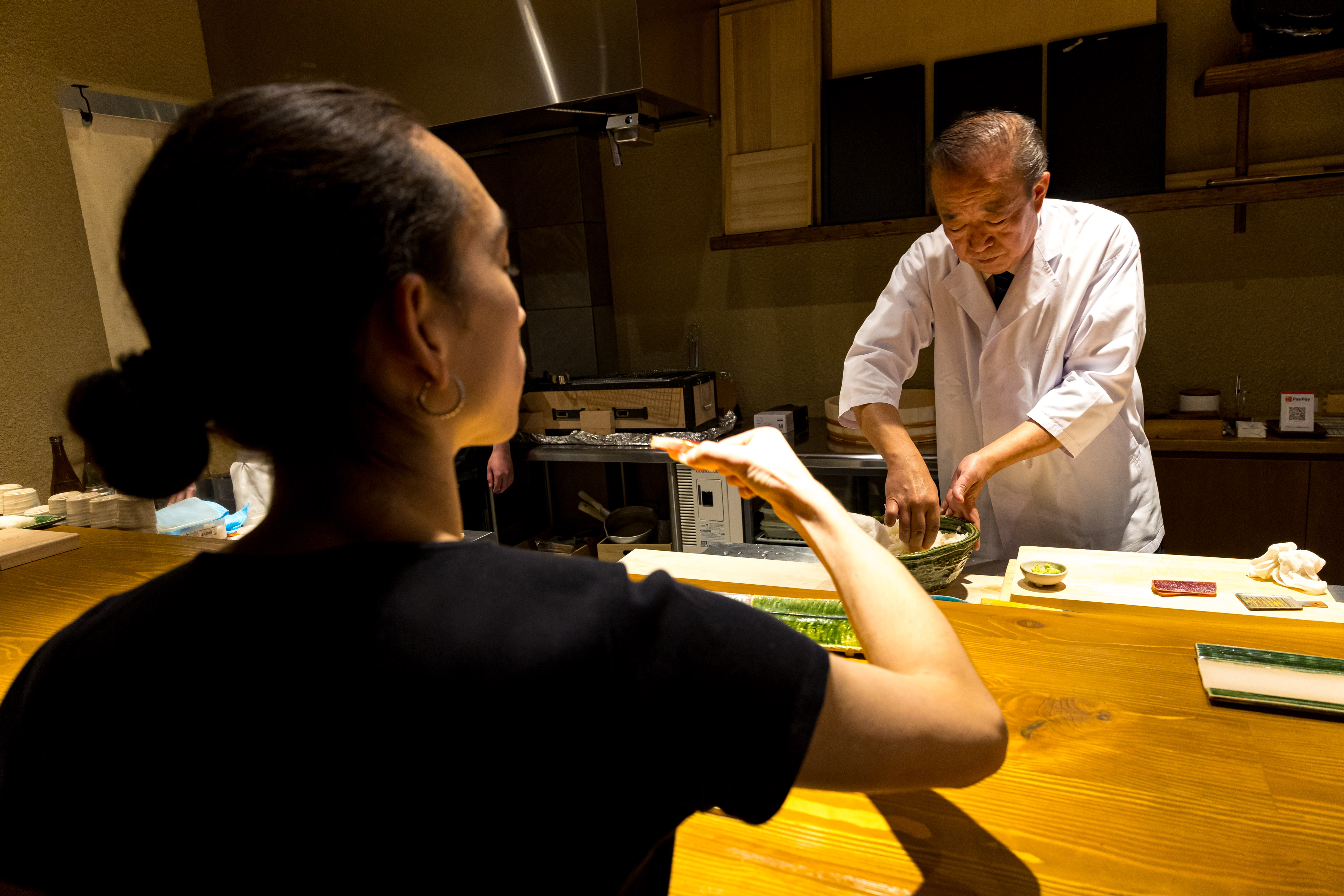
Sushi is not a dish where everyone necessarily starts eating at the same time.
The chef makes one piece and places it in front of you.
From that moment, that piece is for you.
And when you eat it, that piece is complete.
That is why, at a sushi counter, eating your sushi at your own timing is simply the natural way to enjoy it.
Japanese food culture is not only about the food itself. It also includes a sense of timing and when to enjoy something.
So if you have the chance to eat at a sushi counter in Japan, remember this.
When a piece of sushi is placed in front of you, you do not need to wait for everyone else.
That piece has been made for you and is being served at the moment the chef feels it is at its best.
So go ahead and enjoy it.
The time the chef spends making the sushi and the time you spend eating it come together in that moment.
That is where the live feeling of a sushi counter comes from.
And perhaps that is what makes sushi more than just food, and makes it an experience.