
Please note: Reservations are required; walk-ins cannot be accommodated.
Please note: Reservations are required.


In July 2026, REONA Sushi Tokyo welcomed UCLA Associate Professor Vetri Nathan for an Edomae sushi experience exploring the relationship between sushi, Japanese food culture, the ocean, and other living species. Joining the conversation was Sushi Chef Hishiya, a sushi chef with more than 50 years of experience who oversees REONA’s omakase program. Together, we explored how sushi culture has evolved over the decades and what its traditions can teach us about our relationship with nature.
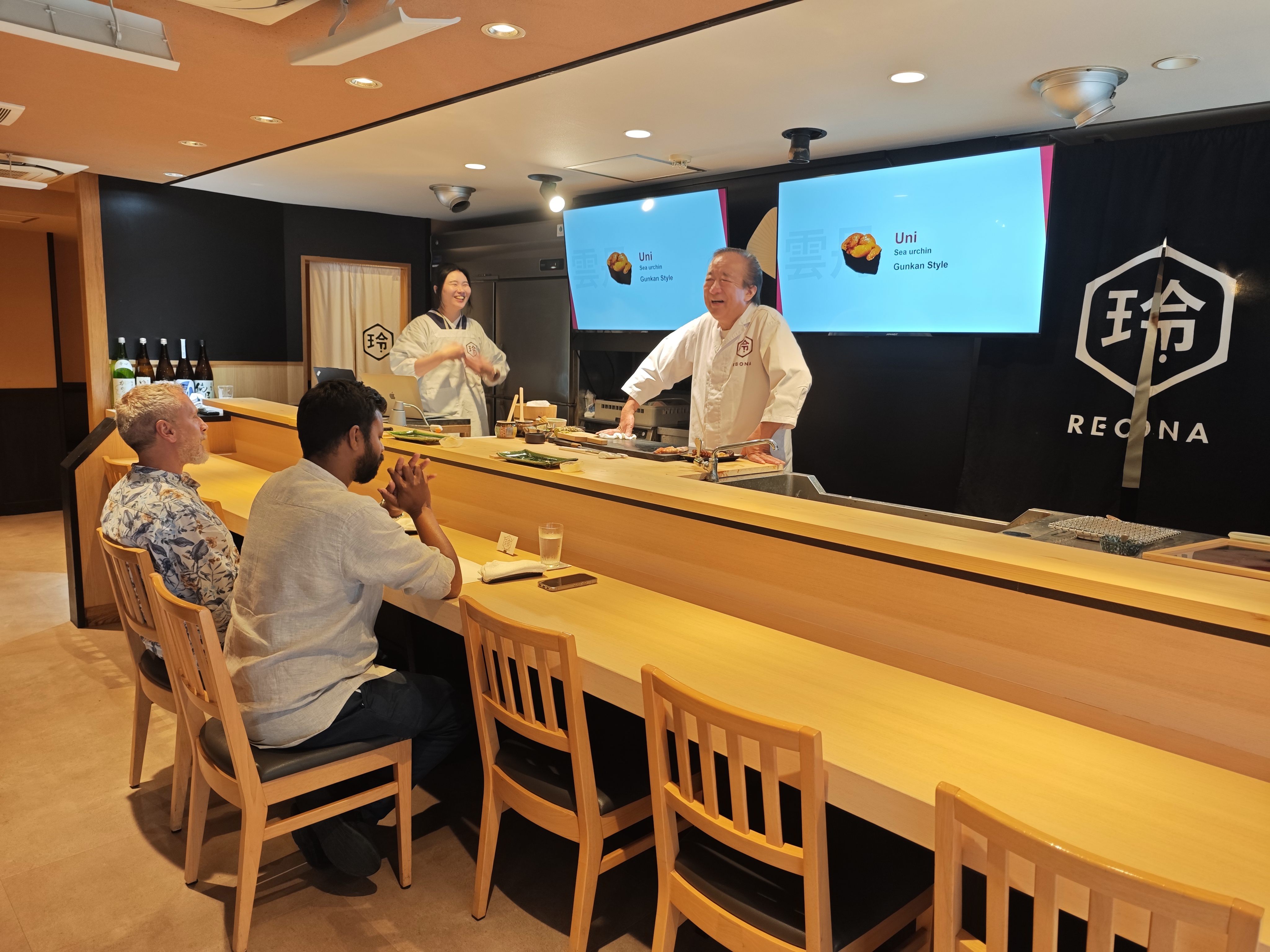
One day in July, we received an email from Los Angeles. It was from Professor Vetri Nathan at the University of California, Los Angeles (UCLA). At first, I assumed it was simply another reservation inquiry from an international guest, so I opened it as I normally would.
But as I kept reading, it became clear that this was much more than a reservation. Professor Nathan is researching the relationship between humans, nature, and other living species.
As part of his upcoming book and research project, he has been traveling across Japan to learn about its food culture. Among the many subjects he wanted to explore, sushi was one of the most important.
One sentence from his email has stayed with me ever since.
"Sushi traditions connect us to the oceans and its life in a very intimate way."
When I read those words, I found myself stopping for a moment. Every day at REONA, we introduce Edomae sushi to guests from around the world. We explain why traditional preparation techniques matter.
Why is each fish cut differently? Why are some pieces meant to be enjoyed exactly as they are, without adding soy sauce? These are conversations we have almost every day.
But I had never really looked at sushi through the lens of our relationship with the ocean. Instead of seeing sushi simply as food, Professor Nathan saw it as a cultural practice that connects people with nature.
It was a perspective that felt completely new to me.
On July 17, we welcomed Professor Nathan to REONA for an omakase experience and an opportunity to explore the questions behind sushi and its relationship with Japanese food culture and the ocean. To make the conversation even more meaningful, we invited our master chef, Mr. Hishiya, whose career as a sushi chef spans more than fifty years.
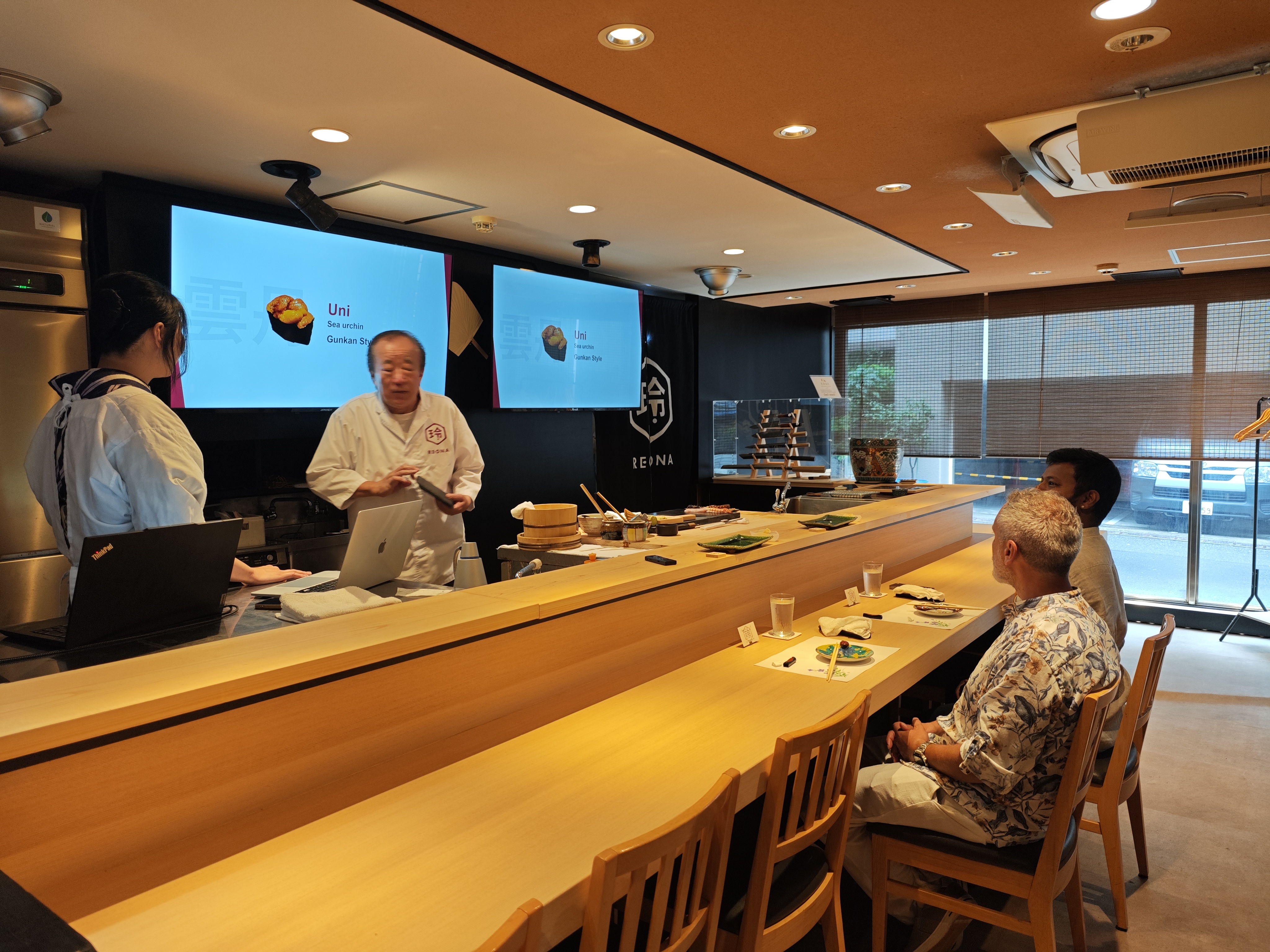
Rather than simply focusing on the food itself, we made time throughout the experience for conversation. Each piece of sushi became the starting point for another discussion.
We talked about fish. Knives. Traditional preparation techniques. The history of Edomae sushi. And the philosophy that has guided Chef Hishiya throughout his career.
Every answer naturally led to another question. Before we knew it, the evening had flown by. As REONA's navigator, I was there throughout the conversation. It felt less like an interview and more like a chance for all of us to think together about sushi, culture, and history.
What impressed me most was the kind of questions Professor Nathan asked. Of course, there were technical questions, such as: "How do you prepare this particular fish?"
But many of his questions went far beyond technique. He asked things like: "Over the past 50 years, how has sushi culture changed?" "Do you think the mindset of sushi chefs has changed as well?" "Do you think casual sushi restaurants, such as conveyor belt sushi, have had a positive impact on the industry?" "Has the relationship between sushi chefs and their guests changed over the years?"
He wasn't simply trying to learn how sushi is made. He wanted to understand the values, history, and human relationships behind it.
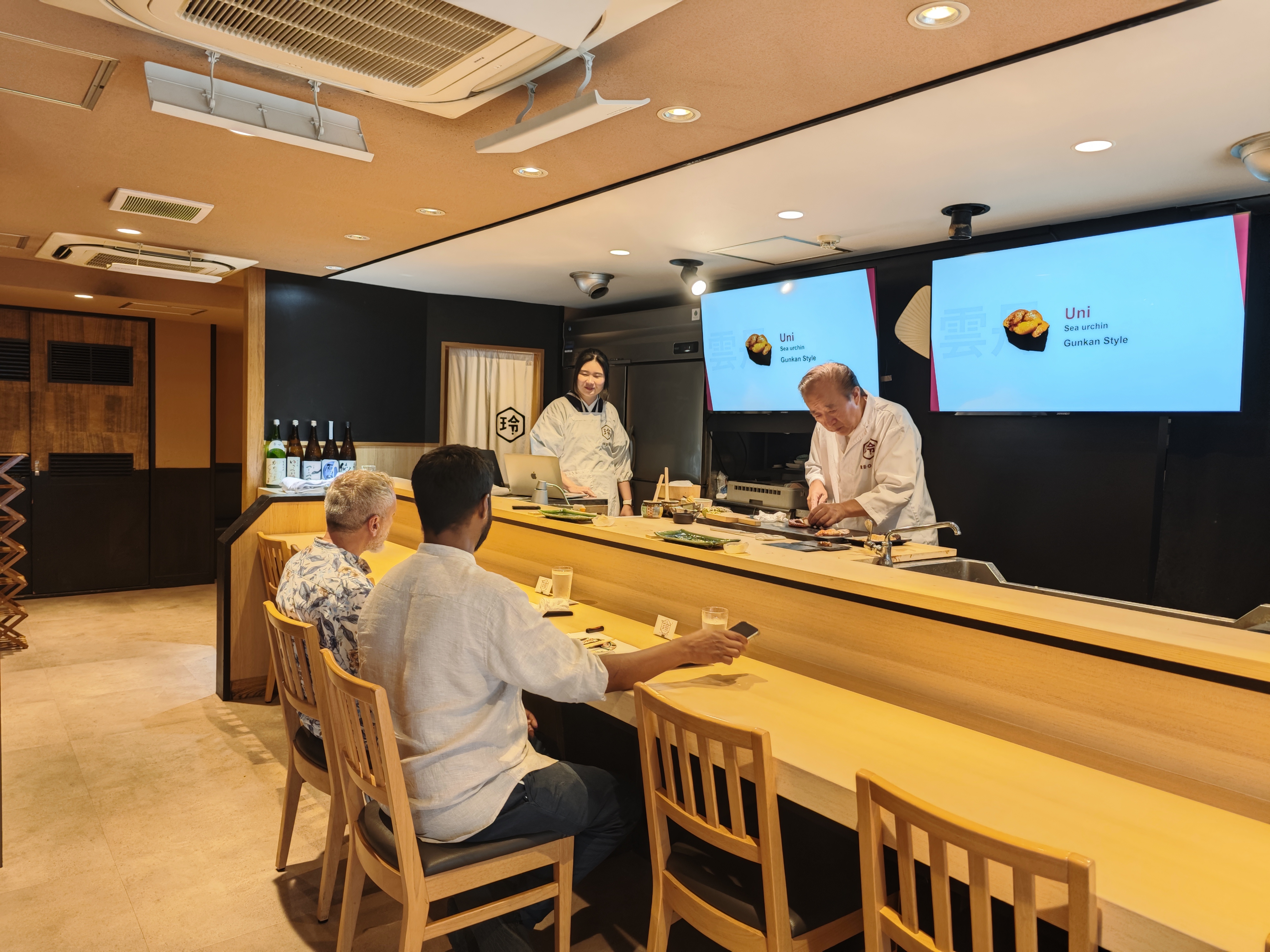
That curiosity left a lasting impression on me.
At REONA, we introduce sushi culture to our guests in English every day. We don't just explain the fish. We also talk about Japanese food culture, history, and the ideas behind each tradition.
Our goal isn't simply for guests to leave saying, "The sushi was delicious." We hope they leave thinking, "Now I understand why it's prepared this way." That moment of discovery is an important part of the experience we want to create.
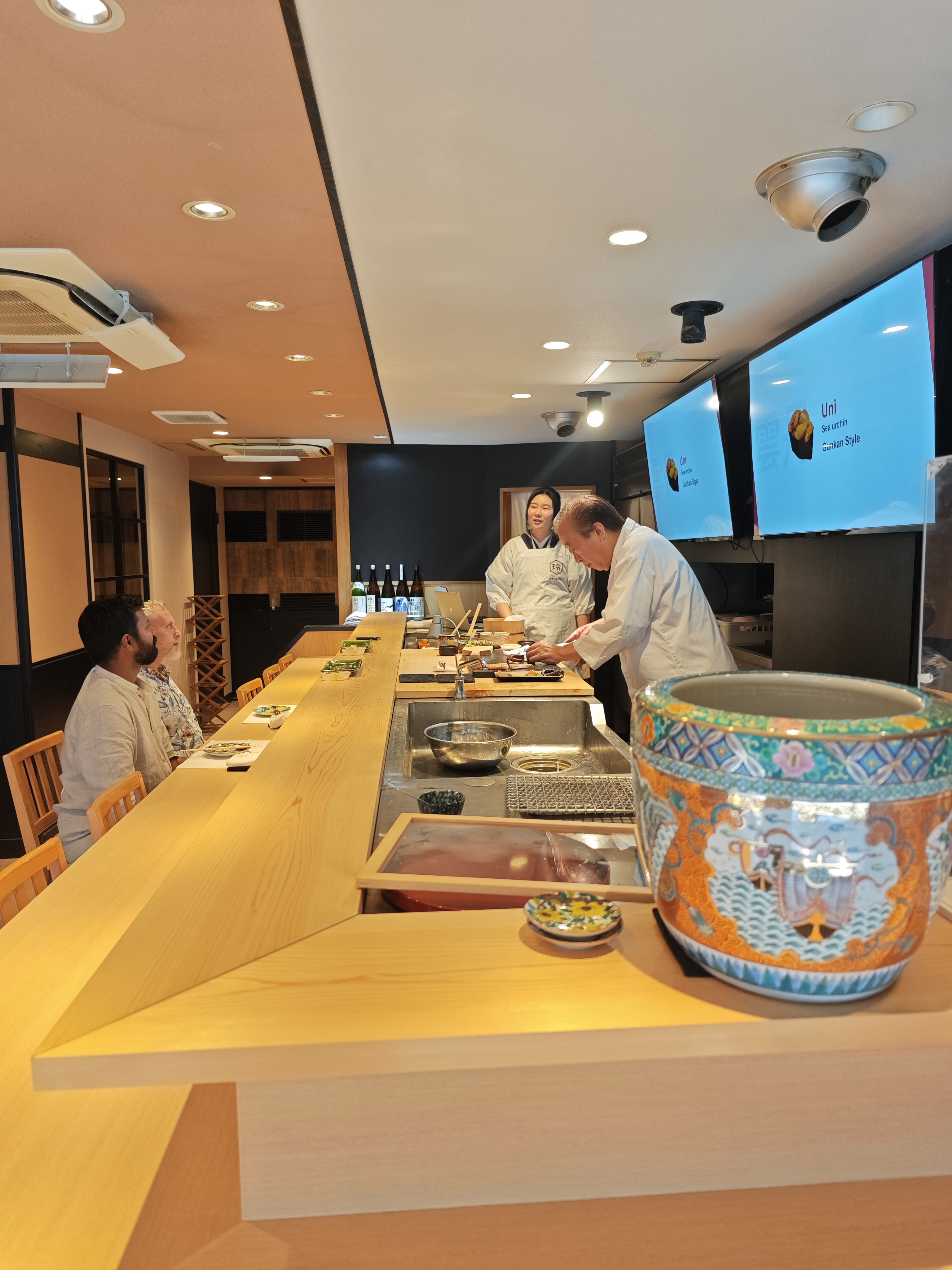
Speaking with Professor Nathan reminded us that what we've been doing all along has value beyond the restaurant itself. Knowing that a researcher from overseas found meaning in our approach was both encouraging and deeply rewarding.
This collaboration gave us the opportunity to share our knowledge of sushi. But looking back, I think we were the ones who learned the most.
As someone who spends every day talking with guests, I found Chef Hishiya's stories just as fascinating as Professor Nathan did. After more than fifty years as a sushi chef, he spoke not only about technique, but about the way he approaches his work.
His respect for the craft. His respect for the ingredients. His respect for every guest who sits at the counter.
The words he shared carried a weight that only decades of experience can bring.
The day also encouraged me to see sushi from a completely different perspective. Not simply as food, but as something that reflects our relationship with the ocean, our culture, and the lives that make it possible.
It reminded all of us that serving sushi is only part of what we do. Sharing the stories, traditions, and values behind it is just as important. It was a day that reaffirmed what we want REONA to continue doing in the years ahead.
We are very much looking forward to reading Professor Nathan's upcoming book and research when they are published.
We hope readers around the world will have the opportunity to discover not only Japanese sushi, but also the history, philosophy, and way of thinking that have shaped it over generations. To us, sushi is much more than a delicious meal.
It is part of Japan's history. It reflects our culture, our values, and the relationship between people and nature that has developed over centuries.
Being able to play even a small role in sharing that story with the world was a true honor. As Japanese people, we are proud of this culture, and we hope more people will have the chance to experience and appreciate it.
On a personal note, this was one of the most memorable experiences I've had since joining REONA. Professor Nathan, thank you again for giving us this wonderful opportunity.

We truly appreciate your visit, and we wish you all the best with your research and your upcoming publication.